
Breakfast shoppers who choose organic
You want to add dried fruit to your breakfast and assess the organic label and available product information for yourself. Skal Biocontrole explains that the organic label is protected.


Start with an option labelled organic, then check the ingredients, the texture you want and the product information. Raisins are one option for breakfast dishes; AH describes its organic prunes as soft, but also warns that a stone may remain and that the product may contain peanuts and nuts. AH, Jumbo and PLUS offer ways to order online; check with your chosen retailer whether delivery or collection is available for your address.
You want to add dried fruit to your breakfast and assess the organic label and available product information for yourself. Skal Biocontrole explains that the organic label is protected.
You want to have the fruit delivered or collected with your regular groceries. Jumbo and PLUS describe ways to order online; options depend on the retailer and your order.
You prefer soft dried fruit with your breakfast and want to check the ingredients, storage information and product warnings in advance. AH describes its prunes as soft.
Start by checking the organic product information and ingredients. Then decide which texture and ordering option best suits your breakfast shopping.
| What to consider | What should you check? | Who might this matter more to? |
|---|---|---|
| Organic label | Check the organic label and product-specific information, such as a control code. | If I buy organic, I want to assess what the label is based on rather than rely on general descriptions alone. Around 29% of consumers make verifiable organic status their top priority. |
| Ingredients and sugars | Read the ingredients and nutritional information; compare values on the same basis, for example per 100 g. | For my breakfast, I want to check what’s in the product before choosing an option. Around 29% of consumers prioritise ingredients and sugar information. |
| Ordering option | Check whether delivery or collection is available for your address, along with the chosen retailer’s terms. | If I order fruit with my weekly groceries, I want to know whether my retailer delivers to my address or offers collection. Around 24% of consumers make the practical ordering option their top priority. |
| Texture and packaging | Check the described texture, pack size, storage instructions and warnings. | For my breakfast, I want to choose a texture and pack that suit how I’ll use the product, and read any warnings in advance. Around 18% of consumers prioritise texture and practical use. |
A product listing doesn’t automatically mean the supermarket delivers groceries to your home. Lidl says it does not offer a grocery delivery service; Dirk also states that it does not offer a delivery service.
Check how your chosen supermarket handles orders before comparing products.
If the retailer doesn’t deliver, you may need to shop in person or use another way to order.
Organic status and sugar information describe different product characteristics. Albert Heijn lists 0 g of added sugars and 35 g of total sugars per 100 g for the prunes reviewed.
Check the organic label, ingredients and nutritional information separately.
For the prunes reviewed, Albert Heijn warns that a stone may have been left behind.
Bear the warning in mind when eating or preparing the product, and read the information on the packaging.
Its product information covers organic raisins and organic prunes.
Jumbo lists organic sultanas and offers a way to order online.
The BIO+ product page lists organic sultanas for online grocery shopping.
Lidl is relevant here mainly as a place to shop; a general organic range page does not prove that an individual dried fruit listing is organic.
The official listing for Trader Joe’s Raisins 500 g directs shoppers to buy them in an ALDI store.
Dirk is an option for shoppers who do their grocery shopping in person.
This Joybuy selection includes dried raisins, dates and sultanas. For any organic label, check the product information and packaging too.
 No image available
The product information describes portions of raisins for children aged 12 months and over.
The pack contains ten 14 g portions. The product information recommends storing in a cool, dry, dark place.
It also says that children should be supervised while eating and that the product is not suitable for children with swallowing difficulties.
 No image available
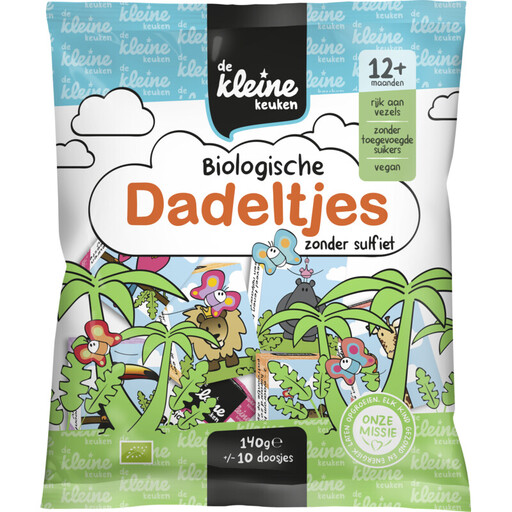
The product information describes these dates as baby food for children aged 12 months and over.
The ingredients list states 95% dates and 5% rice flour. Store in a cool, dry, dark place.
The product information recommends keeping the child sitting upright and supervising them while they eat.
 No image available
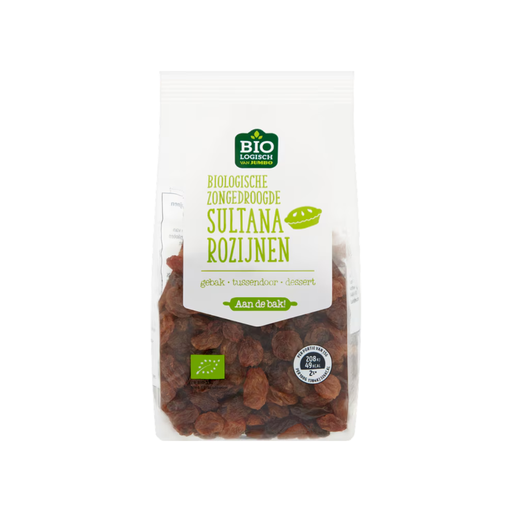
The product information suggests adding these raisins to breakfast cereal, for example, if you’d like to include raisins in your breakfast.
The ingredients list includes raisins and sunflower oil. The product information describes the raisins as organic.
According to the product information, a stalk or stone may remain despite cleaning.
No, don’t look only for a Dutch code. The AH product pages list TR-BIO-154 for the organic raisins and NL-BIO-01 for the prunes; check the product information for the option you’re buying.
No. Albert Heijn lists 0 g of added sugars and 35 g of total sugars per 100 g for the prunes reviewed. Check both figures separately.
BIO+ recommends storing its sultanas in a cool, dry, dark place. Albert Heijn gives the same storage advice for the prunes reviewed and notes that they have a limited shelf life after opening. Follow the instructions on your product’s packaging.
Check the current ingredients and allergen information on the packaging. Stichting Voedselallergie lists dried fruit as a product category in which high levels of sulphites may occur. For the prunes reviewed, Albert Heijn notes that they may contain peanuts and various nuts; an organic label does not tell you whether the product is suitable for your sensitivities.
Business.gov.nl states that label information must be in Dutch and available online. The Netherlands Food and Consumer Product Safety Authority explains that any allergens present that must be declared should be clearly identifiable in the ingredients list.