What should you look for when choosing?
Organic raisins
Choose these if: you want to control the portion and are looking for an easy addition to breakfast.
Bear in mind: the raisin varieties reviewed also contain sunflower oil.
Unsweetened organic mango
Choose this if: you fancy a different type of fruit with breakfast.
Bear in mind: unsweetened means no sugar has been added; it doesn’t mean mango contains no natural sugars.
Start by checking the certification and ingredients list, then look at the portion, pack size and storage advice. The Dutch Government explains that ‘organic’ is a protected designation. According to the European Commission, the EU organic logo is accompanied by a control code and information about the agricultural origin.
| What to consider |
What should you check? |
Who is this important for? |
| Organic status |
Look for the organic certification, control code and agricultural origin on the packaging. |
If organic origin matters to you for breakfast, don’t rely solely on words such as ‘natural’. Around 36% of consumers prioritise organic certification. |
| Sugars and ingredients |
Read the ingredients list and nutritional information; distinguish between total and added sugars. |
If you want to know what else is in the pack besides fruit and avoid added sugar, check the label on the exact variety. For the mango reviewed, Albert Heijn lists 0 g of added sugars per 100 g; this does not mean it contains 0 g of total sugars. Around 29% of consumers prioritise sugar and ingredients. |
| Product type and portion |
Compare the type of fruit, net weight and stated portion; follow the instructions on your own pack. |
If you regularly eat dried fruit at breakfast, you’ll want a type and quantity that suit your routine. Around 21% of consumers prioritise daily use. |
| Packaging and storage |
Check the net weight and storage advice to make sure the pack suits how you use it. |
If you’re stocking up, you’ll want to know how much is in the pack and how to store it. Around 14% of consumers look at this first. |
Joybuy products
Here are Joybuy dried fruit products that may work for breakfast or as a small portion. Check each pack to make sure its organic status, ingredients and usage instructions suit your needs.
 No image available
De Kleine Keuken Organic Raisins 12M+ 140 g
The product description mentions 14 g snack boxes of raisins, which may suit you if you want small portions.
The title includes ‘Organic’; check the organic designation on the packaging. According to the product information, this product is suitable from 12 months; supervise children while they eat. Not suitable for children with swallowing difficulties.
View at Joybuy
 No image available
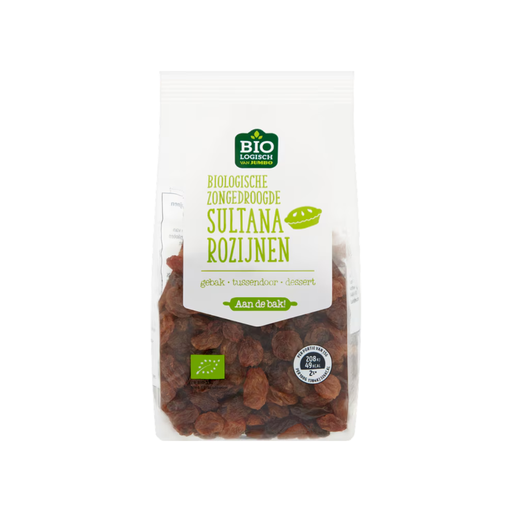
B+ Sultana Raisins 250 g
The product description suggests adding them to breakfast cereal; the pack contains 250 g.
The ingredients list includes raisins and sunflower oil. The product information warns that a stalk or small stone may remain despite cleaning. Check the organic designation on the packaging.
View at Joybuy
 No image available
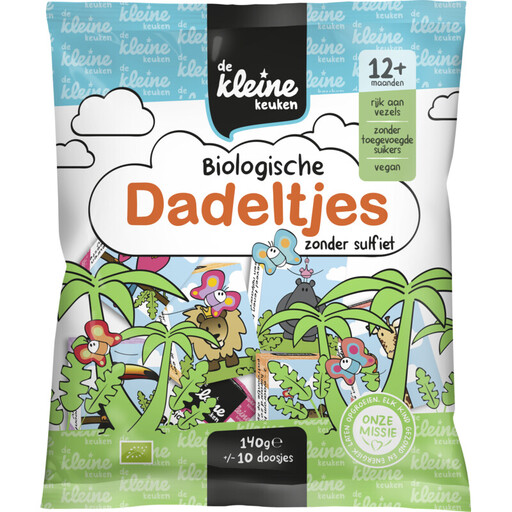
De Kleine Keuken Organic Dates 12+
The product information describes mini dates; the ingredients are dates and rice flour.
The title includes ‘Organic’; check the organic designation on the packaging. According to the product information, this product is suitable from 12 months: make sure the child is sitting upright and supervise them while they eat.
View at Joybuy
Frequently asked questions
Does the control code on organic dried fruit have to be Dutch?
No, the control code doesn’t have to be Dutch. The European Commission describes the code as part of organic labelling; a code from another country is not, by itself, a reason to reject the organic designation.
Is unsweetened dried fruit sugar-free?
No, unsweetened means no sugar has been added; it doesn’t mean the fruit contains no natural sugars. The Netherlands Nutrition Centre points out that dried fruit contains a lot of sugar, so check the nutritional information and watch your portion size.
Is the portion shown on the pack general nutritional advice?
Not necessarily. The Albert Heijn and PLUS packs reviewed show a 25 g portion, while Jumbo uses 15 g in its nutrition table. The Netherlands Nutrition Centre advises having no more than a handful of dried fruit with no added sugar.
How should I store dried fruit after buying it?
Follow the storage advice on the pack for your chosen variety. PLUS recommends storing the raisins reviewed in a cool, dry and dark place; for the mango reviewed, Albert Heijn recommends room temperature and a dark place.
What should I look out for if sulphites or another allergen matters to me?
Check the allergen information on the exact pack. The Netherlands Food and Consumer Product Safety Authority states that allergen information for pre-packed products appears on the label; organic certification doesn’t guarantee that a product meets your allergen requirements.


