What should you look for when choosing?
If you’re picking up dried fruit for breakfast during a small shop, first check the organic designation and ingredients. Then choose a quantity and retailer that suit how you’ll use it.
| What to consider |
What should you check? |
Who is this most relevant to? |
| Identifying organic products |
Check for the EU organic logo and control code on the pack; don’t rely on the product name alone. |
If I make organic a must-have, I want to be able to identify it on the pack. Around 31% of consumers say assurance that a product is organic is their main purchasing priority. |
| Ingredients and sugars |
Read the ingredients list and nutritional information separately; compare total and added sugars per 100 g. |
If I want to limit additives, I check both the ingredients and the nutritional information. Around 31% of consumers prioritise ingredients and the distinction between added and total sugars. |
| Choosing the right quantity |
Check the net weight and storage instructions, including after opening. |
If you only add dried fruit to breakfast now and then, the pack size should suit how much you use. Around 23% of consumers focus mainly on choosing the right quantity. |
| Fitting it into your regular shop |
Check which product your chosen retailer offers and which way to buy it fits your usual shopping routine. |
If I only want to add something to my usual shop, I want to be able to pick it up or order it in a way that suits me. Around 15% of consumers put convenience first when buying. |
Joybuy product picks
This selection includes dried fruit that, according to the product information, works well with breakfast cereal or as a small snack. Check the contents and any usage warnings on each pack.
 No image available
De Kleine Keuken Organic Raisins 12M+ 140g
The product information suggests adding them to breakfast cereal; the title lists a 140 g pack.
The product information warns that a stalk or stone may be present despite checks.
View at Joybuy
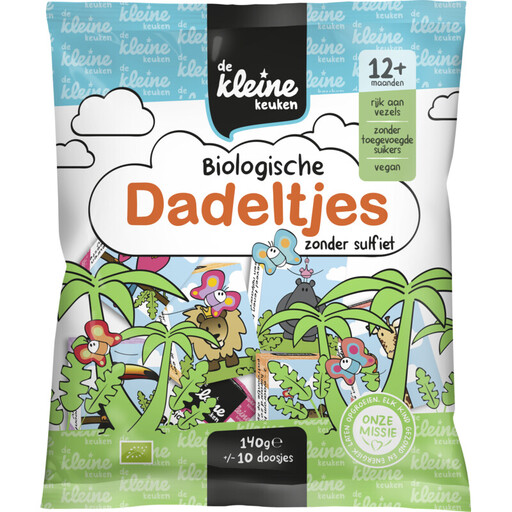 No image available
De Kleine Keuken Organic Dates 12+
The product information lists organic dates as the main ingredient in a snack and suggests using snack pots.
The title says 12+; the product information recommends supervising children while they eat and keeping them sitting upright.
View at Joybuy
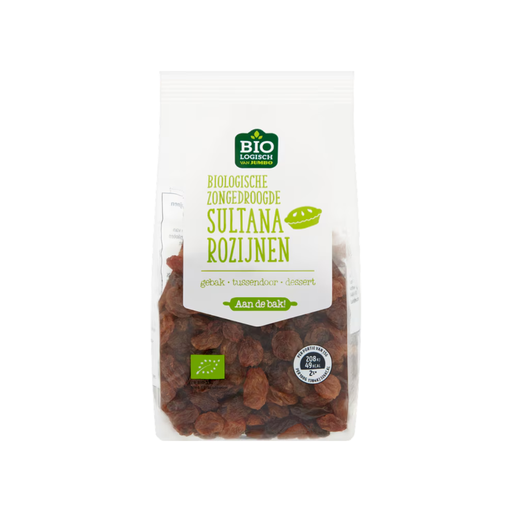 No image available
B+ Sultana Raisins 250 g
The product information lists organic sultana raisins and suggests adding them to breakfast cereal; the product name specifies 250 g.
View at Joybuy
Frequently asked questions
What do the organic leaf logo and control code on the pack mean?
According to the European Commission, the EU organic logo is intended for products certified as organic by a recognised control authority or control body. The control code is part of the inspection information; on its own, it does not prove that the fruit was grown in the Netherlands. Skal Biocontrole explains the organic designation for consumers.
Does organic or unsweetened mean dried fruit is low in sugar?
No. These labels do not tell you how much total sugar the product contains. Albert Heijn lists 0 g of added sugars and 61 g of total sugars per 100 g for AH Biologisch Mango gedroogd & ongezoet; the product information for AH Biologisch Rozijnen lists 59 g of total sugars per 100 g. Compare the figures on the exact pack.
Is organic dried fruit automatically suitable if I need to avoid allergens?
No. The Netherlands Food and Consumer Product Safety Authority says allergen information must appear on the labels of prepacked products. The product information for AH Biologisch Mango gedroogd & ongezoet warns that it may contain peanuts and nuts; always check the pack of the specific product you choose.
Which pack size is right for a small breakfast top-up?
Choose based on how much you’ll actually use and how you’ll store the product. Albert Heijn lists 130 g for its organic dried mango and 250 g for its organic raisins; also follow the storage instructions after opening.
How does a serving size on the pack compare with dietary advice?
A serving size on the label is the reference amount the supplier gives for that product. The Netherlands Nutrition Centre recommends a maximum of 20 g of dried fruit a day; this is dietary advice, not a legal limit on purchases.


