When choosing organic crisps for a school lunch, first check the wording on the packaging, then compare the nutritional information per 100 g and the portion you plan to take with you. The organic label tells you about how a product is made, not necessarily its nutritional value. Potato crisps are a savoury snack; lentil, vegetable and apple crisps each call for a different look at ingredients, salt, sugars and allergens.
Who are these choices relevant to?
Parents and pupils looking to identify organic products
If you’re looking for an organic product for a school lunch, check the packaging rather than relying on words such as ‘natural’ or ‘pure’. Skal Biocontrole explains when the European organic logo is required on pre-packed food.
Pupils taking a savoury snack with them
If you want to take crisps alongside a regular lunch, the amount in the bag and the nutritional information per portion are both relevant. The Netherlands Nutrition Centre advises comparing nutritional values per 100 g too, as portion sizes can vary between products.
Consumers looking for a different kind of crisp
Potato, lentil, vegetable and apple crisps differ in their ingredients and in whether they taste sweet or savoury. The exact variety determines which nutritional values and allergens you should check on the packaging.
What should you look for when choosing?
When choosing organic crisps for a school lunch, first decide which feature matters most to you. Then check the label on the variety you’ve chosen: a different main ingredient or an organic logo doesn’t replace that comparison.
| What to consider |
What to check when buying |
Who it matters to |
| Organic origin |
Check the organic wording and the ingredients list. According to Skal Biocontrole, the European organic logo is required on pre-packed food produced in the EU and sold as organic. |
If I’m choosing organic crisps, I want to be able to identify how they were made rather than relying on the name alone. For around 31% of consumers, that check would be the main reason for buying. |
| Lunch portion |
Check the portion size on the bag and compare energy, fat and salt per 100 g as well. Decide how much you’ll actually take with you. |
I want something savoury alongside my lunch, without treating a whole bag as one portion. For around 31% of consumers, crisps as a small extra would be the main consideration. |
| Type of crisp and ingredients |
Compare the specific potato, pulse, vegetable or fruit variety for its ingredients, allergens and nutritional values per 100 g. |
If I’m looking for a different flavour or main ingredient, I want to know how that changes the snack I take with me. For around 23% of consumers, the difference between types of crisps would matter most. |
| Packaging and availability |
Check the bag size and where the variety you’ve chosen is available. Lidl, for example, says its organic vegetable crisps are sold in stores only. |
My snack needs to fit in my bag and be available when I do my shopping. For around 15% of consumers, that practical consideration would be the main reason for choosing it. |
Common mistakes
-
Assuming organic crisps make a complete lunch
The logo tells you about how a product is made. According to the Netherlands Nutrition Centre, a 40 g bowl of plain crisps contains 216 kcal, 13.4 g of fat and 0.45 g of salt. So the logo doesn’t mean you can ignore portion size and nutritional value.
You could take crisps as an extra and make up the rest of your lunch with other foods, such as wholemeal bread, fruit or vegetables.
-
Assuming vegetable crisps are always lower in fat
A different main ingredient doesn’t, in itself, tell you how much fat or energy a crisp contains. Jumbo states that a 25 g portion of its organic sweet potato crisps contains 123 kcal and 6.7 g of fat.
Compare the nutritional information for the specific varieties per 100 g first, then consider the portions you’d take with you.
-
Only looking at added sugars in apple crisps
Albert Heijn states that AH Biologisch Appelchips contains 0 g of added sugars per 100 g; the product information also lists 65 g of total sugars per 100 g. These are different figures.
Treat apple crisps as a sweet snack and check both the total sugars and the portion size.
-
Skipping the allergen information on lentil crisps
The product information for BioToday Lentil Crisps Sea Salt states that the crisps may contain celery, milk, peanuts and soya. The main ingredient or organic label doesn’t replace that warning.
If you have a relevant allergy, check the up-to-date allergen information on the packaging of the flavour you’ve chosen.
Brands to compare
These brands offer relevant organic crisp varieties, but the differences below apply to the products or ranges mentioned, not every product from each brand.
Jumbo
Jumbo lists organic plain crisps and a separate sweet potato variety.
- Jumbo says its plain crisps contain potatoes, sunflower oil and sea salt; the potatoes and oil are listed as organic.
- The sweet potato variety has different nutritional values. Compare the specific bag rather than focusing only on the type of vegetable.
Albert Heijn Biologisch
AH Biologisch Appelchips is a sweet fruit snack, not a savoury potato crisp.
- Albert Heijn lists apple as an ingredient, with 0 g of added salt and 0 g of added sugars per 100 g.
- Check the total sugars and portion size too: ‘no added sugars’ doesn’t mean the product contains no sugars.
BioToday
BioToday Lentil Crisps Sea Salt is an organic crisp variety made from pulses.
- According to Jumbo’s product information, this variety contains 43% lentil flour.
- As well as checking the nutritional information, read the allergen warning on the specific packaging. This variety may contain celery, milk, peanuts and soya.
Trafo
Trafo describes itself as a producer of organic crisps made with a range of ingredients.
- The different crisp bases give you a choice of flavours and ingredients.
- Compare Trafo’s claims about fat content with the nutritional table and the basis of comparison for the specific variety.
Lidl
Lidl lists organic vegetable crisps as an in-store product.
- Lidl describes a 100 g pack of crisps cooked in sunflower oil.
- According to Lidl, the variety shown is only available in stores. Check the packaging and availability at the branch where you shop.
A crisp-style snack at Joybuy
These cheese-flavoured corn puffs are a crisp-style snack to enjoy alongside a school lunch, rather than classic potato crisps. If you’re specifically looking for organic crisps, check the organic wording on the packaging.
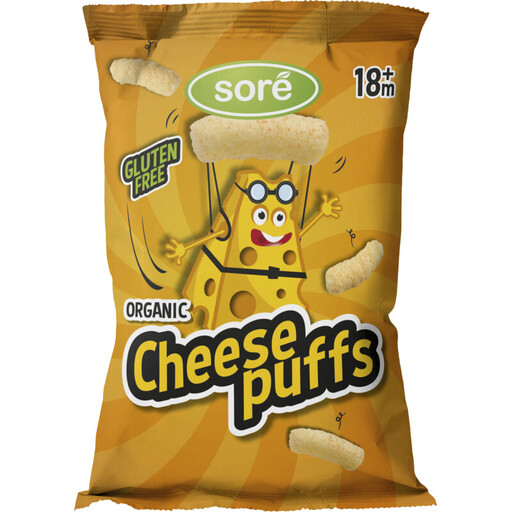 Image unavailable
Sore Organic Cheese Puffs – 35 g
A savoury, cheese-flavoured corn snack to consider as an addition to lunch. Check for the European organic logo on the packaging before assuming it is organically certified. The title says 35 g, but the portion and packaging details don’t match that amount, so check the net weight on the packaging. If you have a relevant allergy, also check whether milk is listed.
View at Joybuy
Frequently asked questions
How can I identify organic crisps on the packaging?
Look for the organic wording and check the label on the specific bag. According to Skal Biocontrole, the European organic logo is required on pre-packed food produced in the EU and sold as organic.
Can organic crisps replace a school lunch?
No. The organic logo doesn’t make crisps a complete lunch. It tells you about how they were made. You should also check the portion, ingredients and nutritional value, and consider taking crisps alongside other lunch foods.
Should I compare crisps per portion or per 100 g?
First compare different crisps per 100 g, then look at the portion you’ll actually take with you. The Netherlands Nutrition Centre points out that portion sizes on labels can vary, so comparing portions alone can be misleading.
What should I look for in lentil crisps if allergens are a concern?
Read the allergen information on the specific packaging before choosing the crisps. For example, the product information for BioToday Lentil Crisps Sea Salt lists possible traces of celery, milk, peanuts and soya. That warning doesn’t automatically apply to every lentil crisp.
How should I store an opened bag for the next school day?
Follow the storage advice on the packaging and seal the bag well after opening. Jumbo advises storing its organic plain and sweet potato crisps in a cool, dark place; BioToday advises keeping its lentil crisps sealed in a cool, dry place.


