
Parents who want to verify organic status
A label such as ‘natural’ isn’t enough for you: you want to be able to check the organic status on the packaging. The European Commission explains that the EU organic logo is linked to organic certification.


For a party bag, first look for a verifiably organic product that you can hand out in small portions. Then check the ingredients and allergens for the exact variant. According to the Netherlands Nutrition Centre, organic food has not been shown to be healthier than conventional food in general. So compare the nutritional information too, and check the rules at the school, after-school club or childcare setting before you buy.
A label such as ‘natural’ isn’t enough for you: you want to be able to check the organic status on the packaging. The European Commission explains that the EU organic logo is linked to organic certification.
You want to know in advance what the school, after-school club or childcare setting allows, and whether any children have allergies or other dietary restrictions. The Netherlands Nutrition Centre recommends asking about allergies when choosing treats.
You don’t want to give every child a large bag of crisps. The Netherlands Nutrition Centre recommends small portions for treats; Albert Heijn and Jumbo list 25 g portions for their organic ready-salted crisps.
First check the organic label and the group’s rules. Then compare the portion size and nutritional information. Only after that should you choose a flavour or main ingredient.
| What to consider | What to check before buying | Who it matters to |
|---|---|---|
| Organic label | Look for the EU organic logo on the packaging, along with details of the control body and origin. | If I’m choosing organic, I want to be able to check the label on the packaging rather than rely on a product description alone. For around 37% of consumers, this is the top priority. |
| Group rules and allergens | Ask about the treat policy and any relevant allergies in advance. Check the ingredients and allergens for the exact variant, including any ‘may contain’ statement. | I want to avoid handing out something a child can’t eat or that doesn’t meet the setting’s rules. For around 27% of consumers, suitability is their main concern. |
| Portion size and nutritional information | Check how much each child will get, and compare salt, fat and sugars per 100 g and per portion. | For a party bag, I want to be able to measure out a small amount and understand what that portion contains. Around 27% of consumers give this the highest priority. |
| Flavour and shape | Only after making the other checks, compare the specific potato, vegetable, lentil or maize options. | I’m mainly looking for variety in what I hand out, but the flavour still needs to suit the group. For around 9% of consumers, variety matters most. |
Organic certification relates to how a product is made. According to the Netherlands Nutrition Centre, organic food has not been shown to be healthier than conventional food in general.
Use the organic logo to check the product’s organic status, then compare the nutritional information per 100 g and per portion.
Sweet potato or lentils won’t tell you how much salt, fat or sugars a snack contains. Albert Heijn lists 33 g of sugars per 100 g for its organic sweet potato crisps included in the research. For the BioToday lentil crisps included in the research, the retailer lists 1.7 g of salt per 100 g.
Compare the nutritional information and ingredients of the variants you’re actually considering.
An ingredient, a ‘may contain’ warning or the local treat policy could determine whether a snack is suitable for a child or setting.
Ask about the rules and allergies in advance. Then check the current packaging for the flavour and variant you’ve chosen.
According to their product information, the ready-salted crisps from Albert Heijn and Jumbo included in the research each contain five 25 g portions. But they are not individually packed treats for children. If you portion them out yourself, make sure the ingredient and allergen information remains available.
Work out how many portions you’ll need in advance, keep the original packaging and check whether portioning the crisps yourself is allowed by the setting.
Albert Heijn offers organic ready-salted potato crisps and sweet potato crisps for anyone choosing between a classic option and a different main ingredient.
Jumbo’s organic ready-salted potato crisps are an option if you want to portion out smaller servings from a 125 g pack.
Lidl lists 100 g packs of organic vegetable crisps in store for anyone looking for a vegetable option.
The organic BioToday lentil crisps included in the research offer an alternative to potato-based snacks.
These maize and pea puffs are a crunchy alternative to potato crisps for a party bag. Check the packaging separately for an organic label, portion size and allergens.
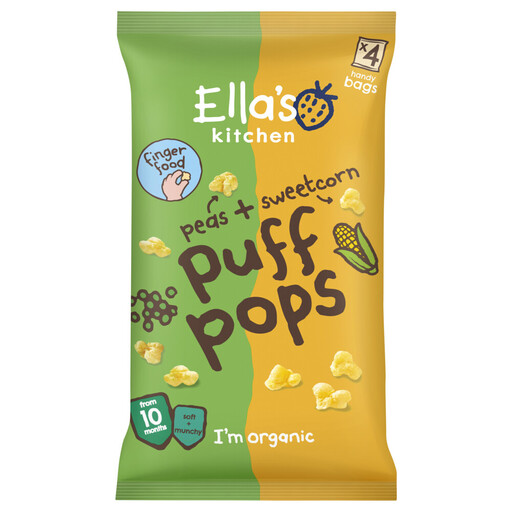 Image unavailable
Maize and pea puffs for anyone considering a crunchy snack other than potato crisps. Before handing them out to a group, check the current packaging for the amount per portion, organic labelling and allergens.
No. According to the Netherlands Nutrition Centre, organic food has not been shown to be healthier than conventional food in general. Compare the ingredients, nutritional information and amount per child for the crisps you’re considering.
Look for the EU organic logo and the details of the control body and origin of the agricultural ingredients. The European Commission says the logo can only be used on products that meet organic standards.
Yes. Before you buy, ask about the treat policy at the school, after-school club or childcare setting. The Netherlands Nutrition Centre points out that settings may have their own rules for celebrations and also recommends asking about allergies.
Ask which allergies are relevant to the group and read the current label for the exact product variant, including any ‘may contain’ statements. For example, Albert Heijn says the BioToday lentil crisps included in the research may contain peanuts, soya, milk and celery.
Follow the storage instructions on the packaging of the crisps you’ve chosen. The potato crisps included in the research say to store them in a cool, dark place; Albert Heijn recommends keeping its ready-salted variant in a sealed container after opening.