
Small households buying organic
If you take a while to get through a box of crispbread, it’s useful to check not only the organic certification but also whether the crispbread is individually wrapped and how to store it after opening.


If you have a small household, choose organic crispbread whose organic certification and packaging you can check. A smaller box won’t necessarily prevent waste, so check the inner packaging and storage instructions too. Then compare wholegrain status, fibre and salt per 100 g, and read the allergen information for the exact variant.
If you take a while to get through a box of crispbread, it’s useful to check not only the organic certification but also whether the crispbread is individually wrapped and how to store it after opening.
If these are your priorities, compare the wholegrain claim with the ingredients and the fibre content per 100 g for the specific variant.
For these shoppers, the ingredients and any may-contain warnings on the exact pack are key. An organic label says nothing about whether a product is suitable for someone with an allergy or following a gluten-free diet.
Start by checking the organic certification and choosing packaging that suits how much you eat. Then look at the nutritional information and allergens for the variant you want to buy.
| What to look for | What to check when buying | Who it matters to |
|---|---|---|
| Organic certification and packaging | Check for the EU organic logo and control code. As well as the net weight, look at any inner packaging and the storage instructions. | I want to buy organic crispbread without leaving an open box around for too long. For around 31% of consumers, the combination of organic certification and packaging format is the top priority. |
| Wholegrains and fibre | Check the wholegrain claim and ingredients, and compare the fibre content per 100 g across variants. | If you mainly want to compare wholegrains and fibre, you need specific nutritional information, not just the product name. For around 31% of consumers, this comparison comes first. |
| Ingredients and allergens | Check the allergen statement and any may-contain warnings on the current packaging for the variant you’ve chosen. | If I need to avoid gluten or sesame, I want to know what my chosen variant contains before buying it. For around 23% of consumers, checking ingredients and allergens is the top priority. |
| Salt and iodine information | Compare the salt content per 100 g. If you need to know the type of salt used or the iodine content before choosing, ask the manufacturer for this information. | If salt matters to my choice, I don’t want to assume the iodine content from the word ‘salt’. Around 15% of consumers give salt and iodine information top priority. |
The Albert Heijn organic crispbread variants reviewed list rye, wheat, gluten and sesame. The multiseed variant also warns that it may contain traces of peanuts, soya and nuts.
Check the ingredients and allergen information for the exact variant again if you switch flavour or packaging.
A smaller box doesn’t tell you how the contents are packaged once opened. For AH Biologisch Knäckebröd sesam, Albert Heijn lists a 3 x 5 pack format for the 225 g box. For the 250 g multiseed variant, it advises storing the contents in a sealed tin after opening.
If you eat crispbread slowly, compare the inner packaging and storage instructions first, then check the total weight.
The word ‘salt’ in an ingredients list doesn’t tell you which type of salt was used or how much iodine the crispbread contains.
If you need this information to assess a product, check the current label or ask the manufacturer which type of salt is used and what the iodine content is.
Albert Heijn lists 16 g of fibre per 100 g for AH Biologisch Knäckebröd meerzaden, while Wasa lists 20 g per 100 g for Wasa Volkoren. That doesn’t mean their organic status, ingredients or salt content are the same.
Compare these features separately before choosing a variant.
For its sesame and multiseed variants reviewed, Albert Heijn lists an EU organic logo and the control code NL-BIO-01.
Wasa lists wholegrain rye flour as an ingredient in Wasa Volkoren, with 20 g of fibre per 100 g.
Ryvita’s UK brand page lists wholegrain rye as an ingredient in Original Crispbread, with 13,4 g of fibre per 100 g.
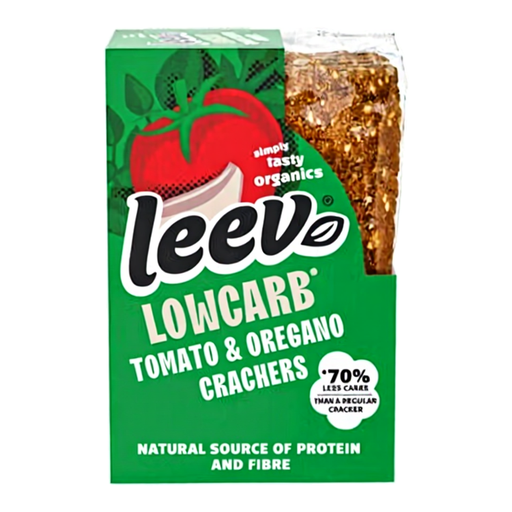
This small pack of crackers is a related option if you’re also considering products other than crispbread. Check the product type and organic certification on the current packaging before choosing it as an alternative.
 No image available
The 80 g pack may suit you if you want to buy a small amount at a time, but this product is described as crackers, not crispbread.
Check the current packaging for organic certification and whether the product contains inner packaging. Read the label before buying too: the available ingredient and allergen information about egg and milk varies.
Look for the EU organic logo and control code on the current packaging. For the AH Biologisch variants reviewed, Albert Heijn lists the code NL-BIO-01. Don’t assume another variant is organic based only on its brand name or packaging colour.
No. The weight mainly tells you how much is in the box, not how the contents are divided up after opening. So compare the inner packaging and storage instructions with how much you usually eat.
No. An organic label or the word ‘salt’ doesn’t tell you the iodine content of the product you’ve chosen. If you need this information to make your choice, ask the manufacturer which type of salt is used and what the iodine content is.
Also check the wholegrain claim, ingredients, salt content per 100 g and allergens for the exact variant. According to the Netherlands Nutrition Centre, a cracker can only be called wholegrain if all the flour used is wholegrain flour.