
For those who want to control the sweetness
You want an organically certified base for milk or yoghurt, but prefer to choose what else goes in the bowl. Check for the EU organic logo, then compare sugars and fibre per 100 g.


If you want organic breakfast cereal for a sweet breakfast, first check for the EU organic logo, then compare similar products per 100 g for sugars and fibre. Organic cornflakes are a good choice if you want a crunchy base and prefer to decide how sweet to make it yourself; grain flakes or muesli offer a different mix of ingredients and texture. An organic certification label alone tells you nothing about sugar or fibre content.
You want an organically certified base for milk or yoghurt, but prefer to choose what else goes in the bowl. Check for the EU organic logo, then compare sugars and fibre per 100 g.
You want the texture of cornflakes without relying on a sweet-sounding product name. The ingredients list and nutritional information can help you distinguish added sugar from total sugars.
You might want to combine fruit or yoghurt with grain flakes, and prefer to focus on the grains used and fibre content rather than the light texture of cornflakes alone. The Netherlands Nutrition Centre recommends comparing breakfast cereals per 100 g.
If organic certification is a must for you, start by checking the organic label. Then choose between cornflakes and other grain flakes based on the ingredients, nutritional information and texture you prefer.
| What to consider | What to check when buying | Who is this important to? |
|---|---|---|
| Organic certification | Look for the EU organic logo on the packaging; don’t judge a product by a natural-sounding name alone. | If organic certification is a must for me, I want to be able to recognise the label on the packaging. For around 42% of consumers, this is the top priority. |
| Sugars and ingredients | Compare similar breakfast cereals per 100 g for sugars, and check the ingredients list for sources of added sugar. | I want to put together a sweet breakfast, but decide for myself how many sweet ingredients to add. Around 33% of consumers give this the highest priority. |
| Fibre and grain type | Check which grains are used, whether a variety is wholegrain and how much fibre it contains per 100 g. | Grain type and fibre content matter more to me than the typical texture of cornflakes. This is the main consideration for around 25% of consumers. |
The EU organic logo relates to organic production, not the amount of sugars or fibre. A certified product may still contain sweet ingredients.
Check for the logo, then compare the ingredients list and nutritional information per 100 g.
Serving sizes can vary, so values per serving don’t give you a like-for-like basis for comparing products.
Compare the values per 100 g for similar breakfast cereals, paying particular attention to sugars and fibre.
A product name mentioning maize or oats doesn’t tell you what other ingredients or warnings are listed on the packaging. The product information for Smaakt Bio Cornflakes Ongezoet states that various allergens may be present.
For the variety you choose, check the current ingredients list, allergen information and any warnings.
Ingredients and nutritional information can change. Albert Heijn recommends checking the packaging for its organic cornflakes.
Check the latest product information before buying, and check the packaging before using the product.
Albert Heijn offers organic cornflakes alongside organic grain flakes and puffed grains.
Smaakt has a 300 g organic cornflake variety; the product information at Jumbo lists organic maize as an ingredient.
Lidl offers organic breakfast cereals, including a variety with fruit.
These products are muesli mixes with grain flakes, nuts and seeds or fruit, not plain cornflakes. If you’re looking for an organic option, check for the EU organic logo on the packaging and compare the nutritional information for each mix.
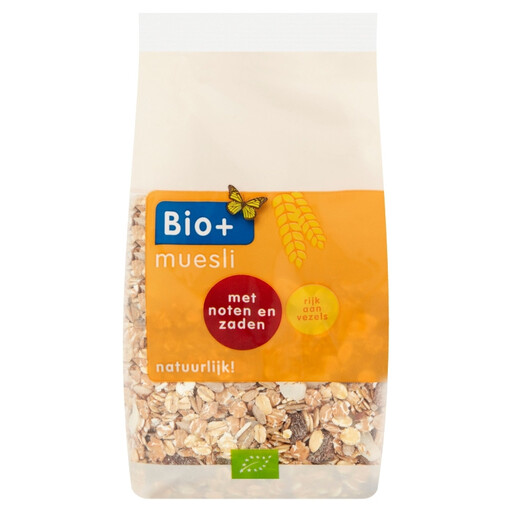 Image unavailable
This muesli with nuts and seeds is a good choice if you’re looking for a mix with grain flakes rather than plain cornflakes.
If organic certification is a must for you, check for the EU organic logo. Compare sugars and fibre per 100 g, and read the latest allergen information on the packaging.
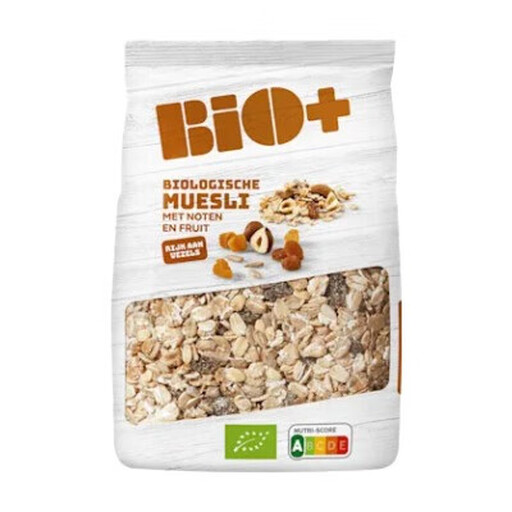 Image unavailable
This muesli with nuts and fruit is a good choice if you’re looking for a grain flake mix with fruit rather than plain cornflakes.
Check the net weight on the packaging: the product information lists both 400 g and 450 g. Also check for the EU organic logo, sugars and fibre per 100 g, and the latest allergen information.
Look for the EU organic logo on the packaging. The Dutch Government identifies this certification logo as a way to recognise organic products; a natural-looking name or package is no substitute.
No. The organic certification label describes how a product is made and doesn’t indicate its sugar content. Compare similar cornflakes per 100 g for sugars, and read the ingredients list if you want to know which sweet ingredients have been used.
Use the nutritional information per 100 g as a like-for-like basis. The Netherlands Nutrition Centre recommends checking sugars and fibre, among other things, when choosing breakfast cereals; ideally, compare products of the same type.
No. Check the ingredients and allergen information on the specific packaging, including any warnings about possible presence. For example, the product information for Smaakt Bio Cornflakes Ongezoet states that gluten-containing cereals, milk, nuts, peanuts, sesame and soya may be present.