
The busy breakfast eater who values organic food
You want a breakfast that takes little preparation on a weekday, with flakes whose organic status you can check on the packaging.


Choose organic cornflakes for a quick breakfast if you can check the packaging to confirm that the product is organic. Then compare similar breakfast cereals per 100 g for sugars, fibre and salt. Organic status alone says nothing about these nutritional values or whether a product is suitable if you have an allergy. Muesli may be an alternative if you’re looking for a mix with ingredients such as nuts or fruit, but it isn’t the same product as cornflakes.
You want a breakfast that takes little preparation on a weekday, with flakes whose organic status you can check on the packaging.
You don’t choose on the organic label alone. You compare similar breakfast cereals for sugars, fibre and salt per 100 g. This is also the basis for comparing labels recommended by the Netherlands Nutrition Centre.
If you need to avoid gluten or other allergens, check the current ingredients list and allergen information. An organic label doesn’t tell you whether a product meets that requirement.
Start by checking the organic label on the packaging, then compare only breakfast cereals of the same type using their nutritional information. Finally, consider which pack will fit into your morning and shopping routine.
| What to consider | What to check when buying | Who it matters to |
|---|---|---|
| Organic status | Check the organic label on the current packaging. According to the European Commission, the EU organic logo is compulsory for prepacked foods produced in the EU and sold there as organic. | If organic status is my main requirement, I want to be able to identify it on the packaging before considering taste or nutritional values. For around 46% of consumers, this check comes first. |
| Sugars, fibre and salt | Compare similar products per 100 g for sugars, fibre and salt. Check the ingredients list too if added sugar will affect your choice. | An organic label isn’t enough for me if I also want to weigh up the nutritional profile. Around 36% of consumers give this comparison top priority. |
| Product type and packaging | Decide whether you want cornflakes or muesli, check the net weight and see whether the product you want is available where you shop. | On busy mornings, I want a product that suits my usual breakfast, without mistaking muesli for cornflakes. This is the most important consideration for around 18% of consumers. |
An organic label doesn’t tell you how much sugar, fibre or salt the cornflakes contain, or whether they’re wholegrain.
Check organic status separately, then compare the nutritional information for similar products per 100 g, as recommended by the Netherlands Nutrition Centre.
Organic status and the type of grain used are no substitute for checking the ingredients and allergen information. This is particularly important if you need to avoid gluten or another allergen.
Read the current ingredients list and allergen information, and check the packaging for any gluten-free claim.
A familiar product name doesn’t mean the ingredients or nutritional values will stay the same. Albert Heijn points out that information about diets and allergies can also change.
Check the packaging again when your product arrives, especially if an ingredient or allergen is key to your choice.
Albert Heijn lists AH Biologisch Cornflakes as an option if you’re specifically looking for cornflakes.
Jumbo lists Smaakt Bio Cornflakes Ongezoet 300 g in its range.
ALDI Netherlands lists organic muesli with dried fruit, nuts and seeds, as well as organic grains.
Lidl lists organic breakfast cereals with fruit as a mixed cereal option.
Kellogg's Corn Flakes can be used for comparison if organic status isn’t a requirement.
These products are muesli with nuts. Consider them if you’re thinking about a mixed breakfast cereal instead of cornflakes. If organic status and ingredients matter to your choice, check the current packaging.
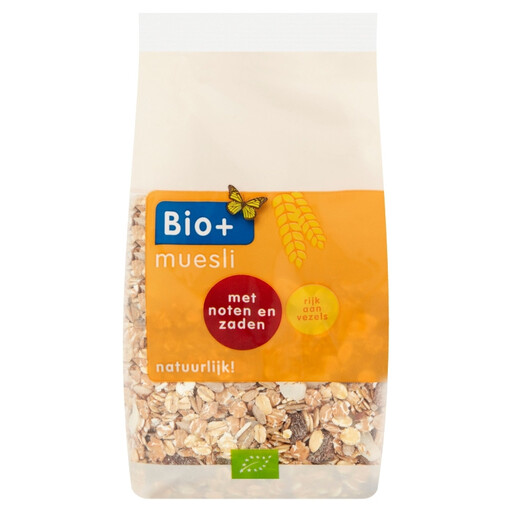 Image unavailable
For anyone looking for muesli with nuts and seeds rather than plain cornflakes. Check the organic label and allergen information on the current packaging.
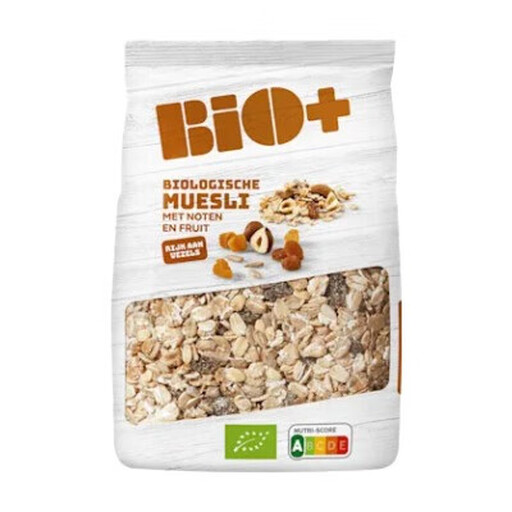 Image unavailable
For anyone who’d like to consider muesli with nuts and fruit as an alternative to cornflakes. Check the net weight on the packaging: this product is listed as both 400 g and 450 g. Check the organic label and allergen information too.
Check the organic label on the packaging. According to the European Commission, the EU organic logo is compulsory for prepacked foods produced in the EU and sold there as organic; the logo isn’t compulsory for imported products.
No, organic status doesn’t tell you that. Compare the sugar content of similar breakfast cereals per 100 g; the Netherlands Nutrition Centre also recommends using this basis when comparing labels.
Not on the basis of the organic label alone. Check the ingredients, allergen information and any gluten-free claim on the current packaging for the specific product.
Use the online information to compare products, but check the packaging you receive before using the product. Albert Heijn says that ingredients, nutritional values and allergen information can change.