Who is this choice relevant to?

Budget-conscious organic shoppers

You want to know whether the organic designation applies to the whole product, then compare pack sizes and quantities. Skal Biocontrole and the European Commission set out the rules for organic products and labelling.

Fans of a crunchy coating

You’re looking for a savoury snack to enjoy with drinks, with a crunchy coating, and don’t want plain cashews or walnuts presented as the same product. Duyvis describes its Borrelnootjes as peanuts with a crunchy coating.

Breakfast shoppers who prefer unsalted nuts

You’re looking for nuts to eat regularly at breakfast and assess whether they’re unsalted separately from whether they carry an organic certification. Albert Heijn suggests using its organic unroasted cashews with yoghurt; the Netherlands Nutrition Centre includes unsalted nuts in the Wheel of Five.

What should you look for when choosing?

Coated peanuts with a crunchy coating

Choose this option if: you’re looking for a savoury coating and crunchy texture to enjoy with drinks.

Bear in mind: if you want an organic option, check that the designation applies to the finished composite product.

Uncoated organic nuts

Choose this option if: having an organic designation matters more to you than a crunchy coating.

Bear in mind: cashews and walnuts aren’t coated peanuts, and they aren’t identical substitutes for one another.

Unsalted nuts for breakfast

Choose this option if: you want to eat nuts regularly at breakfast and prioritise an unsalted product.

Bear in mind: assess salt content and organic status separately; one doesn’t automatically tell you anything about the other.

What to consider What should you check? Who is this important to?
Organic status Check whether the organic designation applies to the composite product. Skal Biocontrole specifies a minimum of 95% organic agricultural ingredients, with additional conditions for the remaining ingredients. If the EU organic logo is used, the control code and agricultural origin must also be shown. I want the designation to apply to the whole product, not just the peanuts. Around 34% of consumers put confidence in organic credentials at the top of their list of purchasing priorities.
Pack size Check the net weight and choose a quantity that suits how much you expect to use. A larger pack means you’ll need to use more and store it appropriately. I want to choose a quantity that suits my shopping and how much I’ll use, rather than going by the size of the bag alone. Around 33% of consumers prioritise quantity and their total grocery spend.
Ingredients for breakfast Assess whether the product is unsalted and whether it has a coating separately from its organic status. The Netherlands Nutrition Centre includes unsalted nuts in the Wheel of Five; AH Biologisch Cashewnoten ongebrand lists 0 g of salt per 100 g for that specific variant. I’m looking for nuts to eat regularly at breakfast and don’t want a savoury coating to be an assumed part of that. Around 20% of consumers give daily breakfast use the highest priority.
Allergen information Read the allergen information on the current packaging. The Netherlands Food and Consumer Product Safety Authority states that this information must appear on the label of prepacked products. I want to check which allergens are listed on the packaging before serving the product, and whether they’re suitable for anyone sharing it. Around 13% of consumers prioritise allergen information.

Common buying mistakes

  • Confusing organic peanuts with organically certified coated peanuts

    For a composite product, the organic assessment covers not only the peanuts but also the other agricultural ingredients.

    Check the organic designation and labelling information for the whole product. Skal Biocontrole sets out the requirements for composite organic products.

  • Looking only at the size of the bag

    If a pack isn’t suited to how much you use, you’ll need to use more of it and find somewhere suitable to store the contents.

    Compare the net weight and quantity with how much you actually expect to use.

  • Assuming an organic certification means a product is suitable for breakfast or allergy-friendly

    Organic production, an unsalted recipe and allergen information each answer different questions.

    If you’re buying nuts for breakfast, check the ingredients separately. If you have allergies, read the allergen information on the current packaging.

Brands and product ranges for reference

Duyvis

The Borrelnootjes range includes variants such as Cocktail, Provencale and Oriental. Duyvis describes the range as peanuts with a crunchy coating.

  • A relevant range if you’re specifically looking for a coated snack to enjoy with drinks.
  • The product description alone doesn’t substantiate organic status.

Albert Heijn

AH Biologisch Cashewnoten ongebrand is an uncoated alternative; Albert Heijn suggests serving it with yoghurt.

  • The product page lists organic origin, the EU organic logo and control code NL-BIO-01 for this variant.
  • These are unroasted cashews, not coated peanuts with a crunchy coating.

Jumbo

Jumbo has a coated-peanuts category that includes own-brand Cocktail variants.

  • The category shows different pack sizes that you can compare by net weight.
  • A category page doesn’t confirm the organic status of a specific variant.

Lidl

Lidl has a Dutch page for coated peanuts that serves as a route to this product category in its stores.

  • Useful for browsing coated peanuts in the retailer’s range.
  • The category name alone doesn’t confirm organic status or ingredients.

Aldi

Aldi publishes a Dutch overview of its range of nuts, seeds and kernels.

  • A starting point for browsing the retailer’s nut range.
  • A range overview isn’t a product specification for organic coated peanuts.

PLUS

PLUS sells both coated peanuts and Biologisch PLUS Walnoten gepeld biologisch; these are different types of product.

  • The walnut product page lists an organic designation and the EU Organic Farming logo for that variant.
  • The uncoated walnuts aren’t coated peanuts, and their organic designation doesn’t automatically apply to the coated peanuts.

Joybuy products

These product picks are uncoated nut mixes offered as an alternative to coated peanuts with a crunchy coating; the product information doesn’t mention organic certification.
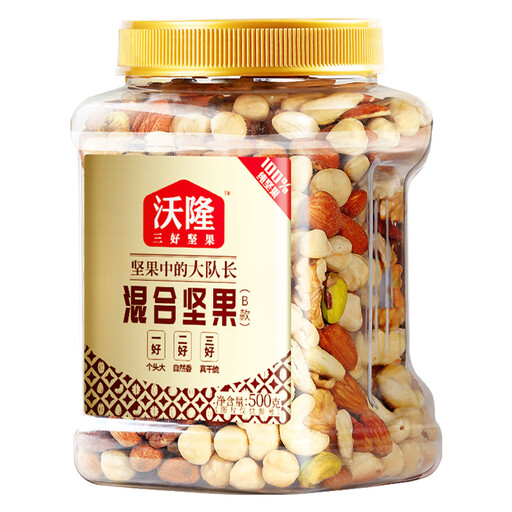
Wolong Assorted Pure Nuts, tin, 500 g

Wolong Assorted Pure Nuts, tin, 500 g

An uncoated nut mix for when you want plain nuts rather than coated peanuts.

Pack size: 500 g; the description lists six types of nuts and 0 g of salt per 100 g.

The description suggests using it as a topping for yoghurt, salads and baked goods.

View at Joybuy
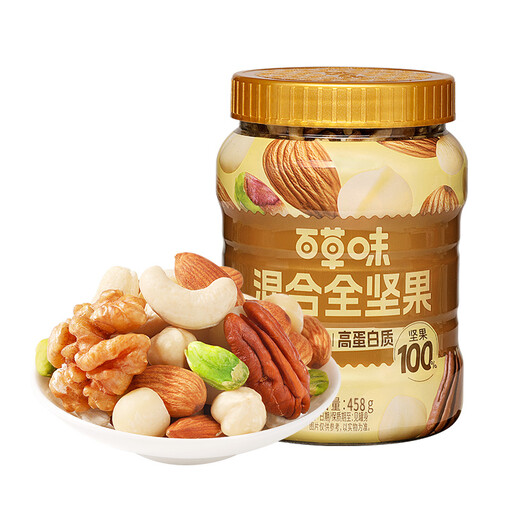
BE&CHEERY Mixed Nuts, 458 g (7+0)

BE&CHEERY Mixed Nuts, 458 g (7+0)

An uncoated nut mix for when you want a ready-to-eat snack rather than coated peanuts.

Pack size: 458 g; the ingredients list includes seven types of nuts.

The product information lists tree nuts.

View at Joybuy
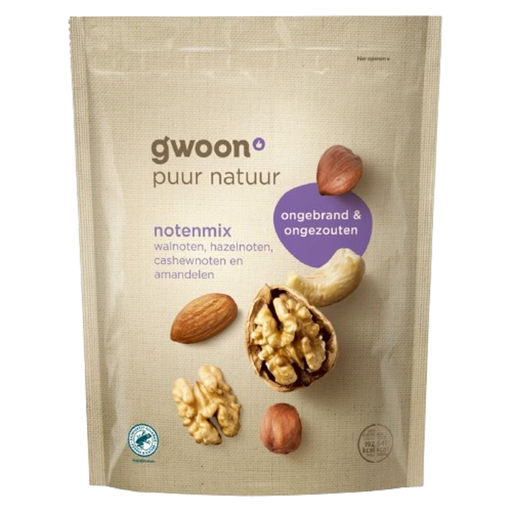
g'woon Nut Mix Raw & Unsalted, 200 g

g'woon Nut Mix Raw & Unsalted, 200 g

An unsalted, uncoated mix for when you want plain nuts as a snack or to add to a dish.

Pack size: 200 g; the ingredients list includes hazelnuts, walnuts, almonds and cashews.

The product information lists 0.01 g of salt per 100 g and possible traces of peanuts.

View at Joybuy

Frequently asked questions

Does every organic nut product in the Netherlands have to carry the green EU organic logo?

Not in every case. According to the European Commission, the logo is compulsory for prepacked foods produced in the EU and sold as organic. It’s optional for imported products that meet European organic rules. If the logo is used, the control code and agricultural origin must also be shown.

Does organic mean that coated peanuts can’t contain E numbers?

No. Skal Biocontrole states that organic products may contain certain permitted additives, including E numbers. Check the ingredients list for the whole product.

How should you store an opened pack of nuts?

Keep nuts sealed, dry and cool, and follow the instructions on the specific pack. For the AH Biologisch Cashewnoten ongebrand product reviewed, Albert Heijn recommends storing it in a cool, dark, dry place and sealing the pack properly after use.

What allergen information should you check?

According to the Netherlands Food and Consumer Product Safety Authority, allergen information must appear on the label of prepacked products. Check the current packaging for allergens that are relevant to the person who will be eating the product.

Are whole nuts automatically suitable for young children?

No. Albert Heijn’s product page for the AH Biologisch Cashewnoten ongebrand product reviewed warns that young children can choke on nuts. Follow the warning on the packaging and don’t assume whole nuts are suitable for young children.
