
Shoppers looking for organic snacks
You’re looking for a savoury festival snack and want its organic status to be verifiable, rather than merely suggested by the packaging or an ingredient claim.


When choosing organic coated peanuts for a festival, the certification on the exact product’s packaging is what matters: check for the EU organic logo and its control code, rather than relying on terms such as ‘natural’ or ‘no artificial colours’. If you’re looking for nuts for breakfast, plain organic unsalted nuts are a different choice from coated peanuts; also check the allergens and storage advice on each pack.
You’re looking for a savoury festival snack and want its organic status to be verifiable, rather than merely suggested by the packaging or an ingredient claim.
You’re looking for nuts for breakfast at the festival campsite and want to distinguish coated peanuts from plain organic unsalted nuts. The Netherlands Nutrition Centre also distinguishes between coated peanuts and unsalted nuts.
You’re buying snacks to share and want to check the ingredients, allergens and storage instructions for the exact product. For example, PLUS lists peanuts, wheat and milk ingredients for its Ham Kaas (ham and cheese) variety.
First decide whether you’re looking for a savoury snack or nuts for breakfast. Then check the certification, ingredients and practical packaging.
| What to consider | What to look for | Who is this most important to? |
|---|---|---|
| Organic certification | Check for the EU organic logo and its control code on the exact product. | If I want to take an organic snack with me, I want to be able to check the status of that specific pack. Around 31% of consumers prioritise verifiable organic certification. |
| Snack or breakfast | Check whether they’re coated peanuts or plain nuts; these are different types of product. | For breakfast at the campsite, I’m looking for nuts without a coating and treat them as a different type of product from coated peanuts. Around 25% of consumers put this breakfast choice first. |
| Ingredients and allergens | Read the ingredients and allergen information for the exact flavour and pack you’ve chosen. | If I’m sharing snacks, I want to check the ingredients and allergens for that exact product. Around 19% of consumers prioritise checking the label. |
| Quantity and storage | Choose an amount that suits how you’ll use it, and check the storage instructions after opening. | For a festival stay, I want an amount I can seal properly and keep dry once opened. Around 13% of consumers prioritise taking snacks along and storing them. |
| Comparing costs | Compare net weight and unit price only between products that meet the same need and organic requirements. | I only compare costs between products that suit my choice. For around 12% of consumers, cost is then the top priority. |
A claim about colourings doesn’t mean a product is organic. Duyvis says its Provencale variety contains no artificial colourings; the European Commission sets out separate requirements for the EU organic logo.
Check the certification and control code on the packaging of the exact product.
Coated peanuts have a crunchy coating. The Netherlands Nutrition Centre distinguishes coated peanuts from unsalted nuts in its Wheel of Five guide; an organic label doesn’t change the type of product.
First decide whether you want a savoury snack or plain nuts, and don’t present one type of product as an identical substitute for the other.
PLUS lists peanuts, wheat and milk ingredients, among other things, for its Borrelnoten Ham Kaas (coated peanuts, ham and cheese flavour). The flavour name alone doesn’t give you the full ingredient information.
Keep the packaging to hand and check the ingredients and allergens for each product.
The Netherlands Nutrition Centre recommends storing nuts in a dry place in a well-sealed container. For its Ham Kaas variety, PLUS advises storing it in a cool, dry, dark place.
Choose an amount you can store as instructed once the pack is open.
An opened bag that you can’t seal properly may be awkward to take with you and could end up going unused.
Duyvis describes its coated peanuts as peanuts with a crunchy coating, available in a range of flavours.
Albert Heijn sells coated peanuts as well as separate organic nut products.
Jumbo’s category page lists several Duyvis coated peanut varieties.
PLUS product information provides details about specific varieties of coated peanuts.
Lidl’s product page describes Duyvis coated peanuts in Provencale and Cocktail varieties.
Aldi’s product page lists coated peanuts under the Trader Joe’s product brand.
These Joybuy products are coated peanuts for savoury snacking. Check the EU organic logo and control code on each pack before choosing a product as organic; the flavour or product name is no substitute for checking.
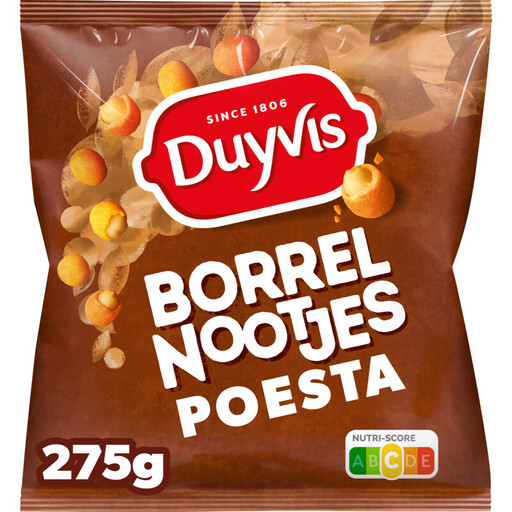 Image unavailable
A seasoned variety for anyone looking for savoury coated peanuts. Joybuy’s product information lists peanuts, milk, gluten (wheat) and celery; the product may contain traces of soya, mustard and other nuts.
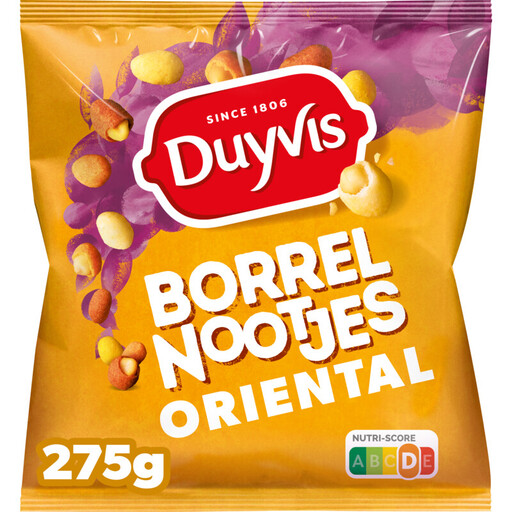 Image unavailable
For anyone looking for coated peanuts with a mild curry flavour. Joybuy’s product information lists 49% peanuts; the product contains peanuts, gluten (wheat and barley) and soya, and may contain milk, nuts and mustard.
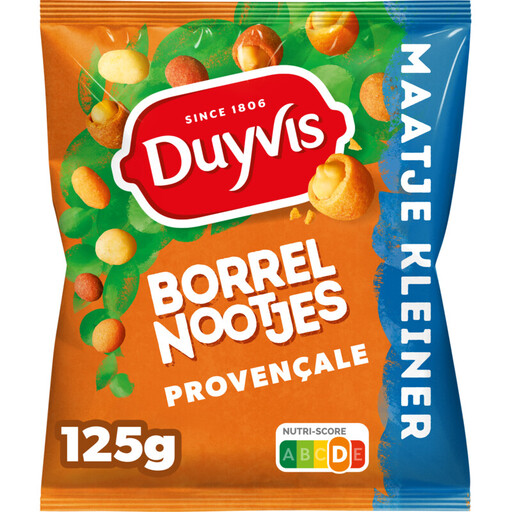 Image unavailable
Joybuy’s product information lists 50% peanuts and onion and garlic seasoning. The product contains peanuts and wheat, and may contain milk, nuts, soya and mustard. Once opened, it’s best to seal the pack well and store it in a dry place.
 Image unavailable
For anyone looking for a crunchy coating with onion and garlic flavour. Joybuy’s product information lists 50% peanuts; the product contains peanuts and wheat, and may contain milk, nuts, soya and mustard.
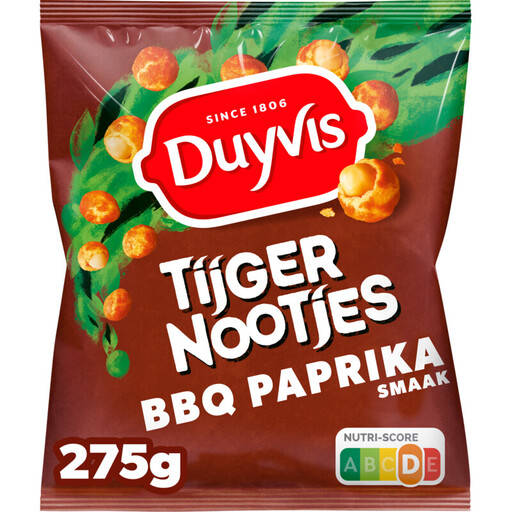 Image unavailable
Joybuy’s product information describes a double coating with BBQ and paprika flavour and lists 40% peanuts. The product contains peanuts and gluten (wheat), and may contain milk, nuts, soya and mustard.
The EU organic logo is intended for certified organic products. According to the European Commission, the logo is accompanied by a control code and an indication of where the agricultural ingredients come from. Among other requirements, at least 95% of the ingredients must be organic for the logo to be used; additional rules apply to the remaining ingredients.
No, these labels don’t mean the same thing. Duyvis says its Provencale variety contains no artificial colourings; this is not proof of organic certification. To check that, look for the certification and control code on the exact product.
Store nuts in a dry place in a well-sealed container and follow the instructions on the packaging. The Netherlands Nutrition Centre recommends storing nuts at 10 to 15 °C; this isn’t a legal temperature limit for all festival products.
Check the ingredients list and allergen information on the exact pack. According to Your Europe, allergens present must stand out in the ingredients list, for example by using a different typeface. The product page for AH Biologisch Cashewnoten ongebrand (AH Organic Unroasted Cashews) lists cashews and says the product may contain peanuts and other nuts.