What should you look for when choosing?
First, check whether cashews are compatible with the allergy arrangements and the school’s current policy. Then check the organic certification, the salt information and whether you can store the quantity properly at home.
| What to consider |
What should you check? |
Who is this important for? |
| Allergies and school policy |
Personal allergy arrangements, the school’s current policy and the allergen information on the packaging. |
If I’m packing lunch for a student, I first want to know whether cashews are allowed and compatible with the allergy arrangements. Around 25% of consumers put school safety first. |
| Organic label |
The EU organic logo, control code and indication of agricultural origin on the specific pack. |
People who deliberately buy organic want to be able to check the product information on the packaging. Around 25% of consumers give organic assurance the highest priority. |
| Unsalted option |
The unsalted label and the ingredients or salt information for the chosen variety. |
If you regularly eat cashews with lunch, the unsalted option may be the deciding factor. Around 20% of consumers start with this everyday choice. |
| Quantity and storage |
The weight in grams, the storage instructions on the packaging and a dry place where the pack can be sealed tightly. |
If I’m buying enough for several school days, I want to be able to divide it up and store it conveniently. Around 15% of consumers look at this first. |
| Quantity to suit your needs |
Compare the weight in grams with how much you expect to use and the storage advice. |
Anyone looking for a pack that suits their needs won’t want to buy more than they can store practically. Around 15% of consumers make this their first consideration. |
The percentages give a general indication of the different first priorities when choosing cashews for a school lunch. They relate to one main priority per consumer; an allergy requirement or school rule is always a separate restriction.
Brands and product listings for reference
The following listings give examples of product varieties and their stated characteristics. A listing alone does not mean that a product is available everywhere or that all products from the same brand have the same characteristics.
Albert Heijn
Albert Heijn lists AH Biologisch Ongezouten cashews and a separate organic unroasted variety.
- The product names distinguish between unsalted and unroasted.
- Check the current packaging for information about the variety you choose.
Jumbo
Jumbo lists Biologisch Ongebrande Cashewnoten in a 175 g pack.
- The product information for this variety lists NL-BIO-01 and EU/non-EU Agriculture.
- This information applies to the stated variety and is not an independent taste assessment.
PLUS
PLUS lists BIO+ cashews in separate salted and unsalted 200 g varieties.
- The product listings distinguish between the salted and unsalted varieties.
- Check the packaging to assess the characteristics of the specific variety.
Lidl
Lidl lists organic cashews and describes Way To Go cashews as a separate supply-chain initiative.
- The organic product listing gives you a starting point for checking the packaging.
- According to Lidl, Way To Go cashews are processed in Tanzania; this supply-chain description alone does not confirm organic certification for that range.
ALDI
ALDI lists Trader Joe’s roasted, unsalted cashews in a 250 g pack.
- The stated product description specifies both the preparation method and that the cashews are unsalted.
- These characteristics do not confirm organic certification.
Duyvis
Duyvis describes Cashews Original as oven-roasted without added oil.
- The product description makes the preparation method clear.
- The description does not confirm that the cashews are organic or unsalted.
Cashew products at Joybuy
These Joybuy products are cashew options to take with you or enjoy as a snack. The product information provided does not specify organic or unsalted characteristics for every variety; check these details on each pack if they matter for your school lunch.
 No image available
Jiazhouyuanye Original Flavour Large Cashew Nuts 160 g
The product information suggests enjoying them as a snack or with yoghurt or muesli.
View at Joybuy
 No image available
g’woon Cashew Nuts Roasted & Unsalted 200 g
The title specifies roasted, unsalted cashews.
The product information states that the pack contains 200 g.
View at Joybuy
 No image available
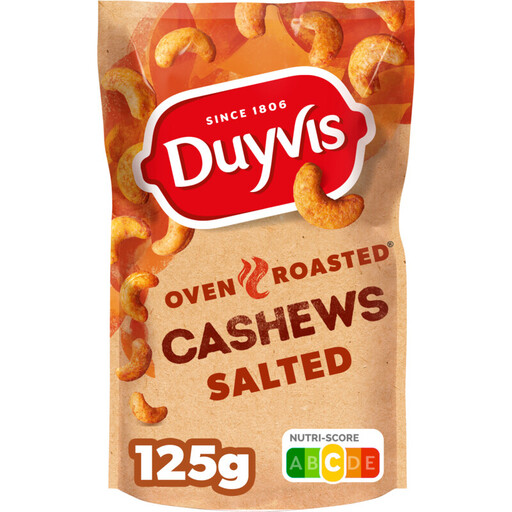
Duyvis Dry Roasted Cashews 125 g
This variety may suit anyone looking for oven-roasted cashews; the product information states that each pack contains 4–5 servings.
The product information lists sea salt, so this is not an unsalted variety.
View at Joybuy
 No image available
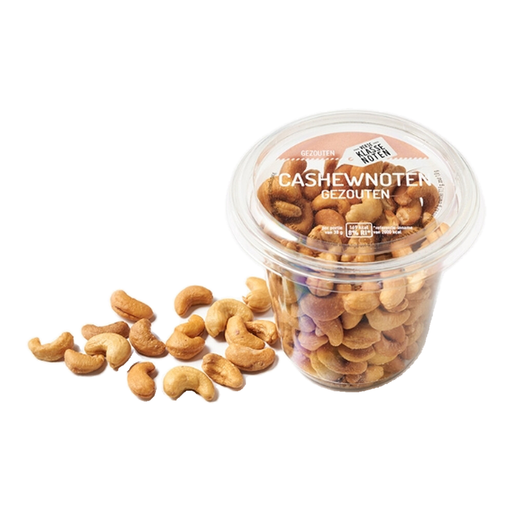
Verse Klassenoten Salted Cashew Nuts 150 g
The title specifies salted cashews; the product information describes roasted cashews in a 150 g pack.
The product information recommends storing them in a cool, dry place and closing the pack after opening.
View at Joybuy
 No image available
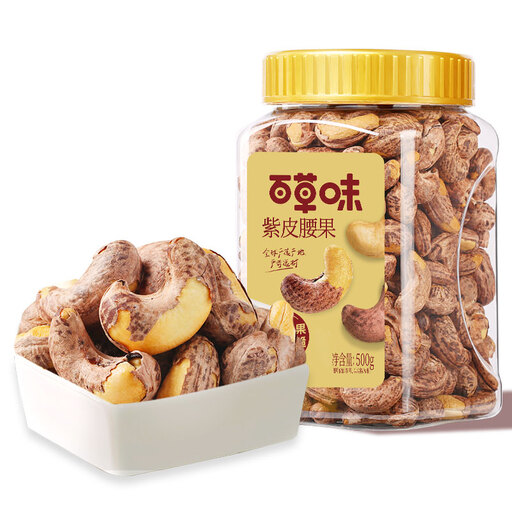
Be&Cheery cashews with purple skin, 180 grade, 500 g
The product information suggests enjoying them as a snack or using them in baking.
The cashews are described as lightly salted. The storage information recommends keeping them in a cool, dry place, away from direct sunlight.
View at Joybuy
Frequently asked questions
How can you identify organic cashews on the packaging?
Look for the EU organic logo, the code number of the control body and an indication of EU agriculture, non-EU agriculture or EU/non-EU agriculture. According to the European Commission, the logo may only be used on organically certified products; it is not a taste assessment.
Are organic cashews suitable if you’re allergic to cashews?
Organic production does not make cashews suitable if you have a diagnosed cashew allergy. Cashews can cause allergic reactions, so follow your personal medical advice.
Does unroasted mean organic?
No. Organic refers to certification and production requirements, while unroasted describes the preparation method. Check the organic label, preparation method and salt information separately.
How should you store an opened pack of cashews?
Store the nuts in a tightly sealed container in a dry place, and follow the instructions on the packaging. For unsalted cashews, the Netherlands Nutrition Centre gives storage guidance of six months in a kitchen cupboard and one year in the freezer after opening; also check whether the nuts have gone rancid, become tough or developed mould.
How many cashews should every secondary school student have with lunch?
The general guidance cited does not specify a particular lunch portion for every secondary school student. The Netherlands Nutrition Centre recommends a handful of unsalted nuts each day and variety between types; a 175 g or 200 g pack is therefore not a recommended portion for one lunch.


