What should you look for when choosing?
First compare the nutritional values per 100 g and the organic certification. Then check the ingredients, preparation method and packaging that best suits how you’ll use them.
| What to consider |
What should you check? |
Who might consider this more important? |
| Fat, energy and portion size |
Compare fat and energy per 100 g, then decide how much you want to eat. For solid foods, the European Commission sets a maximum of 3 g of fat per 100 g for the claim ‘low fat’. |
If I want a lighter snack, I want to consider both the values per 100 g and my portion size; around 36% of consumers mainly prioritise portion size and energy. |
| Organic certification |
Check the organic certification, control code and agricultural origin on the packaging. Being organic doesn’t in itself say anything about fat content. |
If organic origin is my main buying priority, I want to be able to check it on the packaging; around 29% of consumers prioritise organic assurance. |
| Oil, salt and preparation |
Read the ingredients and salt content alongside terms such as unroasted, unsalted or roasted. These terms don’t all mean the same thing. |
If I mainly want to know whether oil or salt has been added, I check both the ingredients and preparation method; around 21% of consumers give these features the most weight. |
| Packaging and storage |
Check the net weight and storage instructions on the exact pack. The Netherlands Nutrition Centre advises storing nuts in a sealed, dry place, preferably somewhere cool. |
If I’m looking for an amount that suits how I use them and the space I have for storage, I check the pack size and storage instructions; around 14% of consumers prioritise packaging and storage. |
Compare cashews at Joybuy
These products are worth comparing for their type of cashews, preparation method and nutritional values. Check the organic certification on the exact pack. As explained by the European Commission, none of these three products meets the maximum threshold of 3 g of fat per 100 g for the ‘low fat’ claim for solid foods.
 No image available
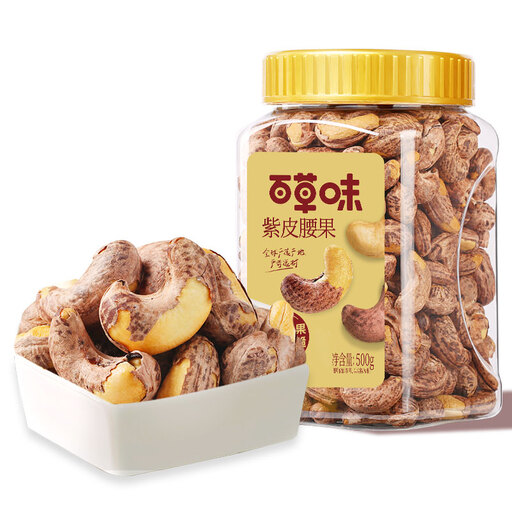
Be&Cheery cashews with purple skin, 180 grade, 500 g
The product description mentions snacking and baking; the nutritional values per 100 g are useful for anyone who checks product labels.
Fat: 60.1 g per 100 g. Energy: 679 kcal per 100 g.
At 60.1 g of fat per 100 g, this variety is above the maximum threshold of 3 g per 100 g for the ‘low fat’ claim on solid foods, according to the European Commission.
View at Joybuy
 No image available
Jiazhouyuanye Original Flavour Large Cashew Nuts, 160 g
You can compare this variety’s ingredients and nutritional values if you’re looking for cashews to snack on or add to yoghurt, muesli or baking.
Ingredients: 100% cashew kernels. Fat: 47.7 g per 100 g. Energy: 604 kcal per 100 g. Salt: 0.028 g per 100 g.
At 47.7 g of fat per 100 g, this variety is above the maximum threshold of 3 g per 100 g for the ‘low fat’ claim on solid foods, according to the European Commission.
View at Joybuy
 No image available
g'woon cashews, roasted and unsalted, 200 g
The title describes a roasted, unsalted variety; the product description mentions snacking, cooking and baking.
Fat: 46.67 g per 100 g. Energy: 596 kcal per 100 g. Salt: 0.067 g per 100 g.
At 46.67 g of fat per 100 g, this variety is above the maximum threshold of 3 g per 100 g for the ‘low fat’ claim on solid foods, according to the European Commission.
View at Joybuy
Frequently asked questions
When can cashews be described as ‘low fat’?
For solid foods, the European Commission sets a maximum of 3 g of fat per 100 g for the ‘low fat’ claim. A product with more fat per 100 g doesn’t meet this threshold; being organic or unroasted doesn’t change that.
How can I identify organically certified cashews?
Check the EU organic logo, the control body’s code and the agricultural origin on the packaging. The logo is compulsory for prepacked organic food produced in the EU; different rules apply to imported products. A foreign control code isn’t, on its own, a reason to reject a product.
Is 25 g the required portion of cashews?
No. The 25 g is the portion size Albert Heijn gives for the AH Biologisch pack reviewed. You can use this figure to work out the nutritional information for that portion, but it isn’t a required amount for everyone.
Which cashews were covered by the ALDI safety warning?
On 20 May 2026, the Netherlands Food and Consumer Product Safety Authority warned about 170 g packs of Trader Joe’s unsalted cashews with barcode 2003020120930 and best-before date 23-09-2026, due to possible metal fragments. Do not eat this batch. The best-before date has now passed; that doesn’t cancel the warning for any pack you may still have in storage.
How should I store opened cashews?
Keep them sealed and dry. The Netherlands Nutrition Centre recommends storing them somewhere cool, for example at 10–15 °C. Also follow the storage instructions and shelf-life information on the packaging.


