What should you look for when buying?
Compare each quality separately: organic labelling on its own tells you nothing about added salt, roasting or how much is right for your journey.
| What to consider |
What should you check? |
Who is this important to? |
| Organic labelling |
Check the organic logo, control code and country-of-origin statement. |
If I’m mainly looking for a clearly identifiable organic product, I check these details on the packaging. Around 28% of consumers put verifiable organic credentials at the top of their list. |
| Unsalted for breakfast |
Read the ingredients and check that the option is unsalted; assess organic and unroasted separately. |
If I want to eat the same cashews for breakfast and as a snack, I focus on the unsalted option. Around 22% of consumers prioritise unsalted cashews for breakfast. |
| Taking them with you and storing them |
Check the net weight, packaging and storage instructions. Store nuts in a dry place in a tightly sealed container. |
If I want to take cashews with me and store them, I choose an amount that suits my journey and check whether I can reseal the packaging. Around 22% of consumers prioritise taking and storing their cashews. |
| Quantity and waste |
Compare the net weight and choose an amount that matches how much you expect to use. |
If I want to avoid having unused supplies left over, I choose a pack size to suit how much I’ll use during and after my journey. Around 17% of consumers put quantity and waste at the top of their list. |
| Sharing safely |
Check the latest allergen information. If children are eating them, make sure they eat slowly and are supervised. |
If I want to share cashews with my fellow travellers, I first check for any relevant allergies and whether whole nuts are suitable for children. Around 11% of consumers prioritise sharing safely. |
Cashews on Joybuy
These options are cashews for breakfast or a snack on the go. They differ in qualities such as added salt, so check each pack for the details that matter to you, including organic labelling.
 No image available
g'woon roasted unsalted cashew nuts 200 g
The roasted, unsalted option is a good choice if you’re looking for a snack with no added salt.
The product description advises resealing the pack after opening and storing it in a cool, dry place.
Joybuy
 No image available
Jiazhouyuanye Original Flavour Large cashew nuts 160 g
The product description suggests adding them to yoghurt or muesli, or eating them on their own.
The ingredients list provided in the description contains only cashew kernels. The pack contains 160 g.
Joybuy
 No image available
Duyvis Dry Roasted Cashews 125 g
The product description recommends these cashews as a snack on the go.
The description lists salt and sea salt, so this option isn’t suitable if you prefer unsalted cashews. According to the description, the pack contains 4–5 servings.
Joybuy
 No image available
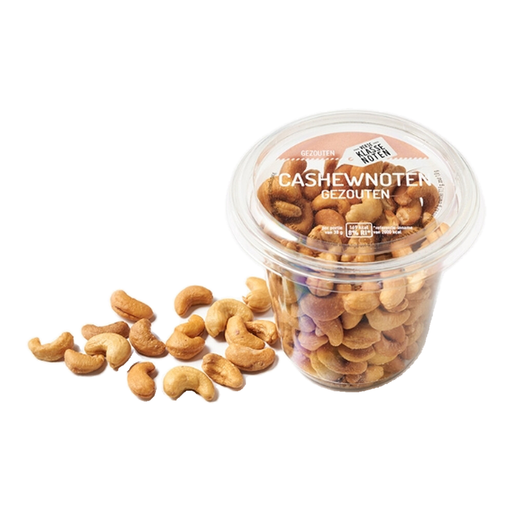
Verse Klassenoten salted cashew nuts 150 g
The product description recommends them as an everyday snack.
The ingredients list includes salt and sunflower oil, so this option isn’t suitable if you prefer unsalted cashews. The pack contains 150 g.
Joybuy
 No image available
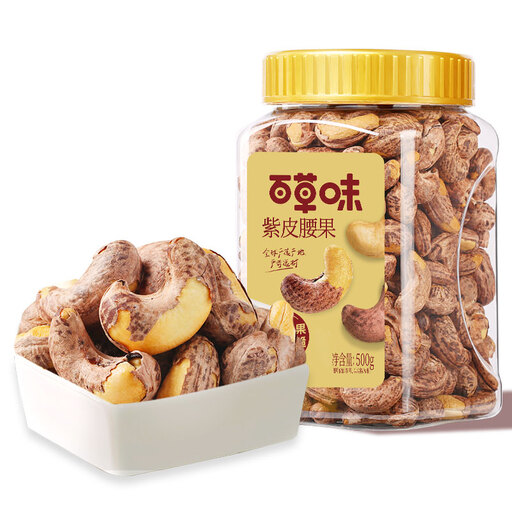
Be&Cheery cashews with purple skin 180 grade 500 g
The product description says these cashews are ready to eat.
The ingredients list includes salt. The pack contains 500 g, so bear this in mind if you’re taking them on a trip.
Joybuy
Frequently asked questions
What should I check on organic labels?
Check the organic logo, control code and country-of-origin statement. The European Commission explains EU organic labelling. Also check the packaging to see whether the product meets your other preferences, such as being unsalted.
Do unroasted, unsalted and organic mean the same thing?
No, these are separate product qualities. Jumbo lists an organic, unroasted option; Albert Heijn and PLUS list unsalted options. Check each quality separately on the latest packaging.
How can I take cashews with me without ignoring storage advice?
Store them in a cool, dry place in a tightly sealed container, and follow the instructions on the packaging. The Netherlands Nutrition Centre recommends 10 to 15 °C as the best temperature for storing nuts; this doesn’t guarantee they’ll keep well in a hot car.
How should I compare pack sizes for a road trip?
Compare the net weight and choose an amount that matches how much you expect to use. The 175 g and 200 g packs mentioned contain different quantities; after opening, also follow the storage instructions on the packaging.
What should I consider when sharing cashews with fellow travellers?
Check the allergen information before sharing; according to the NVWA, it must be available before purchase. For children, the Netherlands Nutrition Centre warns against whole nuts because of the risk of choking: make sure they eat slowly and are supervised.


