What should you look for when buying?
First, decide what role cashew nuts will play in your breakfast. Then check the organic label, ingredients and preparation method, and choose an amount you can store properly.
| What to consider |
What should you check? |
Who might care more? |
| Your whole breakfast |
Check the protein per 100 g and per portion you actually eat. Consider other sources of protein too, as well as the rest of your meal if you’ve exercised intensely or for a long time and have another training session soon afterwards. The Netherlands Nutrition Centre and the Dutch Association of Sports Dietitians discuss recovery in this context. |
I want my breakfast as a whole to suit my exercise, rather than letting one nut product determine the meal. Around 36% of consumers prioritise what goes into their recovery breakfast. |
| Organic certification |
Check the organic label and, if the EU organic logo is used, the control code and indication of the agricultural origin. The European Commission and Skal Biocontrole explain the requirements for organic labelling. |
If I buy organic, I want to be able to check the status on the pack rather than relying on words such as ‘natural’. Around 29% of consumers prioritise verifiable organic certification. |
| Salt and preparation method |
Read the ingredients list and nutrition table, and check separately whether the nuts are salted, unroasted or roasted. The Netherlands Nutrition Centre recommends unsalted nuts that are unroasted or lightly roasted. |
If I mainly want to choose between salted and unsalted nuts or different preparation methods, I check these features separately from the organic label. Around 21% of consumers make salt and preparation method their top priority. |
| Quantity and storage |
Compare the net weight and choose an amount that suits how much you use. Store opened nuts in a tightly sealed container in a dry place, preferably somewhere cool, as recommended by the Netherlands Nutrition Centre. |
I want a pack I can store properly after opening and use in good time. Around 14% of consumers prioritise quantity and ease of storage. |
Cashew nuts at Joybuy
These cashew nuts are options you could consider as part of a breakfast. Check the organic label on the pack before treating a variant as a certified organic choice.
 No image available
Jiazhouyuanye Original Flavour Large Cashew Nuts 160g
Can be added to breakfast as a source of cashews; the product description mentions yoghurt and muesli.
The product information lists 100% cashew kernels and the protein content per 100 g.
Joybuy
 No image available
g'woon Cashew Nuts Roasted & Unsalted 200g
This roasted, unsalted option can be added to breakfast as a source of cashews.
The product information lists cashew nuts as an ingredient and gives the protein content per 100 g.
Joybuy
 No image available
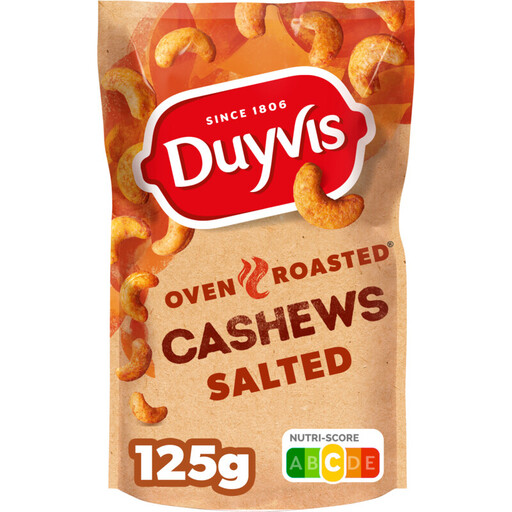
Duyvis Dry Roasted Cashews 125 g
Can be added to breakfast as a source of cashews; bear the stated salt content in mind.
The product information lists 0,92 g of salt per 100 g.
Joybuy
 No image available
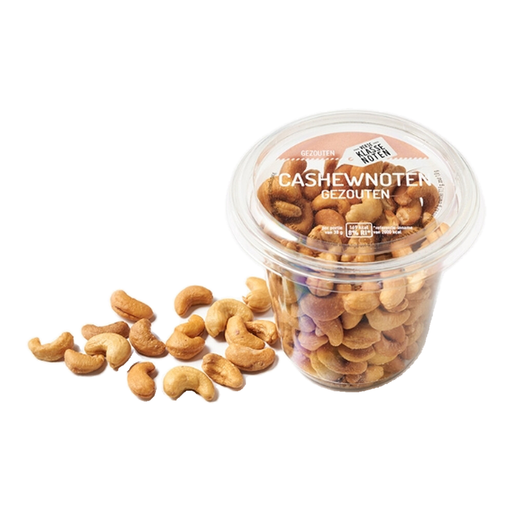
Verse Klassenoten Salted Cashew Nuts 150 g
This salted option can be added to breakfast as a source of cashews if you’re deliberately choosing salted nuts.
The product information lists 1,0 g of salt per 100 g.
Joybuy
 No image available
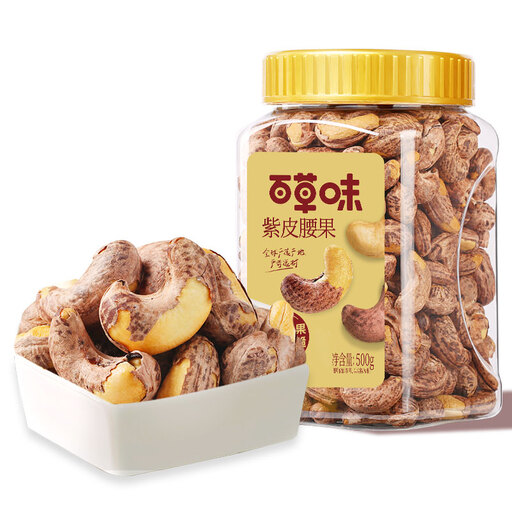
Be&Cheery Cashews with Purple Skin 180 grade 500g
Can be added to breakfast as a source of cashews; bear the stated salt content and pack size in mind.
The product information lists 1,2 g of salt per 100 g.
Joybuy
Frequently asked questions
How can you put together a post-workout breakfast with cashew nuts?
Use cashew nuts as one part of your breakfast and assess the sources of protein across the whole meal. The Netherlands Nutrition Centre lists foods such as quark, yoghurt, milk, tofu, nuts and beans as sources of protein. After intense or prolonged exercise, if you’ll be training again that day or the next, the role of carbohydrates and when you eat may also be relevant.
Does every organic product in the Netherlands have to carry the green EU leaf logo?
No, its use isn’t compulsory in every situation. According to the European Commission, the EU organic logo is compulsory for prepacked foods produced in the EU and sold there as organic. Its use is optional for imported organic products and non-prepacked organic products. If the logo is used, it must be accompanied by the control code and an indication of the agricultural origin.
Are organic or roasted cashew nuts suitable for someone with a cashew allergy?
Organic certification or roasting does not make cashew nuts allergen-free. Cashew is an allergen that must be declared on the label, and heating does not remove the nut allergen. Don’t eat cashew nuts if you have a diagnosed cashew allergy, and follow your personal medical advice.
How should you store an opened pack of unsalted cashew nuts?
Store the nuts in a tightly sealed container in a dry place, preferably somewhere cool, and follow the advice on your pack too. For opened unsalted cashew nuts, the Netherlands Nutrition Centre recommends storing them for six months in a kitchen cupboard or one year in the freezer; their quality may deteriorate after that. Nuts that taste rancid, feel chewy or have mould on them are signs of spoilage.
What should you do if you still have the 170 g pack of Trader Joe’s cashew nuts mentioned in the NVWA warning?
Don’t eat those specific cashew nuts. The NVWA warning concerns Trader Joe’s unsalted cashew nuts in the 170 g pack, with barcode 2003020120930 and best-before date 23-09-2026, because they may contain metal fragments. The date has passed, but the warning applies to that pack and does not relate to other pack sizes.


