
If you’re looking for a simple organic base
You want to check the organic label and prefer to choose porridge oats or muesli whose flavour you can tailor with your own toppings.


Organic porridge oats are a good choice for a weekday breakfast if you want to add your own fruit or other toppings; muesli is more convenient if you want to put a bowl together straight away. Choose a crunchy variety if texture matters most to you, but be sure to compare the ingredients, sugars and allergens too. Check the organic label separately from the nutritional information: the EU organic logo does not tell you how much sugar or fibre a product contains.
You want to check the organic label and prefer to choose porridge oats or muesli whose flavour you can tailor with your own toppings.
You want to eat your breakfast cereal straight away with yoghurt, milk, quark or a plant-based alternative, and compare fibre, sugars and ingredients.
You prefer crunchy or generously filled muesli with ingredients such as fruit, nuts or seeds. The ingredients and allergen lists can help you decide which variety is right for you.
First, choose between a plain oat base, muesli that’s ready to eat, and a crunchy variety. Then check the organic label on each pack and compare like-for-like breakfast cereals using their nutritional information per 100 g.
| What to consider | What to check when buying | Who it matters to |
|---|---|---|
| Organic label | Look for the EU organic logo and the name of the control body on the packaging. According to Skal Biocontrole, the logo is compulsory for pre-packed food produced in the EU and sold as organic. | If I’m choosing organic breakfast cereal, I want to be able to check that on the packaging. For around 42% of consumers, being able to verify this is the top priority. |
| Ingredients and nutritional value | According to the Voedingscentrum, compare similar products per 100 g for things such as sugars and fibre; also check the ingredients list for sugar or syrup. | For my everyday bowl, I want to know the difference between a simple muesli and a sweeter, crunchy variety. This comparison is the main concern for around 33% of consumers. |
| Convenience, texture and allergens | Check how to prepare or serve the product and, if you have a relevant allergy, check the ingredients and allergens for that specific variety. | On a busy morning, I want something that suits the time I have and my preference for a plain or crunchy bowl. For around 25% of consumers, convenience or texture is the deciding factor. |
The EU organic logo relates to organic production, not nutritional value. Albert Heijn lists sugar and glucose syrup among the ingredients in its organic crunchy muesli with four nuts.
As well as checking the organic label, read the ingredients list and compare the nutritional information per 100 g.
The stated serving size may not be the same for two different breakfast cereals. This means nutritional values per serving aren’t necessarily a reliable basis for comparison.
Compare similar products side by side and use the values per 100 g, as recommended by the Voedingscentrum.
The fact that a product contains oats doesn’t confirm that the porridge oats you’ve chosen are explicitly labelled gluten-free.
If you need a gluten-free product, look for a clear gluten-free label on the current packaging and check the allergen information.
Ingredients vary between varieties. For example, Zonnatura lists cashew nuts and several gluten-containing cereals in its Muesli Rijkgevuld.
Check the ingredients and allergens on the exact pack you’re planning to buy, even if you know another variety from the same brand.
Albert Heijn’s organic wholegrain muesli and crunchy nut muesli show why it’s worth comparing individual varieties.
Muesli Rijkgevuld is an organic muesli variety containing cereals, fruit, seeds and nuts.
BioToday offers several organic muesli varieties with different combinations of cereals, nuts, seeds and dried fruit.
Leev Dutch Oatmeal is worth considering if you’re specifically looking for porridge oats labelled organic and explicitly gluten-free.
These products offer an oat base or muesli with fruit, nuts or seeds for a weekday breakfast. Check the organic label on the packaging when choosing; the product names alone don’t confirm that every variety has the same certification or nutritional value.
 No image available
An oat base for anyone who wants to choose their own breakfast toppings.
Check the current packaging for the organic label, preparation instructions and allergen information if these are important to your choice.
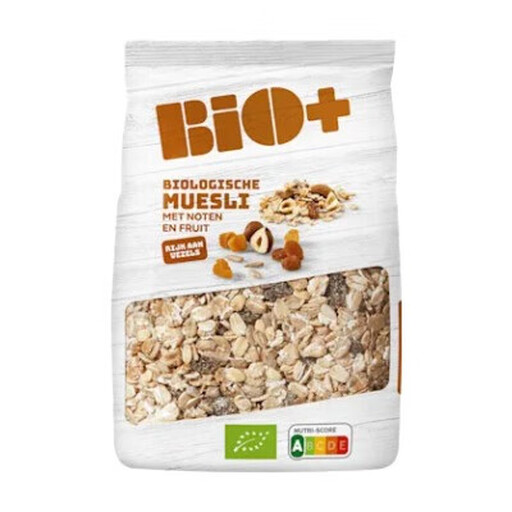 No image available
Muesli with fruit and nuts for anyone who wants those ingredients already in their breakfast bowl.
Check the organic label for the whole product and, if you have a relevant allergy, read the ingredients and allergen information on the packaging.
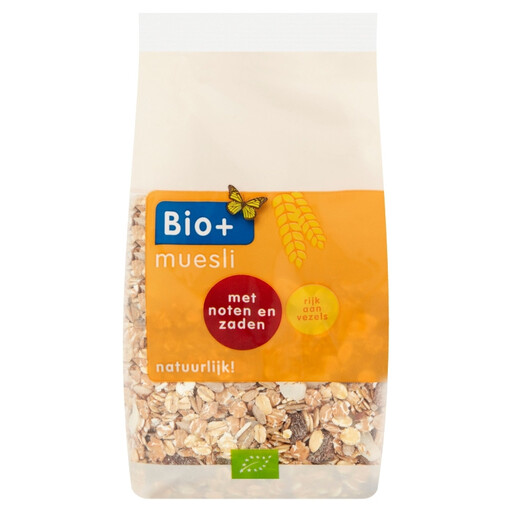 No image available
Muesli for anyone who wants nuts and seeds in their breakfast bowl without adding them separately.
Before choosing this variety, check the packaging for the organic label, the sugars listed in the nutritional information and the full allergen list.
Look for the EU organic logo and the name of the control body on the packaging. According to Skal Biocontrole, the logo is compulsory for pre-packed food produced in the EU and sold as organic; assess the nutritional value separately.
No, the organic label doesn’t tell you how much sugar a muesli contains. Albert Heijn lists 8,4 g of added sugars per 100 g in its organic crunchy muesli with four nuts. So compare the nutritional information per 100 g and read the ingredients list for the variety you choose.
Not just because they’re called porridge oats or labelled organic. If you’re looking for a gluten-free product, check that the exact pack you’ve chosen is explicitly labelled gluten-free and read the allergen information.
Seal the packaging tightly and follow the storage instructions for the product you’ve chosen. Check the packaging for the best-before date and any instructions for storing the product after opening.