
Vandaag of morgen in huis

Kwaliteit gegarandeerd

Welkomstaanbiedingen ontgrendelen: GRATIS bezorging | Tot 80% korting | Gratis 30 dagen JoyPlus-proefperiode
Download de app
A pouch seems simple enough: fruit in, cap on and ready to go. Yet there are clear differences between products for babies and toddlers. The age recommendation, ingredients list, packaging and texture all determine whether a product is right for your child and the occasion.
When choosing organic baby fruit from 6 months, parents often focus mainly on the flavour or organic certification. These are useful points to consider, but they do not tell you everything. A product can be organic and still be less suitable if you do not check whether it contains cereals, milk or other allergens.
Fruit naturally contains sugars. So a product labelled baby fruit with no added sugar is not automatically sugar-free. Check both the ingredients and the nutrition table. Also look for added fruit juice concentrate, syrup or other sweeteners.
A fruit purée for babies may have a very short ingredients list, such as just pear and raspberry. This makes it easier to understand than a recipe containing several types of fruit, cereals and additional ingredients.
A product suitable from 6 months is not the same as baby food from 12 months. The age on the packaging refers to the suitability of the recipe, ingredients and presentation. So do not give a product simply because your child likes the taste.
Pay particular attention to cereals. Oats, spelt and rice may be included in fruit with cereals for babies, but oats and spelt can contain gluten. If your child has an allergy or you are introducing new foods, always check the current packaging and consult a doctor or health visitor if in doubt.
An organic fruit pouch is convenient when you are out and about, but drinking straight from the pouch does not encourage spoon-feeding or exploring textures in the same way. You can also serve the purée in a clean bowl or on a spoon. This gives you a better view of the quantity and mealtime.
Supervision is still needed when your child is eating independently. Also follow the storage and usage instructions. For several of the products mentioned, an opened pouch should be kept chilled and is generally suitable for up to one day.
First, choose between:
A fruit snack is an addition to a varied diet. It does not replace a full meal or milk feed when these are still part of your child’s daily diet.
Check that the first ingredients are actually fruit and look at the percentages. According to the product information, for example, Organix Bio Pear & Raspberry 6+ Months Squeezies contains 90% organic pear purée and 10% raspberry purée. The Organix Apple, Strawberry & Blueberry variant lists 77% apple purée, 20% strawberry and 3% blueberry.
Allergens can be an important purchasing consideration when choosing fruit with cereals. According to the product information, the oat, apricot and banana variant contains gluten. The Ella’s Kitchen Mango Breakfast contains yoghurt and oats among its listed ingredients, and identifies milk and gluten as allergens. Always read the label on the packaging you receive, as recipes and packaging information may change.
“Organic” says something about how the ingredients were produced, but not automatically about the sugar content, portion size or nutritional balance. Compare:
A product with no added sugar may still taste relatively sweet because of the ripe fruit. Vary the flavours and, where possible, also offer suitable pieces of fresh fruit. This helps your child discover different flavours and textures.
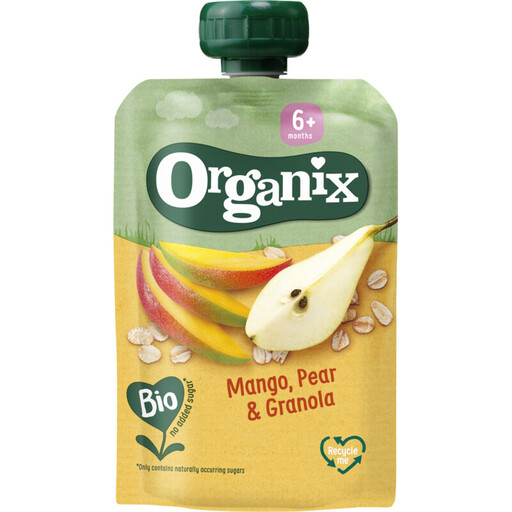
Why it suits this profile: A straightforward first choice for parents looking for a fruit snack from 6 months containing fruit and cereals.
The product information lists 48% mango, 48% pear and 4% oat flakes, with no added sugar. Check the packaging for gluten information.
Organic, 100 grams, suitable from 6 months and made with fruit plus oat flakes.
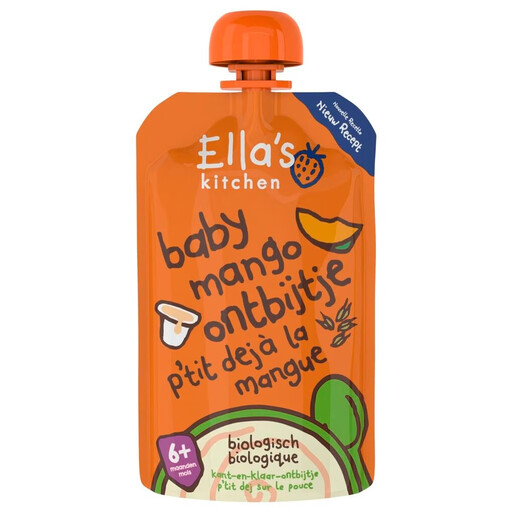
Why it suits this profile: Suitable for parents who want to consider yoghurt and cereals alongside fruit in a single recipe.
The product description states that there is no added sugar, but it does contain milk and oats. It is therefore important to check the allergens beforehand.
Organic mango, yoghurt and cereals; suitable from 6 months; 100 grams per pack.
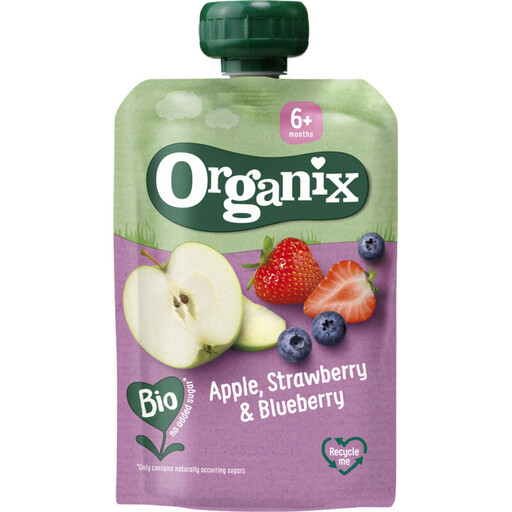
Why it suits this profile: Handy for several mealtimes at home or on the go, with a soft fruit purée and no added sugar according to the product information.
The packaging and age recommendation are clearly stated: suitable from 6 months. Give the pouch under supervision and refrigerate it after opening, following the label.
Organic apple, strawberry and blueberry purée; 100 grams; stated nutritional value of around 50 kcal per 100 grams.
We have compiled a complete, up-to-date list of products that fully meet these strict selection criteria and the applicable European safety regulations.
That depends on the age recommendation for the specific product. Some Organix pouches are suitable from 6 months, while variants with oats, apricot and banana or apple, peach and mango are offered from 12 months. Always check the packaging before giving it to your child.
For the Organix products mentioned, the instructions state that an opened pouch can be kept in the fridge for up to one day. Ella’s Kitchen states that its mango breakfast can be refrigerated for up to 48 hours. The instructions on the packaging you receive take precedence. Throw the product away if the packaging is swollen or damaged, or if it smells unusual.
Organic baby biscuits and fruit bars for toddlers can be practical as a snack, but compare them with fruit purée. A biscuit or bar may contain cereals, gluten, sugar or allergens. According to the product information, De Kleine Keuken Organic Fruitjes with Apricots are suitable from 12 months and contain dried apricot, date, banana and rice flour. The statement “no added sugar” does not mean that the product contains no natural sugars. Read the label and offer snacks that are suitable for your child’s age and always under supervision.
