
Vandaag of morgen in huis

Kwaliteit gegarandeerd

Welkomstaanbiedingen ontgrendelen: GRATIS bezorging | Tot 80% korting | Gratis 30 dagen JoyPlus-proefperiode
Download de app
Buying organic baby food seems straightforward – until you look at the packaging. “Organic”, “no added sugar” and “natural ingredients” all sound appealing, but they don’t tell you everything about whether a product is right for your child. The age recommendation, allergens and how to prepare it matter just as much.
This guide helps parents and carers compare organic baby purées, fruit pouches, organic squeeze pouches and ready-made baby meals with confidence.
A product with no added sugar can still contain naturally occurring sugars from fruit. A fruit purée made with banana, peach or mango will taste sweet all on its own. So always check both the ingredients list and the nutritional information per 100 grams.
With snacks like baby biscuits, sugar may well have been added. For example, De Kleine Keuken organic oat cake contains 14% coarse brown sugar according to the product information. “Organic” does not automatically mean “no added sugar”.
Organic ingredients are an important buying criterion, but they don’t tell you whether a product is suitable for your child’s stage of development. A pouch from 4 months has a different composition and texture than a meal with soft lumps from 8 or 10 months.
Always check the age recommendation on the packaging. Product information can change; the current packaging is what you should rely on.
Milk, gluten, egg, soya and nuts are common in baby food and snacks. Sometimes you’ll also see “may contain traces”. That’s different from an allergen listed as an ingredient, but it’s still important information if your child has an allergy or intolerance.
Also pay attention to lids, lumps and how the food is eaten. A squeeze pouch is convenient, but young children should always be supervised while eating. Never heat a pouch in the microwave if the label says not to.
Use the age recommendation as your first filter:
An age label isn’t a personal feeding instruction. If you’re unsure about introducing new foods, talk to your health visitor or another qualified healthcare professional.
Compare the first ingredients on the list – these are usually present in the largest amount. Also look at:
With baby snacks that have no added sugar, portion control is still important. Baby corn puffs, for example, are light and easy to hold, but they mainly contain grain and oil. Use them as a snack within a varied diet, not as a meal replacement.
Check before you buy whether the product contains milk, oats, gluten, egg, soya or other allergens. Then look at the storage instructions. Many opened squeeze pouches need to be kept in the fridge and used within 24 to 48 hours.
A resealable packet is handy for on the go, but always follow the instructions on the label. A damaged or bloated pouch should never be given to your child.
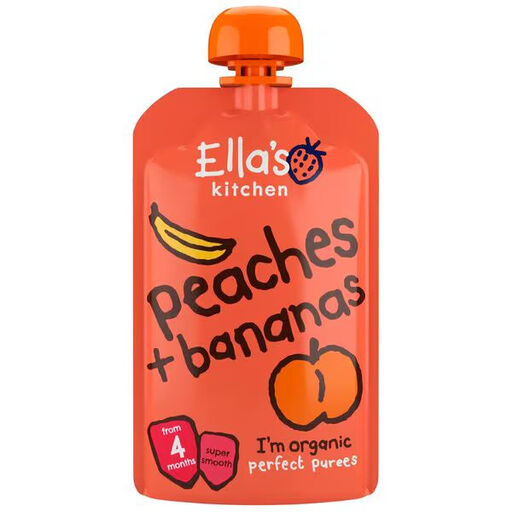
Why it fits this profile: A straightforward fruit purée for anyone starting out with a simple ingredient list. The pouch contains banana, peach and a small amount of lemon juice.
The age recommendation from 4 months is clearly stated. According to the product information, there are no added sugars and no listed allergens.
Smooth fruit purée, 120 grams, can be stored unopened outside the fridge and keeps for up to 48 hours in the fridge once opened.
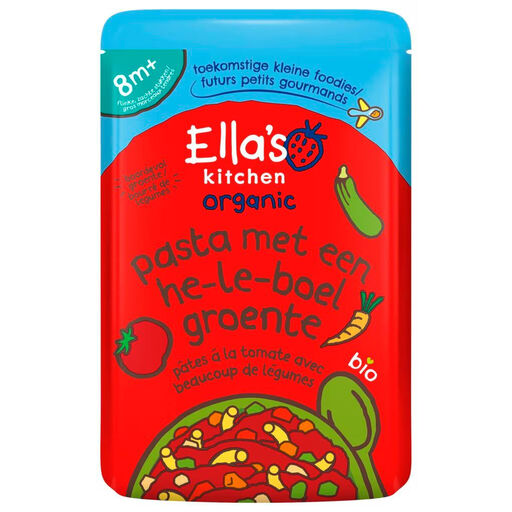
Why it fits this profile: Ideal for parents who care about both organic ingredients and texture, and want a complete meal for home or on the go.
The packaging states soft lumps from 8 months. The ingredients and allergens are clearly listed: wheat and egg are present in the pasta.
190 grams, can be served warm or cold, with 41% tomato and 25% cooked pasta according to the product information.
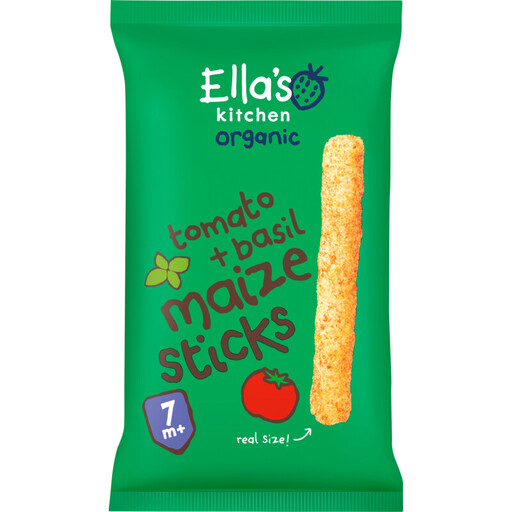
Why it fits this profile: A small snack for moments when your child wants to learn to eat independently, for example on the go or during a short break.
The portion is 16 grams and the packet is resealable. According to the product information, it is suitable from 7 months and contains no added sugar.
100% organic snack according to the product information, with tomato and basil; resealable packet to keep the sticks crunchy.
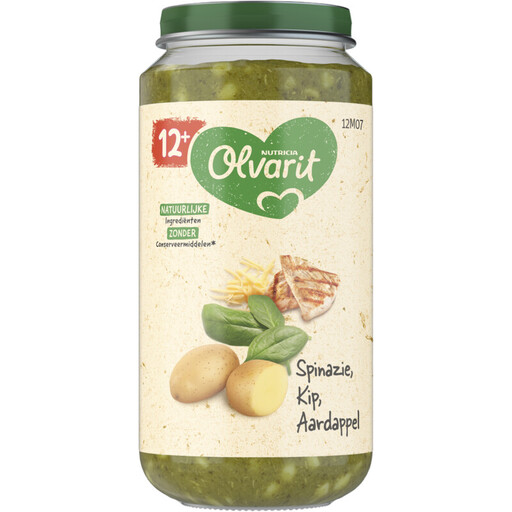
Why it fits this profile: A practical organic baby meal from 12 months for busy days when cooking from scratch isn’t an option.
The main ingredients and allergens are specified: potato, spinach, chicken, gluten and milk. The age recommendation from 12 months is clearly stated.
Contains 35% potato, 15% spinach and 9% chicken according to the product information. Leftovers can be kept in the fridge for up to 48 hours.
We’ve put together a full, up-to-date list of products that meet these strict selection criteria and comply with current European safety regulations.
Not automatically. The age recommendation tells you from what point the manufacturer positions the product, but every baby develops differently. Start with small amounts and pay attention to the texture. If you’re unsure, ask your health visitor for advice.
It varies by product. Many fruit purées and breakfast items need to be kept in the fridge after opening and used within 48 hours. For organic baby meals, the time is sometimes shorter – 24 hours. Always check the label and make a note of the date you opened it.
“No added sugar” means that according to the product information, no extra sugar has been added to the recipe. Fruit does contain naturally occurring sugars. Baby biscuits, organic squeeze pouches and baby corn puffs are therefore mainly intended as a supplement. Alternate them with suitable meals and healthy toddler snacks such as fruit, vegetables or other age-appropriate products.
