
Vandaag of morgen in huis

Kwaliteit gegarandeerd

Welkomstaanbiedingen ontgrendelen: GRATIS bezorging | Tot 80% korting | Gratis 30 dagen JoyPlus-proefperiode
Download de app
Organic baby food may look straightforward on the shelf, but the differences are often in the small details. A pouch can be handy for on-the-go feeding, yet the same size is less suitable as a full meal replacement. Likewise, terms like “no added sugar” don’t mean a product is low in sugar: fruit naturally contains sugars.
For parents and carers in the UK, there are three main pitfalls to watch out for:
Start with the age stated on the label. Products for baby food from 4 months are usually smooth fruit purées. For baby food from 6 months, combinations with yoghurt, grains or an adapted texture can be offered. From 12 months, there are more varieties with oats, quinoa or soft grain components.
The age indication isn’t a general developmental assessment. The introduction of foods can vary from child to child. So follow the advice of your health visitor or another qualified healthcare professional if you’re unsure.
With pouches, also pay attention to how they’re used. Don’t let a baby eat unsupervised and check the warning on the packaging. Lids can be dangerous for young children. If needed, squeeze the contents onto a spoon or into a small bowl.
“No added sugar” means that, according to the product description, no sugar has been added as an ingredient. The natural sugars from, for example, banana, mango or apple are still present. So compare the nutrition table per 100g, not just the marketing text.
Also check:
With Ella’s Kitchen 4+ Months Banana + Coconut Smoothie, the product information lists banana, coconut milk and a little lemon juice. According to the product description, this product is organic and has no added sugars. The variant is suitable from 4 months, but check the packaging again when you receive it.
The Organix varieties with oats or quinoa, on the other hand, contain grain components. The product information for Organix Squeezable Fruits Oat, Apricot & Banana lists oats and gluten-containing grains. That makes the product less suitable if you want to consciously avoid gluten or oats.
A pouch of 100g or 120g is practical for a walk, nursery or train journey. Do check the storage instructions after opening. In the product information provided, various varieties need to be kept refrigerated and used within 24 to 48 hours.
Pay attention to the following points:
Organic also says something about how the ingredients are produced, not automatically about the portion size, nutritional value or suitability for every age. Check those aspects separately.
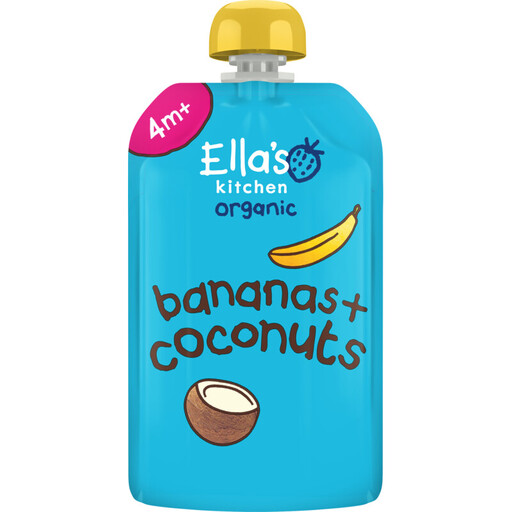
Why this fits the profile: A straightforward fruit purée for anyone looking for a first product from 4 months with a short ingredients list and a 120g portion.
The age indication and ingredients are clearly stated. According to the product description, it contains no added sugars; still compare this with the nutrition table.
Organic fruit purée, suitable from 4 months and usable at home or on the go.
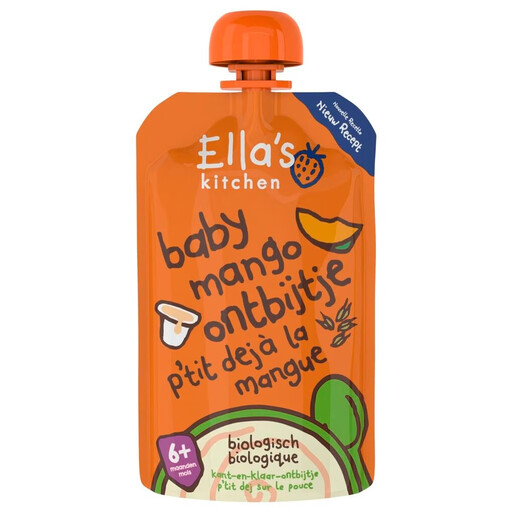
Why this fits the profile: Suits parents who want to include fruit as well as yoghurt and grains in a baby breakfast from 6 months.
The composition lists mango, yoghurt, oats and rice. This means you can check milk and gluten-containing oats in advance rather than relying only on the front of the pack.
100g, organic, no added sugar according to the product information and suitable from 6 months.
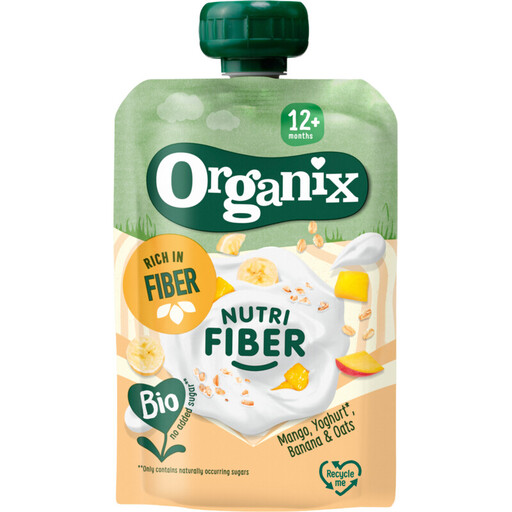
Why this fits the profile: A practical choice for toddlers from 12 months who get a fruit, yoghurt and grain portion on the go.
The product information explicitly mentions milk, oats and gluten-containing grains. This makes an allergen check beforehand simple.
Organic ingredients, 100g and according to the product data 68 kcal per 100g, with fruit, yoghurt and oats in one pouch.
We’ve put together a full, up-to-date list of products that fully meet these strict selection criteria and comply with current European safety regulations.
No. The age on the packaging indicates the intended age for introduction, but not whether every child is ready for it at the same time. Discuss any doubts about starting, texture or allergens with your health visitor. Introduce new ingredients one at a time where possible, so you can see how your child reacts to them.
A fruit pouch with no added sugar still contains natural sugars from fruit. So it’s usually more practical to see it as a fruit portion, snack or part of a mealtime. Vary with appropriate foods and give the product according to the usage instructions. For young children, eating from a spoon or from a bowl is also a way to learn about different textures.
That varies per product. In the product data for the varieties mentioned, it’s usually use within 24 to 48 hours once refrigerated. Always follow the label on the packaging, as instructions can differ per recipe and size. Discard any leftovers if the product has been out of the fridge for too long or if the packaging is damaged.
