
Vandaag of morgen in huis

Kwaliteit gegarandeerd

Welkomstaanbiedingen ontgrendelen: GRATIS bezorging | Tot 80% korting | Gratis 30 dagen JoyPlus-proefperiode
Download de app
Organic baby food might seem straightforward to choose, but packaging can hide important differences. A cheerful fruit pouch isn’t automatically suitable for every age. And “no added sugars” doesn’t mean a product contains no sugars at all: fruit and dairy can naturally provide sugars.
For parents and carers in the UK, there are three main pitfalls to watch out for:
First, check whether the product matches the age on the packaging. For baby food from 6 months, you’ll often find smooth fruit purées or soft meals. From 8, 10 or 12 months, you’ll see coarser textures, soft pieces or grains more often.
Texture is practically important. A smooth pouch can be handy on the go, while a meal with soft pieces suits children who are starting to practise chewing. Always give snacks safely and supervise your child while they eat.
Read the ingredients from top to bottom. The ingredients that appear most are listed first. With a fruit purée for babies, it’s useful to check which fruit makes up the main component. Organix Bio Pear & Raspberry, for example, lists 90% pear purée and 10% raspberry purée.
Also look out for mandatory allergens, such as:
An organic certification doesn’t rule out allergens. If you have a known allergy or are unsure about introducing ingredients, it’s wise to speak to a doctor or health visitor.
“No added sugars” means that, according to the product information, no sugar has been added as an ingredient. The product can still contain naturally occurring sugars. This is clearly stated on the Organix fruit purées and various Ella’s Kitchen products.
Also compare the portion size. A pouch of 70 or 100 grams is quite different to a meal pouch of 130 or 190 grams. Look at the nutritional values per 100 grams and not just at the front of the packaging. With savoury baby meals, it’s also sensible to check the salt content.
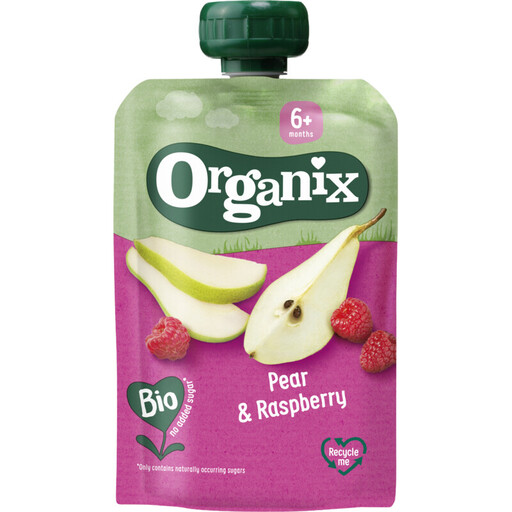
Why this fits the profile: A straightforward fruit purée for anyone wanting to start from 6 months with a simple product, at home or on the go.
The age is clearly stated as 6 months, and the ingredients list contains just two fruit purées. The product information states no added sugars.
100 grams, organic according to the product description, and once opened keep refrigerated for a maximum of one day.
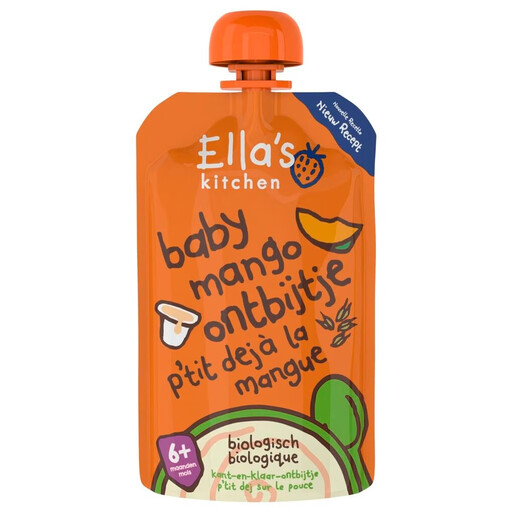
Why this fits the profile: Ideal for parents who want fruit, yoghurt and grains all in one portion, with clear allergen information.
The product information states no added sugar, but lists milk and oats as allergens. This lets you assess the ingredients carefully.
Contains, according to the product information, 63% mango, yoghurt and oat flour; keep refrigerated after opening and use within 48 hours.
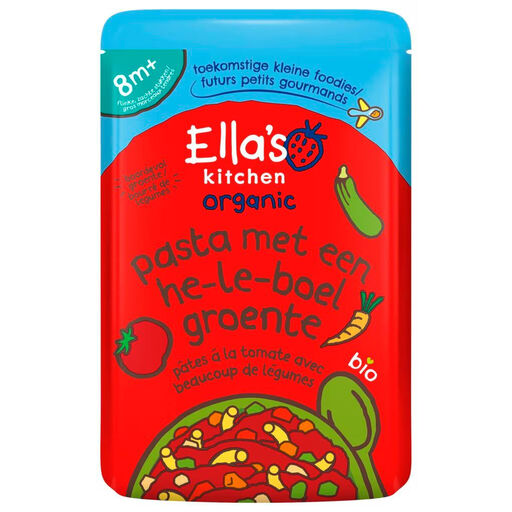
Why this fits the profile: A practical choice for families who regularly need a complete meal at home or on the go.
The age label is 8 months, and the product information describes soft, chunky pieces. Gluten and egg are listed as allergens.
190 grams per pack, can be eaten cold or warm, and must be kept refrigerated and used within 24 hours after opening.
With baby snacks, baby biscuits and toddler treats, pay extra attention to how often they’re eaten. A product with no added sugars isn’t automatically meant to be an unlimited snack. De Kleine Keuken Organic Fruitjes with Apricots are, according to the product information, suitable from 12 months and contain dried apricots, dates and banana. The natural sugars and possible traces of nuts are relevant points to consider.
We’ve put together a full, up-to-date list of products that fully meet these strict selection criteria and comply with current European safety regulations.
Not automatically. Check the age label, ingredients, texture and allergens. The introduction of solid foods varies from child to child. If in doubt, follow the advice of your health visitor or doctor.
It varies by product. For the products mentioned, the information often says: keep refrigerated and use within 24 to 48 hours. Organix fruit purées state a maximum of one day after opening; Ella’s Kitchen products state, depending on the product, a maximum of 24 or 48 hours. Always follow the label on the packaging.
No. Fruit, dried fruit and dairy can naturally contain sugars. So look at both the ingredients list and the nutrition table. “No added sugars” only means that, according to the product information, no extra sugar has been added.
