
Vandaag of morgen in huis

Kwaliteit gegarandeerd

Welkomstaanbiedingen ontgrendelen: GRATIS bezorging | Tot 80% korting | Gratis 30 dagen JoyPlus-proefperiode
Download de app
Buying organic baby food might seem straightforward, but the packaging doesn’t always tell the full story. A cheerful label, words like “pure” and a handy squeeze pouch reveal little about whether it’s right for your baby. Age, ingredients, allergens, texture and storage instructions matter far more than marketing speak.
In this guide, you’ll learn what to look for in baby food from 4 months, baby food from 6 months, organic baby meals and snacks. You’ll also find practical product choices for different family situations.
A product can be organic, yet still not be right for a four-month-old baby. Always check the age guidance on the packaging. A meal with lumps or a snack for self-feeding often requires more eating experience than a smooth fruit purée.
The age shown on our product page is the manufacturer’s guideline. Follow the feeding advice you’ve been given as well, and introduce new ingredients gradually.
Baby food without added sugars can still contain natural sugars from fruit. A prune purée made with 100% prunes, for example, contains naturally occurring sugars. So always check both the ingredients list and the nutrition information table. “No added sugar” does not mean the product contains no carbohydrates or sugars.
The front often highlights flavour, the organic certification or convenience. The back gives you the information you actually need:
Also look out for warnings. Whole raisins, seeds and hard lumps are not automatically suitable for young children. With snacks, supervision during eating is important.
For baby food from 4 months, smooth purées are often available, such as a fruit purée for babies or a simple vegetable meal for babies. The product information might state, for example, that a purée is suitable from four months.
From six months, the variety usually increases. You’ll then see combinations with grains, yoghurt, rice, chicken or several types of vegetables and fruit. Check whether the texture is smooth, finely mashed or chunkier. A product from ten or twelve months may contain lumps that aren’t suitable for a younger baby.
Read the full ingredients list. Pay particular attention to:
An organic label says nothing about the absence of allergens. Ella’s Kitchen BIO Maize Puffs Strawberry Banana, for example, lists wheat and gluten and may contain milk and soya. The organic origin and allergen information are two separate things.
Compare products using the table per 100 grams. This makes different portion sizes easier to compare. Check whether sugar or salt has been added and which ingredients provide the flavour.
According to the product information, Ella’s Kitchen Organic Chicken Curry Green Beans Coconut contains no added sugars or salt. The product does contain naturally occurring sugars and salt. Always attribute such claims to the brand’s product information; they are not a general guarantee for all organic baby food.
An opened jar or pouch usually needs to be kept refrigerated and used within a limited time. That time varies by product. Examples from the range:
Always check the packaging. The product packaging may contain more or different information than an online product description.
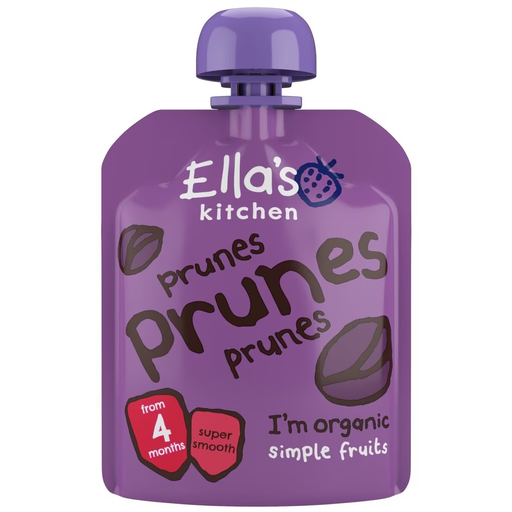
Why this fits the profile: A small pouch with one main ingredient is straightforward for a first fruit purée for your baby. According to the description, the product is suitable from 4 months and contains 100% organic prunes.
The ingredients list is short and states no added sugar. The age and storage period after opening are clearly shown in the product information.
100% organic prunes, gluten-free according to the product information, 70 grams and suitable for freezing. Do not heat in the microwave.
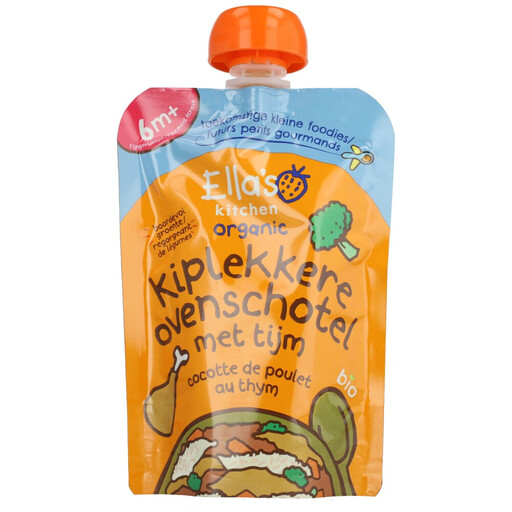
Why this fits the profile: This organic baby meal with chicken combines vegetables, chicken, rice and herbs in a 130-gram portion. That suits parents who want more variety from six months without having to prepare a meal themselves.
The age, ingredient percentages and allergen information are available. The meal has an adapted texture; check whether it suits your child.
Organic ingredients according to the product description, 11% chicken, 11% broccoli and 23% carrot. Keep refrigerated after opening and use within 24 hours.
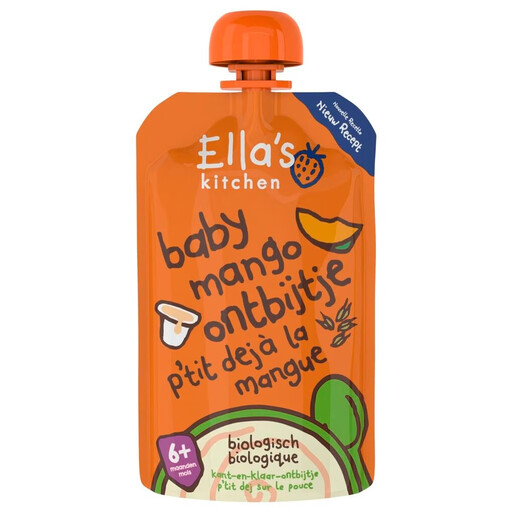
Why this fits the profile: A compact option for baby breakfast, a snack in between, or on the go. According to the product information, the combination consists of mango, yoghurt, oat flour and rice flour.
The pouch is not the same as a complete feeding schedule. Check the milk and oat allergens and use the product as part of a varied diet.
Suitable from 6 months, no added sugar according to the brand’s claim, 63% mango and 34% yoghurt. Keep refrigerated after opening and use within 48 hours.
We’ve put together a full, up-to-date list of products that fully meet these strict selection criteria and comply with current European safety regulations.
For children from six months, organic baby snacks such as maize puffs are available. According to the product information, Ella’s Kitchen BIO Maize Puffs Strawberry Banana is suitable from six months, contains no added sugars and may contain milk and soya. The packaging is resealable.
From seven months, Ella’s Kitchen Organic Tomato Basil Maize Stick is available. From twelve months, organic raisins are among the options. With dried fruit, take note of the warning on the packaging and always supervise your child while eating. Seeds, such as pumpkin seeds and sunflower seeds, are foods for the whole family, but whole seeds are not automatically suitable as a baby meal.
That varies per child and product. Smoothly puréed vegetables or fruit, such as a simple carrot purée or prune purée, are often offered from four months. Always check the age guidance, ingredients and advice from your health visitor or other healthcare professional.
No. Fruit naturally contains sugars. “No added sugars” means that according to the product information, no extra sugar has been added. Check the nutrition information table to assess the sugar content per 100 grams.
That depends on the product. In the examples mentioned, it’s usually 24 or 48 hours refrigerated after opening. Always follow the instructions on the packaging, use clean utensils and check that the packaging is not damaged or bloated.
