
Vandaag of morgen in huis

Kwaliteit gegarandeerd

Welkomstaanbiedingen ontgrendelen: GRATIS bezorging | Tot 80% korting | Gratis 30 dagen JoyPlus-proefperiode
Download de app
Organic baby food and fruit snacks may seem easy to choose at first glance. However, organic fruit purées, baby fruit purée, organic pouches and fruit drinks can differ significantly in recommended age, ingredients and convenience.
Packaging featuring terms such as “pure”, “natural” or “no added sugar” does not tell the whole story. Always check the label, serving size and warnings. This helps you avoid buying a product that does not suit your child’s age, eating experience or daily routine.
A product can contain no added sugar and still contain naturally occurring sugars. Fruit, fruit juice, dates and raisins naturally contain sugar. Therefore, check both the ingredients list and the nutritional information per 100 grams.
For example, according to the product information, Organix Bio Pear & Raspberry Squeezies contains 10 grams of sugar per 100 grams. The ingredients consist of 90% pear purée and 10% raspberry purée. No added sugar is listed, but the product is therefore not sugar-free.
A pouch is convenient, but not every pouch is suitable from the same age. The range includes products suitable from 4, 6, 8 or 12 months. The recommended age depends on the product’s ingredients and texture.
Also pay attention to allergens. Organix Squeezable Fruits Oat, Apricot & Banana contains oats and gluten. Ella’s Kitchen Organic Mango Breakfast contains milk and oats. Check the current packaging with every order, especially if your child has an allergy or intolerance.
Organic fruit juice consists of juice and is generally liquid. For example, Bio+ Apple Juice contains only apple juice and 9.2 grams of sugar per 100 ml. Zonnatura Organic Plum Juice consists of juice from dried plums and contains, according to the product information, 14 grams of sugar per 100 grams.
Dried fruits such as raisins and apricots are more concentrated and have a different texture from fruit purée. De Kleine Keuken recommends its organic raisins from 12 months and states that children should always be supervised while eating. Follow this age recommendation and the instructions on the packaging.
Start with the age recommendation. For baby snacks from 6 months, soft purées and smooth fruit purées are often practical. Products from 12 months may have a firmer texture or contain additional ingredients such as porridge oats, rice flour or dried fruit.
Then compare the contents:
A pouch can be offered directly, but you can also squeeze the purée onto a spoon or into a bowl. This makes it easier to monitor the amount and supports a calmer mealtime at the table.
Look for the complete ingredients list on the label. “100% fruit purée” is a verifiable product specification when the ingredients list indeed contains only fruit and, if applicable, a small amount of lemon juice.
Examples from the range:
Pay attention to the difference between no added sugar and a low sugar content. Fruit purée and fruit juice naturally contain sugars. Always compare the nutritional information per 100 grams or 100 ml rather than relying solely on the wording on the front of the pack.
An organic certification mark, such as the European green leaf, indicates that the product has been certified in accordance with the applicable organic production rules. You should still always check the ingredients and allergens.
Practical checklist:
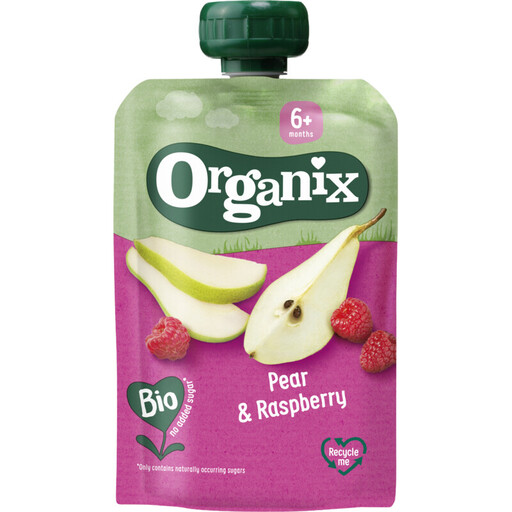
Why it’s a good fit: An organic fruit purée suitable from 6 months, with a short, easy-to-understand fruit ingredients list and a 100-gram serving.
The age recommendation, ingredients and storage instructions are clearly stated with the product. According to the product description, the packaging contains no added sugar.
90% pear purée, 10% raspberry purée, organic, and suitable for refrigerated storage for up to 1 day after opening.
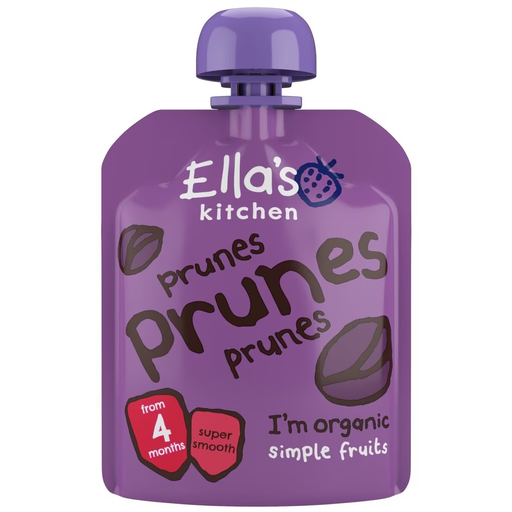
Why it’s a good fit: According to the product information, this compact 70-gram pouch is suitable from 4 months and contains only organic plum purée.
The ingredients are easy to verify: 100% organic plums. No added sugar is listed. For a more mindful mealtime, serve the purée preferably from a spoon or bowl.
Gluten-free according to the product information, with 45 kcal and 9.6 grams of naturally occurring sugars per 100 grams.
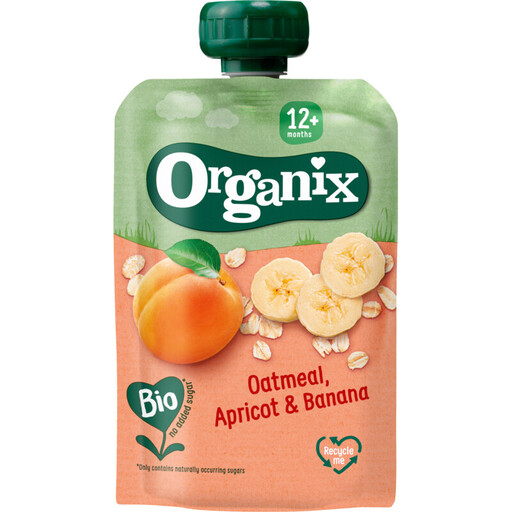
Why it’s a good fit: An organic pouch for days out, designed for baby food from 12 months and made with fruit, oats and rice flour.
The age recommendation is 12 months, and gluten is explicitly listed. This prevents you from confusing the product with a fruit purée intended for younger babies.
30% apricot purée, 25% banana purée, oats and rice flour; 60 kcal and 6.5 grams of sugar per 100 grams.
Discover a current selection of organic fruit, purées, fruit snacks and fruit drinks. Compare ingredients, pack size, age recommendations and storage instructions for each product.
For adults and older children, organic fruit juice can be a practical drink, but juice is not a direct substitute for a complete meal or a varied diet. Bio+ Apple Juice contains only apple juice and is available in a 1-litre pack. B+ Orange Juice is described as juice made from concentrated organic orange juice.
With natural fruit snacks such as raisins, dried apricots and chestnuts, portion size matters. 7FRESH Chestnut Kernels contains 300 grams of ready-to-eat chestnuts and lists chestnut as an allergen. For young children, always consider the age recommendation, texture and the need for supervision while eating.
That depends on the individual product. According to the product information, Organix Bio Pear & Raspberry is suitable from 6 months, while several Organix varieties containing oats or quinoa are offered from 12 months. Always check the age recommendation on the packaging and, for younger children, preferably serve the purée from a spoon.
This varies by brand and product. For certain varieties, Ella’s Kitchen and Olvarit state that the product can be refrigerated for up to 48 hours. Organix states that several pouches should be used within one day of opening. The current packaging takes precedence.
No. Fruit naturally contains sugars. “No added sugar” means that, according to the ingredients list, no additional sugar has been added. Always compare the sugar content per 100 grams and choose a portion that suits your child’s mealtime.
