Looking for organic aniseed sprinkles for Sunday breakfast? Only choose a particular variety if you can check the organic label and EU organic logo on the packaging. If you can’t, you could choose a separately verifiable organic breakfast ingredient without aniseed sprinkles, or regular aniseed sprinkles if organic certification for that topping isn’t essential. For the products you choose, also check the latest ingredients and allergen information.
Who is this choice relevant to?
Shoppers who look for certification
You want to know whether the aniseed sprinkles you put on the table are themselves organically certified. The EU organic logo on the packaging gives you a clear point of reference, as RVO and Skal Biocontrole explain.
Fans of traditional aniseed sprinkles
You want aniseed sprinkles on bread or crispbread, for example, and can decide separately whether that topping needs organic certification. PLUS lists bread, crispbread and yoghurt as ways to enjoy De Ruijter crushed aniseed sprinkles.
Shoppers combining breakfast ingredients
You want to choose an organic breakfast ingredient without treating muesli and aniseed sprinkles as the same product. Albert Heijn, for example, sells AH Organic Wholegrain Muesli with Fruit & Nuts; check the packaging of the variety you choose.
What should you look for when choosing?
Start by deciding whether the aniseed sprinkles themselves need to be organic, or whether you’re mainly looking for an organic ingredient for Sunday breakfast.
An organic breakfast ingredient without aniseed sprinkles
Choose this when: you want a verifiably organic product and don’t need aniseed sprinkles.
The trade-off: muesli is a different product from aniseed sprinkles and doesn’t have their aniseed flavour.
Regular aniseed sprinkles
Choose this when: you want aniseed sprinkles as a topping and organic certification for the sprinkles themselves isn’t essential.
The trade-off: an organic base doesn’t make the regular aniseed sprinkles you add organic.
| What to consider |
What to check |
Who it matters to |
| Organic certification |
Check for the EU organic logo and make sure the label applies to the specific variety of aniseed sprinkles you’ve chosen. |
If I want to serve organic aniseed sprinkles, the certification must apply to the topping itself. Around 42% of consumers put this certification check first. |
| Traditional aniseed sprinkles |
Choose the variety you want and check the latest packaging if ingredients or allergens matter to your decision. |
What matters most to me is having aniseed sprinkles on bread or crispbread; organic certification for the topping comes second. Around 33% of consumers put this traditional choice first. |
| Organic breakfast ingredient |
Check the certification for every ingredient you want to use as organic. |
I’d rather choose a separately verifiable organic ingredient than a topping whose organic status I can’t confirm. For around 25% of consumers, this kind of organic breakfast combination is their main concern. |
Common mistakes
-
Confusing ‘natural’ with organically certified
An organic breakfast ingredient says nothing about the certification of the aniseed sprinkles you add to it.
Before calling a specific variety of aniseed sprinkles organic, check its packaging for the EU organic logo.
-
Relying on online ingredients information alone
Albert Heijn recommends reading the packaging before using a product. Online product information shouldn’t be your final check for ingredients and allergens.
Read the packaging of the product you bought, especially if ingredients or allergens affect your choice.
-
Treating organic muesli as the same kind of topping
Muesli can be an organic breakfast ingredient, but it doesn’t offer the same experience as aniseed sprinkles.
Choose muesli if it suits your breakfast; choose aniseed sprinkles separately if that particular topping matters to you.
A relevant brand to consider
De Ruijter
Albert Heijn, Jumbo and PLUS list De Ruijter crushed aniseed sprinkles as a regular product.
- PLUS lists bread, crispbread and yoghurt as ways to enjoy the crushed aniseed sprinkles.
- Don’t treat a regular product listing as proof that the variety is organically certified; check the packaging to confirm.
Aniseed sprinkles for a regular topping
This product suits you if you want aniseed sprinkles as a topping and organic certification for the sprinkles themselves isn’t essential. If you’re specifically looking for organic aniseed sprinkles, first check the packaging of this variety for the organic label and EU organic logo.
 No image available
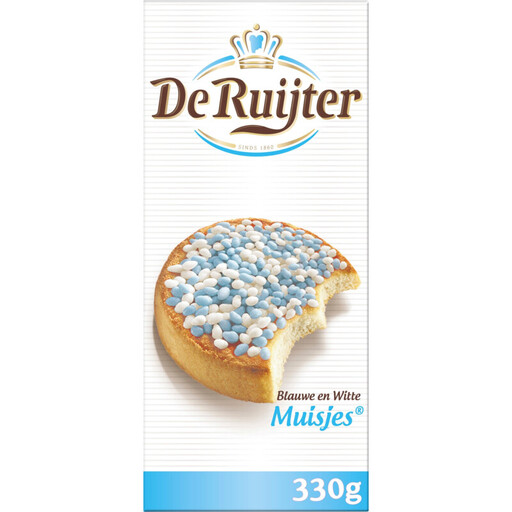
De Ruijter blue and white aniseed sprinkles, 330 g
For anyone who wants aniseed sprinkles as a breakfast topping and doesn’t need this topping to be organically certified.
Check the latest packaging if ingredients, allergens or organic certification matter to your choice.
View at Joybuy
Frequently asked questions
How can I recognise organic aniseed sprinkles?
Check the packaging of the variety you’ve chosen for an organic label and the EU organic logo. RVO and Skal Biocontrole describe the logo as a way to identify organic products; the organic status of another breakfast product doesn’t automatically apply to the aniseed sprinkles.
Are regular De Ruijter aniseed sprinkles automatically organic?
No. A regular product listing doesn’t in itself prove organic certification. Albert Heijn, Jumbo and PLUS list De Ruijter crushed aniseed sprinkles; check the packaging of the specific variety before calling it organic.
What can I choose if I can’t find organically certified aniseed sprinkles?
Choose a separately verifiable organic breakfast ingredient if certification matters more to you than having aniseed sprinkles as a topping. Albert Heijn sells AH Organic Wholegrain Muesli with Fruit & Nuts; check the certification on the packaging you choose and bear in mind that muesli isn’t aniseed sprinkles.
Should I still check the ingredients and allergens on the packaging?
Yes, check the packaging of the product you bought. Albert Heijn advises customers to read the packaging before using a product.


