What should you look for when choosing?
First, check whether the organic label appears on the product packaging. Then compare the ingredients, when you plan to eat them and the packaging; each of these tells you something different.
| What to consider |
What should you check? |
Who is this important for? |
| Organic label |
Check the EU organic logo and inspection details on the specific pack. The European Commission says the logo is intended for products certified as organic by an authorised inspection body. |
If I buy organic, I want to be able to check the label on this particular pack. Around 36% of consumers make this their priority. |
| Ingredients and when you eat them |
Check the salt content and preparation method separately from organic certification. Also consider the amount and when you plan to eat them. |
I want to be able to choose unsalted almonds for breakfast or a break, while taking into account what I can comfortably digest just before exercise. Around 29% of consumers prioritise ingredients and when they eat them. |
| Taking them with you and storage |
Check the net weight, the seal and the storage advice. The Netherlands Nutrition Centre recommends storing nuts in a cool, dark, dry place in a securely sealed container. |
The amount needs to be practical for me when I’m out, and I need to be able to seal the rest properly at home. This is the top priority for around 21% of consumers. |
| Spending and product type |
Compare packs containing the same type of product and check the net weight. A salted or flavoured variety is not directly comparable with unsalted organic almonds. |
I want to stay within my budget without treating products with different ingredients as equivalent. Around 14% of consumers prioritise their overall spending. |
Almond products at Joybuy
The Joybuy options shown range from plain to salted and seasoned almonds. If organic certification is a must for you, check this separately for the product you choose.
 No image available
Jia Zhou Yuan Ye Original Almond Kernels 160 g
The product description suggests enjoying these almond kernels as a snack or with yoghurt and cereal.
According to the product description, the ingredients are 100% almond kernels and the product is ready to eat. Seal the pack securely after opening and store in a cool, dry place.
View at Joybuy
 No image available
Anatolia Badem Natural (Almond) 500 g
The product description says these almonds are ready to eat as a snack or with yoghurt and cereal.
The ingredients are listed as 100% almonds; the description states that they contain 0.00 g of salt per 100 g. Seal the pack securely after opening and store in a cool, dry place.
View at Joybuy
 No image available
Anatolia Roasted Salted Almonds 500 g
This variety is roasted and salted; the product description suggests it as a snack.
The description states that it contains 1.0 g of salt per 100 g. Seal the pack securely after opening and store in a cool, dry place.
View at Joybuy
 No image available
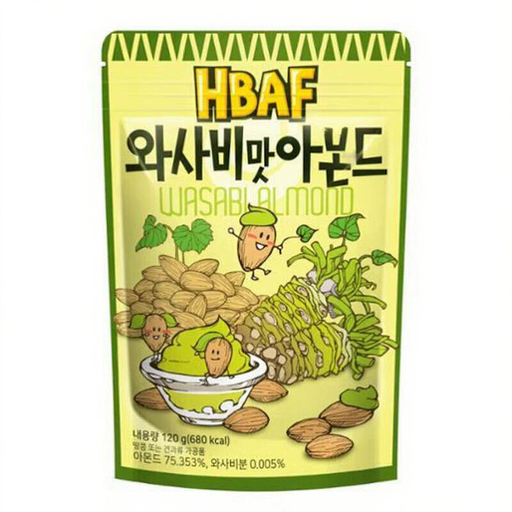
HBAF Almond Wasabi Flavor 120 g
This seasoned almond snack is an option if you’re looking for a bold flavour; almonds make up 75% of the product.
The ingredients list includes sugar, syrup and oil. The stated allergens are almonds, milk, soya and mustard.
View at Joybuy
 No image available
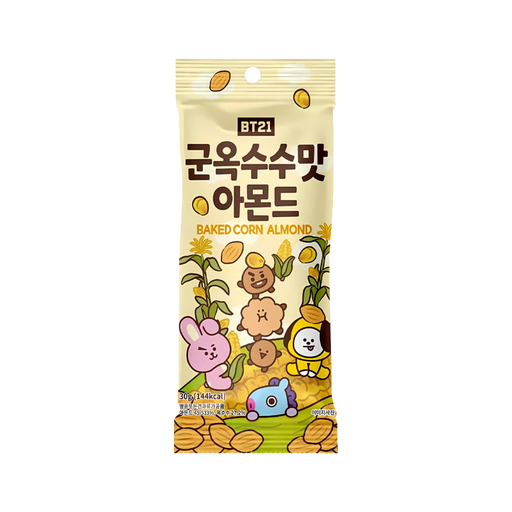
BT21 Baked Corn Flavor Almond 30 g
This baked almond snack has a corn flavour and makes a seasoned option to take with you.
The ingredients list includes corn, sugar, syrup, rapeseed oil and condensed milk. Salt is also listed among the ingredients; the description mentions milk and soya.
View at Joybuy
Frequently asked questions
How can you identify organic almonds?
Check the organic label on the specific product packaging. The European Commission describes the EU organic logo as a label for products certified as organic by an authorised inspection body; the inspection code and agricultural origin help you assess the claim. A general organic range isn’t proof for a specific product.
Are natural, unroasted and organic the same thing?
No. ‘Unroasted’ describes how the almonds are prepared, while ‘organic’ refers to organic production and the associated inspection. So a product described as unroasted or unsalted is no substitute for checking its organic label.
How should you store the rest after taking a portion with you?
Seal the rest securely and store nuts in a cool, dark, dry place. For an unopened pack, follow its storage advice and use-by date. This general storage advice from the Netherlands Nutrition Centre doesn’t replace product-specific instructions.
Are almonds suitable for everyone in a walking group?
No, almonds are among the tree nut allergens. Their organic origin doesn’t change that. Check the label and any cross-contamination warnings; the Netherlands Food and Consumer Product Safety Authority provides guidance on allergen information on labels. If you’re sharing a snack, take relevant allergies into account.
Can you eat a large portion of almonds just before an intensive walk?
Consider what you can comfortably digest and be cautious about eating large portions just before intense exercise. The Netherlands Nutrition Centre advises against large portions high in fat, protein or fibre at that time. This is general sports advice, not a fixed maximum amount of almonds for every walk.


