
Parents who consciously choose organic
You’re looking for organic almonds to enjoy at home after school and want to distinguish verifiable organic certification from terms such as ‘natural’ or ‘unroasted’.


For an organic option, check the organic certification separately from preparation methods such as unroasted or unsalted. Before choosing, also check the allergen information, how the almonds are served, and the rules at school or childcare: almonds are still almonds, and whole nuts can pose a choking risk. If your child has a diagnosed almond allergy, don’t choose an almond product.
You’re looking for organic almonds to enjoy at home after school and want to distinguish verifiable organic certification from terms such as ‘natural’ or ‘unroasted’.
You want to decide whether almonds are suitable for your child and where they’ll be eaten. Allergen information, choking risks and any school or childcare rules all play a part.
You’re looking for a simple snack and a pack that suits how you’ll use it at home. Clear storage advice and a suitable quantity can help you choose.
First, check whether almonds are suitable for your child and where they’ll be eaten. Then consider the organic certification, ingredients and packaging.
| What to consider | What to look for | Who is this important for? |
|---|---|---|
| Organic origin | Check the organic certification and applicable quality mark. The EU organic logo is accompanied by a control code and an indication of agricultural origin. | If organic production is your first selection criterion, you’ll want to be able to check the certification on the specific product. Around 36% of consumers prioritise organic origin. |
| Ingredients | Read the ingredients and salt information, and check that the almonds are unsalted and how they’re prepared separately from whether they’re organic. | For a regular snack, you may be looking for a simple, unsalted product. Around 29% of consumers give this everyday ingredient profile the highest priority. |
| Allergens and how they’re served | Check individual allergy advice, how the nuts are presented, and the current rules at school or childcare. | If allergies, choking risks or rules at the location are decisive, check these requirements before choosing a product. Around 21% of consumers prioritise suitability and safety. |
| Packaging and storage | Compare the net weight and follow the storage advice on the pack; keep nuts dry and in a tightly sealed container. | If you want your stock to suit how you use it at home, consider the quantity and how to store the pack after opening. Around 14% of consumers give practical packaging and stock levels the highest priority. |
The European Commission states that the EU organic logo is compulsory for pre-packed food produced in the EU and sold as organic. Voedingscentrum recommends choosing unroasted or lightly roasted nuts where possible and warns that whole nuts can pose a choking risk. This advice doesn’t replace an assessment of your child, how the nuts are served or the rules at the location.
Organic almonds still contain almonds. Voedingscentrum also warns that whole nuts can pose a choking risk.
Check allergens, how the almonds are served and the rules at the location before choosing a brand or variety. If your child has a diagnosed almond allergy, don’t choose an almond product.
Duyvis describes Almonds Original as oven-baked and savoury, and says that no oil or fat is added. This manufacturer’s description doesn’t, by itself, say anything about organic certification or added salt.
Check the preparation method, salt information and organic certification as separate product features.
The AH Biologisch and Biologisch PLUS packs reviewed contain 150 g; the Jumbo Biologisch pack contains 175 g. These are net weights, not recommended amounts for one snack.
Choose a portion that suits your child and the occasion; don’t automatically treat the whole pack as one snack. Voedingscentrum suggests a handful of unsalted nuts as a possible snack for children aged 4 to 12.
A pack that doesn’t suit how you use it may be left open for longer than you intend. Keep nuts dry and in a tightly sealed container, and follow the instructions for the specific product.
Choose a quantity that suits how often you use the almonds, and seal the pack tightly after opening.
AH Biologisch Amandelen ongebrand is an own-brand option featuring unroasted, unsalted almonds.
Jumbo Biologisch Ongebrande Amandelen is an own-brand organic variety of unroasted almonds.
Biologisch PLUS Amandelen are almonds with their skins on, unroasted and unsalted.
According to its product description, Duyvis Almonds Original is an oven-baked almond product with a savoury flavour.
ALDI describes the Trader Joe’s almonds reviewed as roasted and salted, or roasted with a smoky flavour.
Lidl describes a Bio Organic range and has a Dutch-language page about almonds.
These product selections focus on almonds for snacking; one option is a nut mix containing 20% almonds. Check the organic certification and allergen information on each pack. Terms such as ‘natural’, ‘raw’ and ‘unroasted’ don’t, by themselves, prove organic certification.
 No image available
The product description says the almond kernels are ready to eat as a snack.
According to the description, the ingredients are 100% almond kernels, and the pack is resealable.
 No image available
The product name describes raw, unsalted almonds for anyone looking for this preparation style.
The description lists almonds as the ingredient and advises sealing the pack tightly after opening and storing it in a cool, dry place.
 No image available
The product description says these almonds are ready to eat and suitable as an almond snack.
According to the description, the product contains 100% almonds and 0.00 g salt per 100 g. Storage advice: keep in a cool, dry place and seal tightly after opening.
 No image available
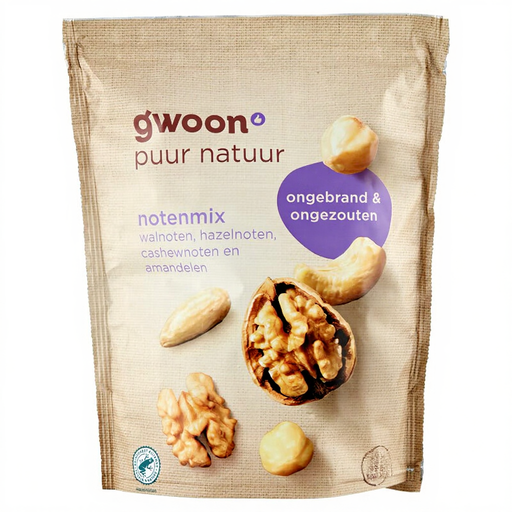
This unroasted nut mix is an option if you’re looking for almonds alongside other nuts; it isn’t made up of almonds alone.
The description states that it contains 20% almonds and no added salt. Seal the pack tightly after opening and store in a cool, dry place.
Check the organic certification and applicable quality mark on the pack. According to the European Commission, the EU organic logo is compulsory for pre-packed food produced in the EU and sold as organic; it is accompanied by a control code and an indication of agricultural origin.
No. The net weight of a pack isn’t individual portion advice. Voedingscentrum suggests a handful of unsalted nuts as a possible snack for children aged 4 to 12; choose a portion that suits your child and the occasion.
Store nuts in a tightly sealed container in a dry place, preferably somewhere cool, and follow the instructions on the pack. The PLUS almonds reviewed advise storing them in a cool, dry, dark place; this isn’t a general storage-life guarantee for every opened pack.
Check the current policy at your child’s school or childcare setting before packing almonds. For example, OBS De Venen describes local rules about nuts and peanuts in lower-school classes; these rules don’t automatically apply elsewhere.
Before buying, check the allergen information for the specific product, and check the packaging when it arrives too. The NVWA emphasises that consumers must be able to access allergen information before buying; Business.gov.nl states that information on the label must also be available online.