
Anyone comparing loaf sizes
You regularly order groceries online and want to know how much bread you’ll get and whether you can use it all up. Compare the weight and packaging, not just the product name.


For everyday use, choose a loaf with a clearly stated type and size, then check whether delivery or collection is available for your order. Next, compare the ingredients and nutritional information of loaves you can realistically use up. A loaf available to order online is not necessarily a whole loaf for everyday sandwiches.
You regularly order groceries online and want to know how much bread you’ll get and whether you can use it all up. Compare the weight and packaging, not just the product name.
You’re looking for bread for breakfast or lunch and want to be able to check the wholemeal description, ingredients and fibre content before choosing.
You can’t rely on a shop’s range alone: delivery or collection must be available for your location and order.
First, check the delivery options, then choose a type and quantity of bread that suit your needs. For the products you’re considering, read the nutritional information and ingredients.
| What to consider | What to check | Who it matters to |
|---|---|---|
| Size and quantity | Compare the weight of similar types of bread. Check whether you can use up a larger loaf or freeze it according to the product instructions. | If I’m ordering bread for several days, I don’t want to choose a pack I can’t finish. That’s why around 42% of consumers prioritise a practical size. |
| Wholemeal and labelling | Look for a wholemeal description and compare fibre and salt per 100 g. Read the ingredients and allergen information too. | For everyday sandwiches, I want to know what type of grain I’m choosing without relying on the colour. Around 33% of consumers prioritise wholemeal bread and the information on the label. |
| Delivery options | Check whether delivery or collection is available for your postcode and whether the time you want works for your order. | If I can’t collect the bread myself, my choice is only useful if delivery is available. For around 25% of consumers, delivery options are the first thing to consider. |
A whole loaf, a pack of individual portions and flatbread won’t necessarily meet the same need. A larger pack is only practical if you can use it up or store it.
Check the weight, number of items, type of bread and storage instructions before choosing a product.
The colour or a name such as ‘multigrain’ doesn’t, by itself, tell you whether a bread is wholemeal. The Netherlands Nutrition Centre advises replacing white bread with wholemeal or brown bread as much as possible.
Read the product description and ingredients list, and compare fibre content on the same basis, such as per 100 g.
According to the Netherlands Nutrition Centre, bakers aren’t required to use baker’s salt. So the type of bread or shop name won’t tell you whether this ingredient has been used.
If the presence of baker’s salt matters to your choice, check the ingredients list for baker’s salt or iodised salt.
Albert Heijn displays a range of bread online, including wholemeal loaves.
Jumbo offers loaves you can order online, including its own-brand wholemeal breads.
PLUS lets you order groceries online for delivery or collection and displays a range of wholemeal breads.
For this choice, Lidl is an alternative shop rather than a direct option for grocery delivery.
ALDI describes an in-store range that includes half and whole wholemeal loaves.
Dirk has a bread range for people who can do their shopping in store.
This selection includes rye bread, Lebanese flatbread and round wholemeal loaves. Pay attention to the type of bread and the quantity in each pack: not every product is a substitute for a regular whole loaf for sandwiches.
 Image unavailable
An option if you’re looking for individual pieces of rye bread. Check the packaging and ingredients if the type of bread or allergens matter to your choice.
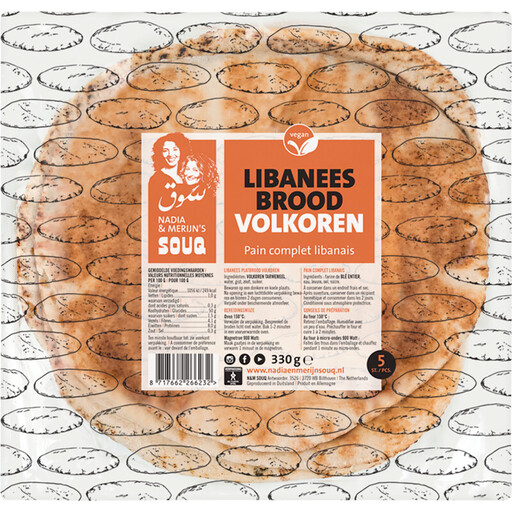 Image unavailable
This Lebanese flatbread is a good fit for a meal where you’re looking for flatbread, rather than a regular whole loaf. The pack contains six pieces; check the ingredients and allergen information for the product you choose.
 Image unavailable
A rye bread product for anyone looking for a 500 g pack. The title says ‘bun’, while the description refers to sliced rye bread; check the type of bread on the current product page or packaging.
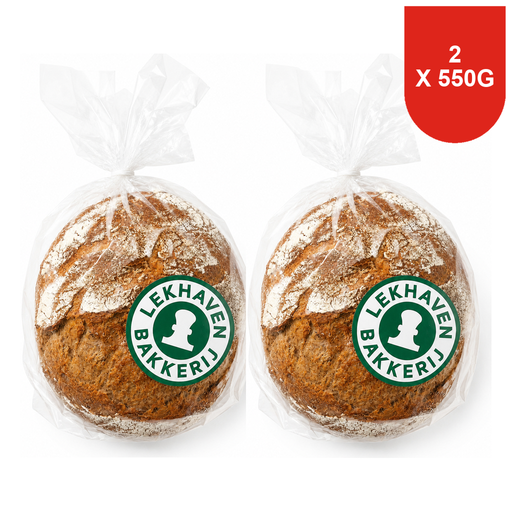 Image unavailable
Two round loaves for anyone who can store and use this quantity. Bear in mind that they need to be thawed and baked; check the product’s preparation and storage instructions.
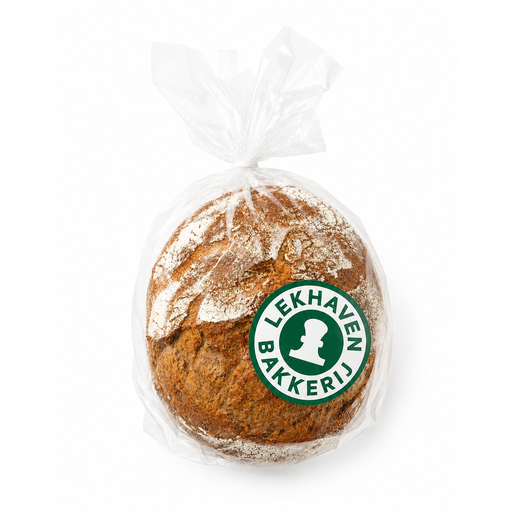 Image unavailable
One round loaf for anyone who doesn’t need a pack of two. This product needs to be thawed and baked; check the preparation instructions before choosing it.
Yes. If you’re choosing bread for everyday use and want to eat wholemeal, the wholemeal description is a useful starting point. The Netherlands Nutrition Centre advises replacing white bread with wholemeal or brown bread as much as possible. Then compare the ingredients and nutritional information of the loaves you’re considering.
No. According to the Netherlands Nutrition Centre, bakers aren’t required to use baker’s salt. For packaged bread, check the ingredients list for baker’s salt or iodised salt; for unpackaged bread, you can ask the baker about the ingredients.
Check the instructions for the specific loaf. Albert Heijn says that AH Wholemeal Whole Loaf can be frozen at home on the day of purchase and should be used within one month. Don’t assume the same guidance applies to other loaves.
Not directly through these shops’ grocery delivery services: Lidl Netherlands says it doesn’t offer grocery delivery, and Dirk says it doesn’t currently deliver groceries. If you need delivery, check another way to order the bread you’ve chosen.