
Focused orchestral listener
You often listen at the dining table and want to see whether two separately positioned speakers suit your orchestral recordings. KEF and Sonos describe stereo pairing for their respective models.


Choose a stereo pair if you want to assess the left-to-right positioning in orchestral recordings from a fixed listening spot and have room for two speakers. A single fixed speaker is easier to position; a battery-powered model is best if you move your speaker regularly. Also compare the connections, controls and components you need, and assess the sound using your own recordings in your own room.
You often listen at the dining table and want to see whether two separately positioned speakers suit your orchestral recordings. KEF and Sonos describe stereo pairing for their respective models.
You move between cooking and eating, and want a speaker that’s practical to position, with playback options and controls to suit the way you listen. The Consumers’ Association lists size and ease of use as factors to consider when choosing.
You want to listen in other places too, so you’re comparing a fixed set-up with a battery-powered model. JBL lists a built-in battery and handle for the Authentics 300.
First, decide where you’ll listen and which playback option you’ll use. Then check whether your preferred set-up will fit in the room and what components you’ll need.
| What to consider | What should you look for? | Who is this more important for? |
|---|---|---|
| Room for stereo positioning | Measure two possible speaker positions and check the power sockets and cable route. KEF describes a connection between the speakers for the LSX II LT. | If I want to assess the left-to-right positioning in orchestral recordings from a fixed spot, there needs to be room for two speakers. Around 31% of consumers say stereo positioning is their main consideration. |
| Sound and positioning | Measure the available space away from the immediate cooking and washing-up areas, and assess recordings at the volume you use at home. | While cooking and eating, I want to hear my music clearly without the speaker getting in the way. Around 25% of consumers prioritise coverage and size. |
| Playback options and controls | Check that your music service, files or wired source work with the inputs and app for the exact model. Sonos says a separately sold adapter is required for a line input on the Sonos Era 100. | I want to be able to start and control my own orchestral recordings directly. Around 19% of consumers prioritise finding the right source and controls. |
| Moving it or keeping it in one place | Think about how often you’ll move the speaker and where you can charge it. A single portable speaker won’t automatically replace the positioning of two separate speakers. | If I listen in different places around the house, a battery is useful to compare with a fixed set-up. Portability is the main consideration for around 13% of consumers. |
| Components you’ll need | Check how many speakers, cables or adapters your source and preferred set-up require. KEF sells the LSX II LT as a pair; Sonos specifies a separate adapter for certain connections. | I want to know in advance which components I’ll need for my complete set-up, such as a second speaker or a wired source. Around 12% of consumers focus mainly on the components required for a complete set-up. |
Two separate speakers can sit on either side of your listening spot, but they take up more room. That’s a different positioning set-up from using one cabinet.
First decide whether you have a fixed listening spot and can make room for two speakers. Then compare the complete set-up.
If you later decide you want a separate stereo pair, you may need a second compatible speaker.
Sonos says a separately sold adapter is required for a line input on the Sonos Era 100. The KEF LSX II LT installation includes a connection between the two speakers.
Map out the route from your source to the speakers and check which cables or adapters you need for the exact model.
You may need a separate adapter or suitable cable for your chosen source or positioning.
A battery is most useful if you actually move the speaker. For a fixed listening spot, positioning and your preferred playback option may matter more.
Choose a portable model based on how often you move it, not just because it has a battery.
The LSX II LT is an active network speaker pair for a fixed set-up, with digital connection options.
The Era 100 is a compact Wi-Fi and Bluetooth speaker that can be used on its own or paired with a second Era 100 as a stereo set-up.
The Home 150 NV is a compact HEOS network speaker. You can also consider AUX, USB or Bluetooth as source options.
The Authentics 200 is a fixed Wi-Fi and Bluetooth speaker; the Authentics 300 is the portable version described by JBL.
These product options range from compact stereo sets to portable Bluetooth speakers and Wi-Fi and Bluetooth models for listening to music.
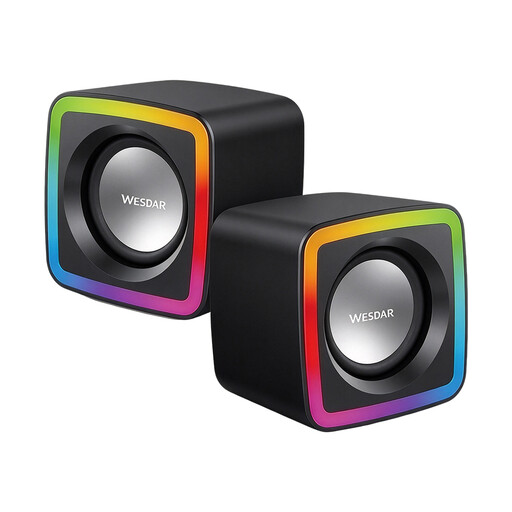 No image available
A compact stereo set to consider if you want to position two speakers on a desk or another similar fixed spot.
The product name describes a stereo set for PC and desk, with RGB lighting.
 No image available
A portable Bluetooth speaker to consider if you want to listen in different places.
The product name mentions wireless TWS pairing. Check whether this feature suits the way you want to use two speakers.
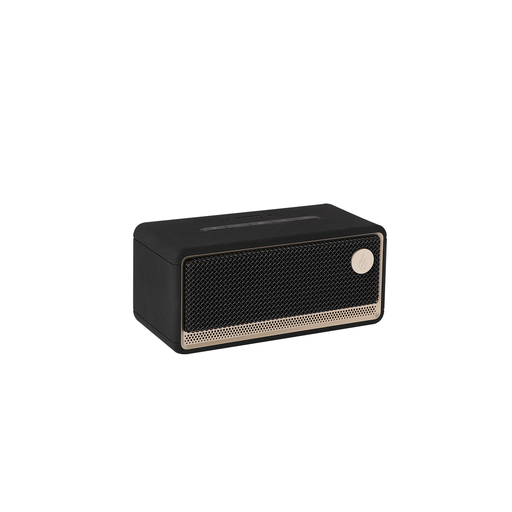 No image available
A fixed Wi-Fi and Bluetooth speaker to compare if you’re considering different playback options at home.
The product name lists AirPlay 2, USB, AUX and a built-in battery. Check which option suits your source.
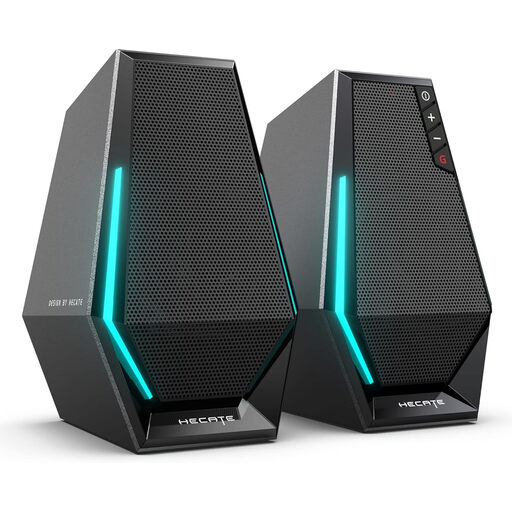 No image available
This desktop set is worth considering if you have a fixed spot and want to connect a wired or Bluetooth source.
The product name lists Bluetooth 5.3, USB and a 3.5mm AUX input.
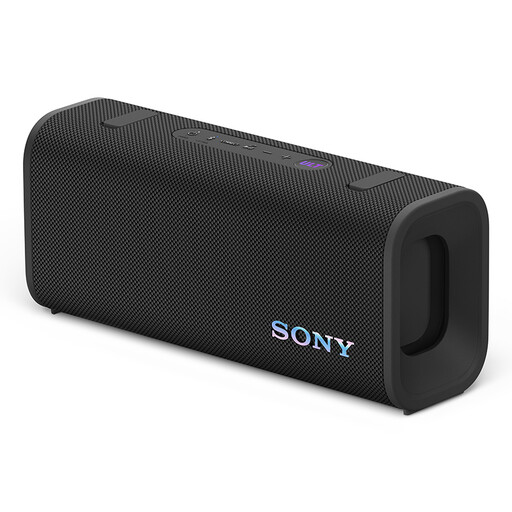 No image available
A portable Bluetooth speaker to consider if you regularly move between listening spots.
The product name describes a portable Bluetooth speaker. Compare this use with a set-up of two separate speakers if stereo positioning is important to you.
One speaker may suit you if simple positioning and listening in different places matter more. If you mainly want to assess the left-to-right positioning from a fixed listening spot, compare a stereo pair with a single cabinet using your own recordings. Product specifications can’t predict how either set-up will sound in your room.
Check your home Wi-Fi, the app you’ll need, your music source, power sockets and any cable routes. For set-up and full network features for the LSX II LT, KEF specifies home Wi-Fi and the KEF Connect app; Sonos describes an initial set-up for the Era 100 using Wi-Fi and the Sonos app.
Check how many speakers and which cables or adapters your source and preferred set-up require. Sonos specifies a separately sold adapter for the Era 100 line input; KEF describes a connection between the two speakers for the LSX II LT.
For normal use of Wi-Fi and Bluetooth, the Dutch Authority for Digital Infrastructure says you don’t need a frequency licence, notification or registration. The Authority also lists wireless speakers among equipment that must have the correct CE marking. Follow the instructions for set-up and use.
For an online purchase as a consumer, a statutory cooling-off period of up to 14 days after delivery usually applies, subject to legal exceptions. ACM ConsuWijzer explains this period and the exceptions; check the applicable terms for your purchase.