
Vandaag of morgen in huis

Kwaliteit gegarandeerd

Welkomstaanbiedingen ontgrendelen: GRATIS bezorging | Tot 80% korting | Gratis 30 dagen JoyPlus-proefperiode
Download de app
Fancy a refreshing Asian snack but unsure whether to go for orange jelly, a jelly drink or orange gummy sweets? The packaging often looks similar, yet the differences in texture, portion size, ingredients and sugar content can be significant. With these practical checkpoints, you can avoid paying mostly for an attractive package.
The words “orange flavour” don’t automatically tell you how much orange is actually in it. So check the ingredients list and any quantitative declarations. Some products contain orange juice or pulp, while others are mostly water, sugar, flavouring and acidity regulators.
For example: the SHENG XIANG ZHEN Fruit Jelly states 5% fruit juice and mandarin pulp. KATO states 25% orange juice and 15% nata de coco. These are verifiable facts that tell you more than a picture of a juicy orange on the packaging.
An orange jelly drink is usually more liquid than a fruit jelly in a cup. Some varieties contain konjac powder, carrageenan or other gelling agents for a soft, slightly syrupy mouthfeel. A firm konjac orange jelly is typically squeezed out of a sachet and requires careful chewing.
Pay attention to the usage instructions. ORIHIRO, for instance, states that you should squeeze the contents out of the packaging while chewing, and not swallow it all at once. WANT WANT notes that the jelly is not suitable for children and must be chewed carefully.
A product with few calories per 100 grams can still contain a relatively large portion. So always compare per 100 grams or 100 millilitres as well as per package. Also look at carbohydrates and sugars.
ORIHIRO states 47 kcal per 100 grams. Hethstia states 7 kcal per 100 grams according to the product information. With sweets, the energy value is clearly higher: Kingz states 322 kcal per 100 grams. A low-calorie jelly can therefore be a different choice from orange gummy sweets, but always check the full label.
First, decide how you want to eat the snack:
For families, the packaging is especially important. Individual cups or sachets are easy to divide up, but check warnings for young children. A jelly product should also not be confused with ordinary squash.
Read the ingredients in the order they appear on the label. Water, sugar or syrup at the top means these components make up a large part of the product. Also check:
The online product information may differ from the physical packaging. So always check the current label, best-before date and storage instructions before consuming.
A portion of 150 or 180 grams makes a real difference in practice. According to the stated nutritional information, SHENG XIANG ZHEN contains 60 kcal per 100 grams. A cup of 180 grams therefore comes to around 108 kcal. Jele Light states 32 kcal per 100 grams, packed in six portions of 125 grams.
Also watch out for sugar. The SHENG XIANG ZHEN information states 13.5 grams of sugars per 100 grams. WANT WANT states 20.5 grams of sugars per 100 grams. These figures help you compare orange jelly, fruit jelly with orange flavour and sweets more fairly.
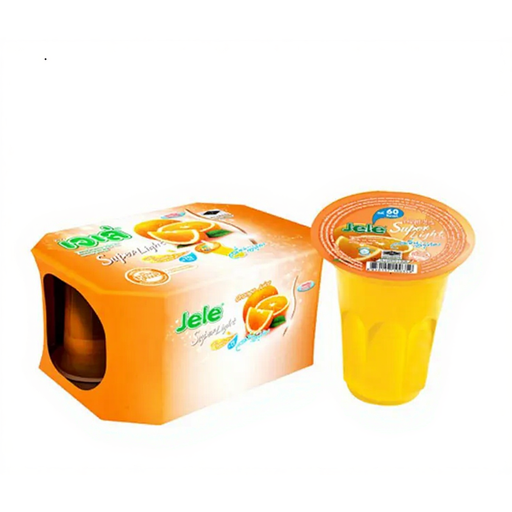
Why it fits the profile: The six portions of 125 grams are practical for daily use and sharing. According to the product information, this orange jelly contains 32 kcal per 100 grams.
The portion size is clearly stated. The ingredients list shows that the product contains, among other things, water, white grape juice, sugar and orange flavouring; so don’t expect a high orange juice percentage.
Six individual packs, 32 kcal per 100 grams and unopened shelf life of up to 12 months according to the product information.
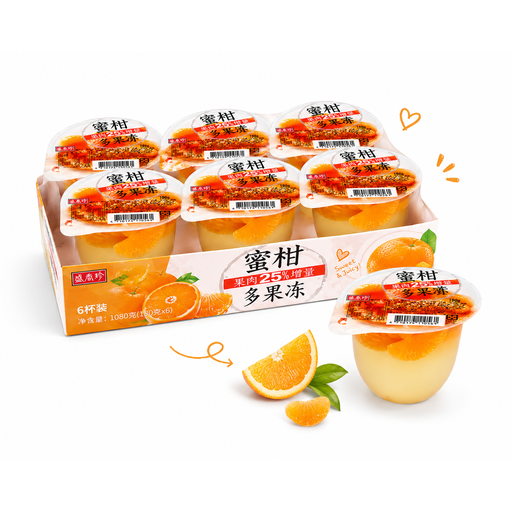
Why it fits the profile: This multipack is aimed at lovers of fruity jelly with pulp and a soft, chewy texture. The six cups are suitable for home or for sharing.
The proportion of 5% fruit juice and the presence of mandarin pulp are concretely stated in the product information. This makes the fruit component easier to assess than with a product that only mentions flavouring.
1080 grams total, divided into six cups of 180 grams; 60 kcal per 100 grams and suitable for serving chilled.
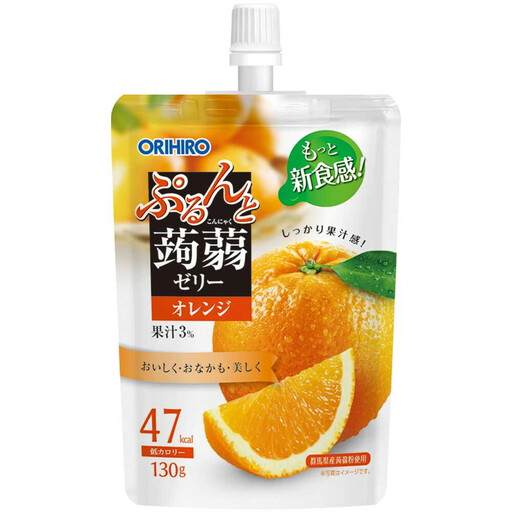
Why it fits the profile: The standing pouch is suitable for a quick snack without a spoon. The stated nutritional value is 47 kcal per 100 grams and the texture is described as springy thanks to konjac flour.
The packaging contains clear usage instructions: squeeze the jelly out while chewing thoroughly. Store the product in a cool, dry place and do not heat or freeze it.
Handy ready-to-eat format, 130 grams content and 47 kcal per 100 grams according to the product information.
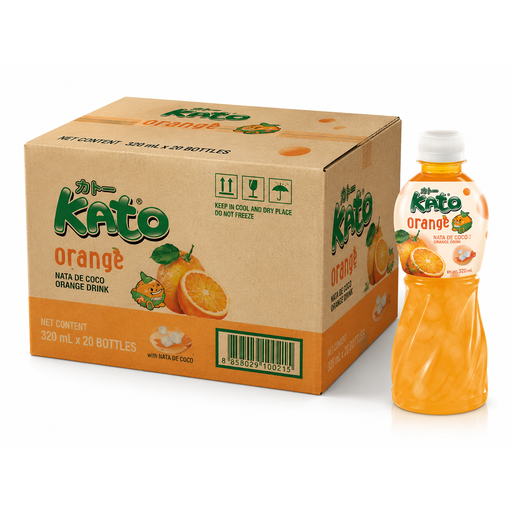
Why it fits the profile: This multipack combines orange juice with nata de coco. With 320 ml per bottle and 24 pieces, the product is suitable for stocking up or serving at a gathering.
The label separately states 25% orange juice and 15% nata de coco. This immediately shows you that it’s a drink with coconut gel pieces and not a firm orange jelly.
24 bottles of 320 ml, 25% orange juice and 15% nata de coco according to the product information.
We’ve put together a full, up-to-date list of products that fully meet these strict selection criteria and comply with current European safety regulations.
According to the product information, most unopened jelly products should be stored in a cool, dry place, away from direct sunlight and heat. For a fresher texture, you can serve many varieties chilled. After opening, seal the packaging, refrigerate if indicated and consume the product as soon as possible.
Check with every purchase:
Not always. “Orange jelly” is a broad description for a jelly-like snack. The texture can be firm, soft or drinkable. A konjac jelly, for example, uses konjac flour for a springy structure, while a jelly drink can be more liquid.
Unopened products can often be stored in a cool, dry place. Refrigeration is recommended for several varieties for taste and texture. After opening, specific instructions apply per product; so always read the label.
That varies per product and portion. In the stated information, Hethstia states 7 kcal per 100 grams and ORIHIRO 47 kcal per 100 grams. Jele Light states 32 kcal per 100 grams. Don’t just compare the number on the front, but also the portion size, sugars and ingredients.
