
Vandaag of morgen in huis

Kwaliteit gegarandeerd

Welkomstaanbiedingen ontgrendelen: GRATIS bezorging | Tot 80% korting | Gratis 30 dagen JoyPlus-proefperiode
Download de app
Ordering a crate of orange fizzy drinks online might seem straightforward. Yet orange soda, orangeade and sparkling orange drinks vary widely in flavour, content and composition. A striking label doesn’t always tell you about the juice percentage, the amount of sugar or how practical the packaging really is.
If you check a few details beforehand, you can avoid a disappointing purchase. This is especially important when you’re buying an orange drink multipack for your household, a party, guests or to take on the go.
A multipack of 24 cans might look appealing, but compare the price per litre. For example, twelve 330 ml bottles give you 3.96 litres. Four 1.5 litre bottles come to 6 litres. The unit price can therefore be quite different from what the product page price suggests.
Also pay attention to the type of packaging:
Check the ingredients declaration and the stated juice percentage. For example, Fanta Orange Soda 24 x 330 ml lists 6.5% orange juice from concentrate. The Fanta Orange Soda 12 x 330 ml variant states 3% orange juice from concentrate according to the product information.
Sanpellegrino Aranciata Rossa contains 17% orange juice and 3% blood orange juice according to the product description. That gives a different flavour profile to a soft drink that mainly uses flavourings. So a product labelled “orange flavour” doesn’t necessarily have the same fruit content as an Italian orange drink.
A sugar-free orange fizzy drink is usually sweetened with sweeteners. Fanta Orange Zero Sugar lists aspartame and acesulfame-K, and contains 3 kcal per 100 ml according to the product data. The regular Fanta Orange contains 23 kcal and 5.6 grams of sugar per 100 ml.
If you want to avoid sweeteners, you need to read the full ingredients list. Also check for allergens and warnings. The Fanta Zero variant mentioned contains a source of phenylalanine and, according to the product information, is not suitable for people with phenylketonuria.
Don’t just look at the number of packs – calculate the total amount:
Number of packs × volume per pack = total volume
A tray of 24 cans of 330 ml contains 7.92 litres. A multipack of 12 bottles of 330 ml contains 3.96 litres. For everyday use, a large pack of cans can be practical; for a family, individual 1.5 litre bottles might be more convenient.
Compare the nutritional values per 100 ml. This stops a small can from looking more favourable just because the portion size is smaller. Look out for these details:
The figures below are based on the product information provided. Always check the current label before buying, as recipes or packaging can change.
A higher juice percentage can give a fruitier profile, but it’s not the only thing that affects the taste. Acids, flavourings, sugar and carbonation also influence the final experience. For example, Rivella Regular Orange lists milk serum, so this product contains milk as an allergen. According to the product information, Fanta Orange does not list any of the 14 major EU allergens.
With imported drinks such as Jarritos Mandarin, Cantabile Orange Ade or Sanpellegrino Aranciata Rossa, it’s wise to check both the Dutch product labelling and the packaging. Keep fizzy drinks chilled after opening and use them within the period stated on the label.
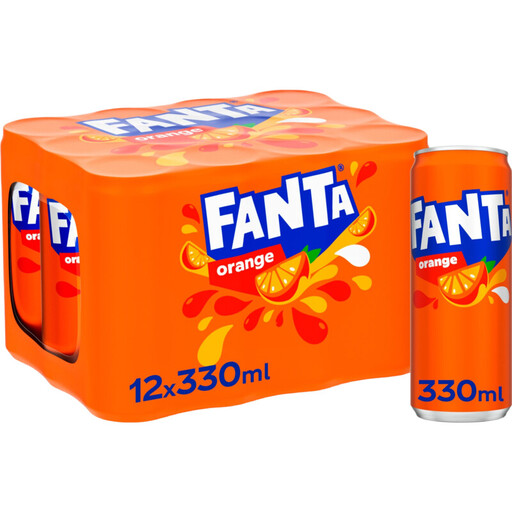
Why this fits the profile: A neat pack of 12 cans for anyone who wants to try a familiar orange fizzy drink without committing to a large bulk pack straight away.
The contents are clearly specified: 12 cans of 330 ml. This makes the total volume easy to work out.
330 ml cans, 3% orange juice from concentrate according to the product information, and ideal for sharing.
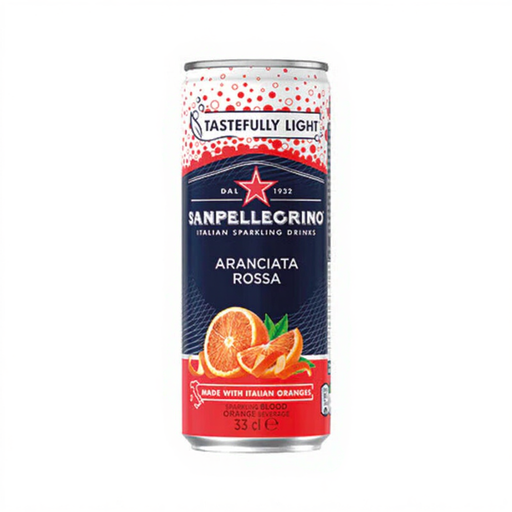
Why this fits the profile: For anyone looking for a distinctive citrus drink with orange and blood orange, perfect for a meal or a quiet moment.
The juice percentage is clearly stated, so “fruity” isn’t something you have to judge just from the front of the pack.
17% orange juice and 3% blood orange juice according to the product description; 330 ml pack.
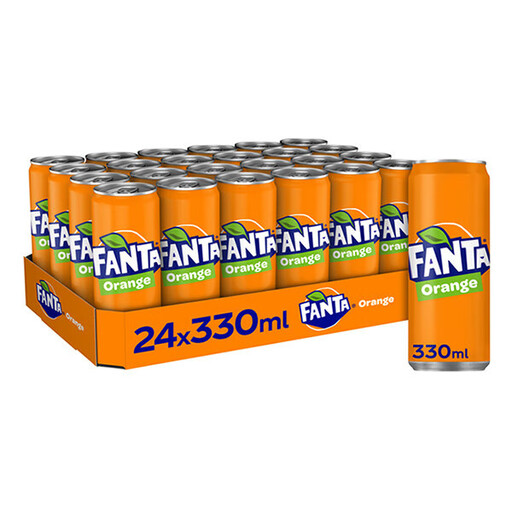
Why this fits the profile: A large pack of cans for parties, offices, families and households that regularly serve fizzy drinks.
The portions are pre-divided. You don’t have to open a large bottle when not everyone wants the same amount.
24 cans of 330 ml; 6.5% orange juice from concentrate and 23 kcal per 100 ml according to the product information.
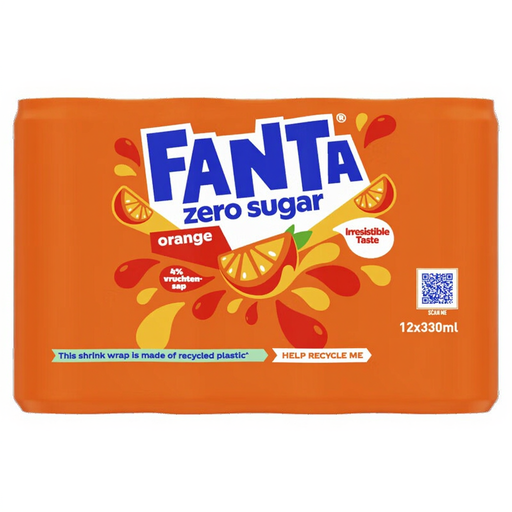
Why this fits the profile: For anyone who wants an orange flavour with a low energy content and is happy to use sweeteners.
The product information lists both the low energy content and the sweeteners used. This lets you tailor your choice to your own preference.
12 cans of 330 ml; 3 kcal and 0.4 grams of sugar per 100 ml according to the product data.
We’ve put together a full, up-to-date list of products that fully meet these strict selection criteria and current European safety regulations.
That depends on the recipe. According to the product information, Fanta Orange Zero Sugar contains 0.4 grams of sugar and 3 kcal per 100 ml. The drink does contain sweeteners. So always check both the nutritional information table and the ingredients list.
Keep an opened bottle or pack chilled and seal the lid or pack tightly. Check the label for the recommended period after opening. Cans are usually intended for a single serving, whereas a 1.5 litre bottle contains several portions.
Not automatically. Compare the price per litre and add up the total volume of the pack. A 24-pack of cans is handy for stock and for guests, but a larger bottle can work out cheaper per litre. Also think about storage space, deposits and the packaging that suits how you’ll use it.
