
Vandaag of morgen in huis

Kwaliteit gegarandeerd

Welkomstaanbiedingen ontgrendelen: GRATIS bezorging | Tot 80% korting | Gratis 30 dagen JoyPlus-proefperiode
Download de app
Searching online for orange drinks brings up more than just orange juice. You’ll also find orange fizzy drinks, sugar-free orange drinks, squash and drinks with an orange flavour. These products vary considerably in composition, nutritional values and intended use. A drink for breakfast, for example, calls for different features than a stock of cans for a party.
Orange juice with no added sugar can still contain naturally occurring fruit sugars. For example, the Appelsientje orange juice label lists 8.6 grams of sugar per 100 ml. According to the product information, this comes from the fruit itself. No added sugar therefore does not automatically mean no sugar.
A sugar-free orange drink or orange drink with no sugar is generally sweetened with sweeteners. Always check both the nutrition table and the ingredients list.
A low-calorie orange drink usually contains little energy, but also less fruit juice than 100% orange juice. Orangina Light, for example, lists 4 kcal and 0.5 grams of sugar per 100 ml. Appelsientje Orange Juice lists 41 kcal and 8.6 grams of sugar per 100 ml.
That does not automatically make one choice more suitable than the other. It depends on what you need: do you want fruit juice with breakfast, a fizzy drink or a light thirst-quencher?
A 330 ml can may look small, but three cans add up to almost a litre. A 1 or 1.5 litre bottle is often more convenient for a family, while individual cans can be useful for travelling or entertaining. Convert the nutritional values to the amount you actually drink.
Also pay attention to the best-before date, storage conditions and how long the product should be kept refrigerated after opening.
Start with the product category:
The product information for Fanta Orange Zero Sugar lists 4% orange juice from concentrate. According to the label, Orangina Light contains 4.8% juice from oranges and other citrus fruits, plus 1.4% fruit pulp.
Always compare the same unit of measurement. A practical selection:
For a “zero” or “light” product, it is also important to read the ingredients. Fanta Orange Zero Sugar lists aspartame and acesulfame-K. The product also states that it contains a source of phenylalanine and is not suitable for people with phenylketonuria. Orangina Light lists acesulfame-K and sucralose.
Choose the size based on how you plan to use it:
Store unopened drinks according to the packaging, away from direct sunlight and heat. Many products need to be kept refrigerated after opening. Always check the current best-before date and the instructions on the label.
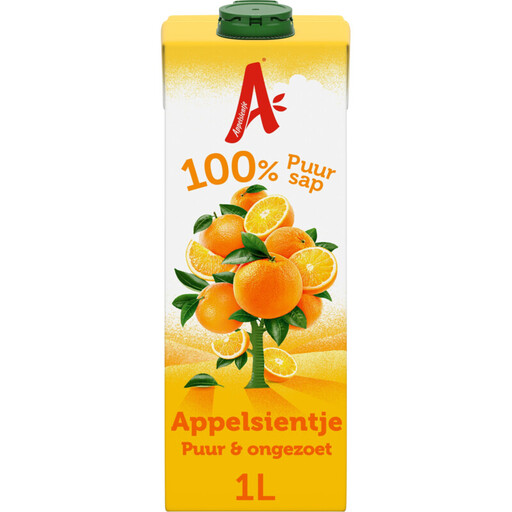
Why it suits this profile: A manageable size for anyone who wants to try regular orange juice without immediately buying a large pack.
The label distinguishes between 100% fruit juice and added sugar: according to the product information, no sugar has been added.
1 litre, 100% fruit according to the label and 41 kcal per 100 ml.
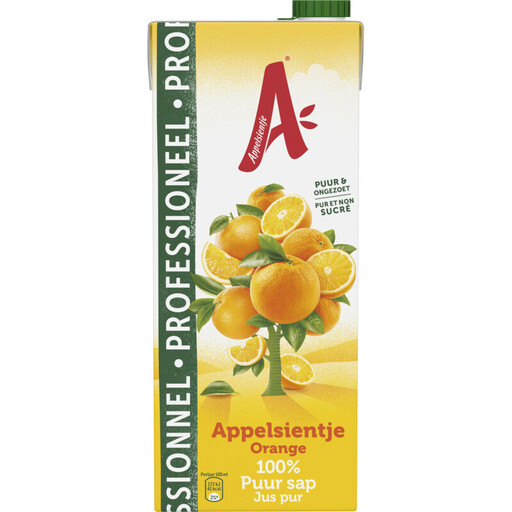
Why it suits this profile: A family-sized pack for households that regularly serve orange juice at breakfast or lunch.
The packaging clearly states 100% pure orange juice and 8.6 grams of naturally occurring sugars per 100 ml.
1.5 litres; according to Appelsientje’s own product information, a source of vitamin C, folic acid and potassium.
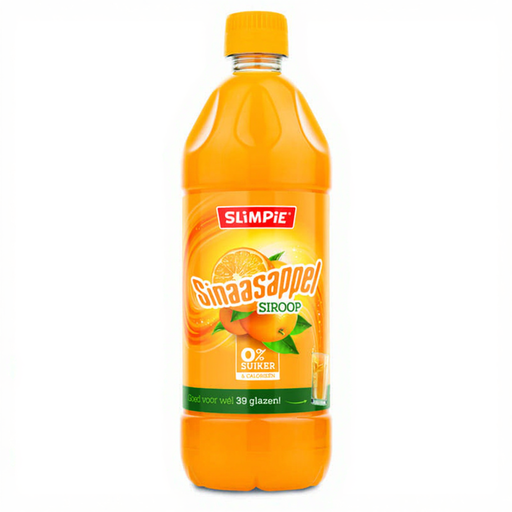
Why it suits this profile: Handy for anyone who wants to make several glasses at home and adjust the amount of water and squash themselves.
This product is not a ready-to-drink fizzy drink: you can choose the dilution yourself, and the ingredients list shows the sweeteners sucralose and acesulfame-K.
According to the product information, 0% sugar and 0% calories; suitable for preparing multiple servings with water.
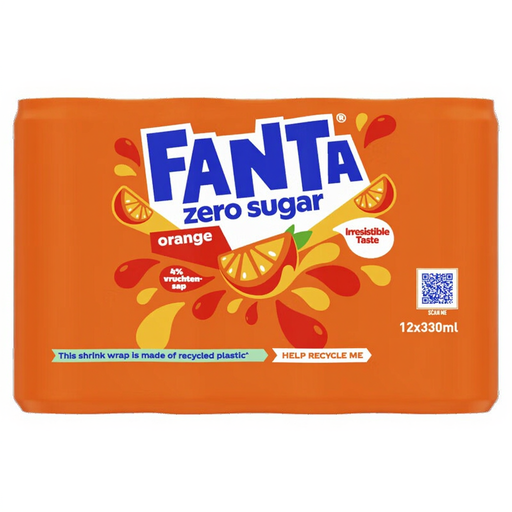
Why it suits this profile: A supply of individual cans for guests, parties or a chilled drink without opening a large bottle.
The can format makes portion sizes clear. The label also lists 3 kcal and 0.4 grams of sugar per 100 ml, along with the sweeteners used.
12 x 330 ml cans, carbonated and low in calories according to the product information.
We’ve put together a complete, up-to-date list of products that fully meet these strict selection criteria and the applicable European safety regulations.
No. With 100% orange juice, the sugars occur naturally in the fruit. Appelsientje lists 8.6 grams of sugar per 100 ml, despite containing no added sugar. So check the nutrition table rather than relying only on the front of the packaging.
It varies by product. In the product information provided, Fanta Orange Zero Sugar contains 3 kcal per 100 ml and Orangina Light contains 4 kcal per 100 ml. Slimpie lists 7 kcal per 100 ml, but this is a squash that still needs to be diluted with water. The final value therefore depends on the ratio.
Always follow the instructions on the packaging. Many orange drinks should be refrigerated after opening and consumed within the stated period. Close the bottle securely and check the smell, taste and appearance before drinking. Cans are best consumed immediately after opening.
