
Managing a growing interview archive
You store lots of audio recordings and want to plan enough space for both the collection and a second local copy kept separately.


For a large archive that usually stays in one place, an external HDD is a sensible choice. If you often take interviews with you or transfer files on location, a portable SSD may be a better fit. Always plan for a separate local backup alongside your main drive: one drive is not an archiving strategy. Check that the connection is compatible with your devices, too, and match access security to how sensitive the interviews are.
You store lots of audio recordings and want to plan enough space for both the collection and a second local copy kept separately.
You move interviews between locations, so portability, compatible connections and protection against knocks matter to you.
You store conversations that could identify individuals. The privacy obligations that apply depend, among other things, on the purpose and how you use the recordings.
Choose this option: if you store lots of interviews and the drive will usually stay in one place.
Bear in mind: an HDD has moving parts and is more susceptible to knocks than an SSD. The Consumentenbond outlined this general trade-off in July 2022.
Choose this option: if you regularly take interviews with you or transfer files on location.
Bear in mind: speed also depends on your computer, cable and USB port; an SSD is no substitute for a separate backup. The Consumentenbond outlined the general HDD/SSD trade-off in July 2022.
| What to consider | What should you look for? | Who is it important for? |
|---|---|---|
| Backups | Plan a second copy on a separate storage device and keep it in a different physical location. Check that you can open the files. | I don’t want irreplaceable interviews to depend on a single device; around 33% of consumers say preventing data loss is their top priority. |
| Privacy and access | Consider who can access the interviews and what level of security is appropriate for their sensitivity. Storing files locally does not automatically determine the legal basis for using them. | If identifiable conversations need to remain confidential, I want to manage access and use carefully; around 27% of consumers prioritise this protection. |
| Portability and connections | Check the model, the cables supplied and the USB ports on the devices you use. | I move interviews between locations and want to be able to connect the drive to my devices; around 20% of consumers prioritise portability and connections. |
| Capacity | Count your existing recordings, allow for growth and set aside space for the separate copy. Then compare the capacity and total cost of suitable models. | For a growing collection, I want to plan enough space without choosing more capacity than I need; around 20% of consumers prioritise archive storage space. |
That leaves you with a single copy, which could be lost or become unreadable. Without the cloud, keeping a separate local copy is especially important.
Make a second copy before deleting any files, keep it somewhere else and check that the files open.
A second local storage device and the management of separate copies require extra resources and attention.
A quoted maximum does not mean your computer, USB port and cable will achieve the same transfer speed.
First check the connections on your devices, and only pay for extra speed if it suits the way you use the drive.
Identifiable conversations may contain personal data. The Dutch Data Protection Authority makes clear that the exemption for use purely for personal or household purposes does not necessarily apply to broader or professional use.
Decide on the purpose and who should have access. If you use the recordings outside a purely private setting, assess which legal basis and security measures apply to your situation.
Appropriate access security and careful management take time and may require additional resources.
The Expansion Portable is a range of HDDs for local storage. Seagate Netherlands lists, among others, the STKM5000400 model with 5 TB.
The Portable SSD T7 Shield is a range of portable SSDs. Samsung Netherlands lists the black 2 TB model as MU-PE2T0S/EU.
The XS1000 is a compact range of external SSDs, which includes a 2 TB model.
The Joybuy products below include portable SSD and HDD options for local storage. Compare their capacity and connections with your collection, your backup and the devices you use.
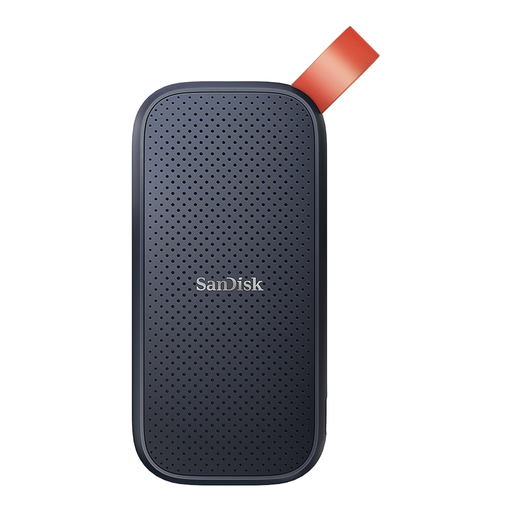 No image available
A portable SSD option for interviews you take between locations.
Capacity: 1 TB.
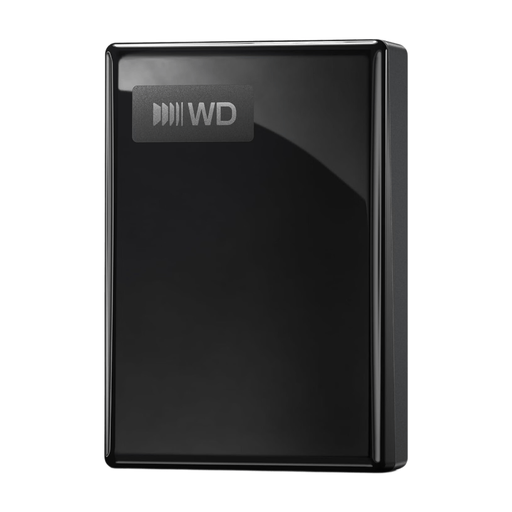 No image available
An external drive option for local storage; check that this model suits your connection and archiving plan.
Capacity: 1 TB. Connection according to product name: USB-C.
 No image available
An external drive option for a growing archive; remember to allow space for a separate backup, too.
Capacity: 4 TB. Connection according to product name: USB-C.
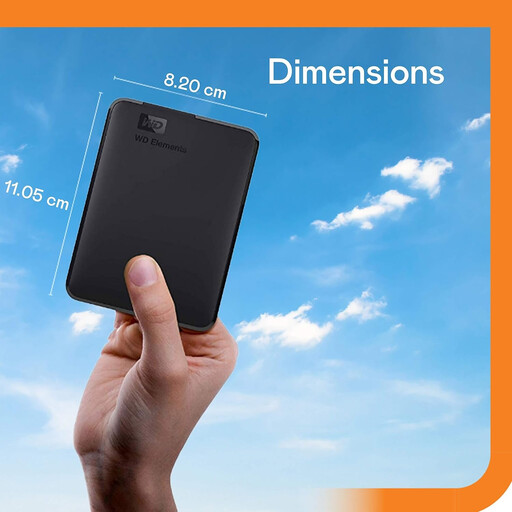 No image available
A portable HDD option for local storage; check that USB-C is compatible with the devices you use.
Capacity: 2 TB. Connection according to product name: USB-C.
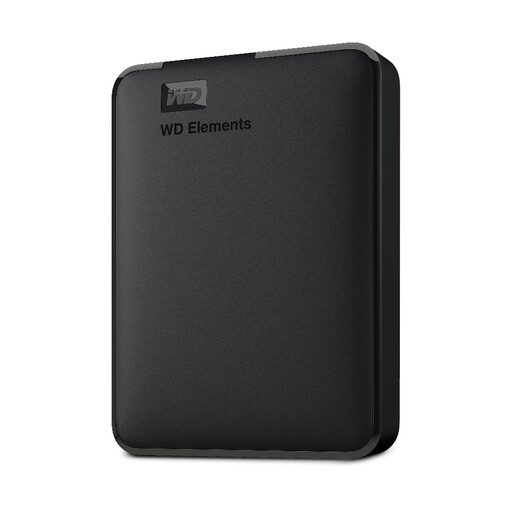 No image available
A portable HDD option for local storage; check that the connection is compatible with your devices.
Capacity: 2 TB. USB 3.0 is listed in the product name.
No, not if preservation is your aim. The Library of Congress recommends keeping copies on different storage media and in separate physical locations. This is preservation advice, not a Dutch statutory purchasing requirement.
Not just because you’re buying a different drive. The National Archives of the Netherlands lists WAV and BWF as preferred formats for government information and warns of the risk of information loss when converting large volumes of files shortly before transfer. Keep the original file and agree any transfer with the receiving archive.
Before buying, check that the port and cable are compatible with your devices. After copying, test that the interviews open, and keep a separate backup; the Library of Congress recommends keeping copies on different media and in different locations for preservation.
No, a warranty is no substitute for a backup. In the Netherlands, you’re entitled to a product that is fit for purpose; according to the Dutch government, there is no fixed statutory warranty period, and a manufacturer’s warranty is an additional benefit. So keep your interviews on a separate storage device as well.
Storing recordings locally does not, in itself, exempt you from privacy rules. If you process them for purposes beyond purely personal or household use, you need to assess which legal basis applies; consent is one possible basis, not automatically the only or sufficient option. The Dutch Data Protection Authority says that organisations’ security measures should be appropriate to the risk. The rules for a private, research or institutional archive depend on how it is used.