Start with a set-up that lets you record the speaker close to the microphone: in a room with echo, placement matters more than impressive microphone specifications. For one speaker in a fixed position, a directional USB or USB/XLR microphone may be suitable. If two speakers move around, you could use separate microphones worn close to them. A portable recorder lets you record without a computer, but distance from the speakers still matters.
Who is this buying guide for?
Interviewer in a room with echo
You can record the speaker in a fixed position close to a microphone, and want to keep their speech clear and easy to understand. Oral History in the Digital Age highlights the importance of a fixed position and speaking close to the microphone.
Interviewer with two speakers who move around
You want to capture both questions and answers when not everyone can stay by the same table microphone. The East Midlands Oral History Archive at the University of Leicester discusses microphone choice in relation to the speaker’s position.
Mobile oral history recorder
You record in different locations and want to record and save files without a laptop. The Oral History Association discusses uncompressed standard formats for recordings that are to be preserved.
What should you look for when buying?
Directional microphone for one speaker in a fixed position
Choose this option if: you can have one speaker talk in a fixed position close to the microphone.
Consider: Audio-Technica describes the ATR2100x-USB as having a cardioid polar pattern. In a room with echo, getting the distance right and making a test recording are still important.
Two microphones worn close to the speakers
Choose this option if: the interviewer and speaker move around, or cannot both stay close to one table microphone.
Consider: DJI says the Mic Mini receiver can pair with two transmitters at the same time. Check exactly what is included in the set and that it connects to your recording device.
Portable recorder with built-in microphones
Choose this option if: you want to record on location without a laptop and can place the recorder close to the people speaking.
Consider: Zoom lists built-in X/Y microphones, while Tascam lists built-in omnidirectional microphones. With both, distance from the speakers still matters.
Oral History in the Digital Age and the East Midlands Oral History Archive at the University of Leicester highlight the importance of microphone placement in relation to the speaker. Then choose based on the number of voices, where you’ll be recording and how you want to record.
| What to consider |
What to check before buying |
Which consumers? |
| Clear speech in a room with echo |
Check the polar pattern and mounting options. Make a test recording where you plan to use the microphone. |
When I record a speaker in a room with echo, I want to be able to position the microphone close by and capture their voice clearly. Around 33% of consumers put clear speech at the top of their buying concerns. |
| Recording both voices |
Count how many microphones and inputs or transmitters you need. Test questions and answers from the positions people will usually speak from. |
When both the interviewer and speaker need to be easy to hear, I want to know whether each person can wear a microphone close to them. Around 27% of consumers prioritise recording both voices. |
| Recording without a laptop |
Check whether the device can record on its own, which microphone input is available and how you can listen back to the recording. |
When I work in different locations, I want to be able to record without bringing a computer. Around 20% of consumers prioritise being able to record on location without a computer. |
| Checking and preserving a recording |
Check whether you can monitor the recording as it’s being made and whether the device supports WAV if that’s the format required by the archive receiving it. |
When I want to preserve or hand over an interview later, I want to be able to check the recording and choose the required file format. For around 20% of consumers, preserving and checking a recording is their top buying concern. |
Common mistakes
-
Assuming a recorder in the middle of the table will capture both voices clearly
The distance and position of both speakers affect what the microphone picks up. Oral History in the Digital Age emphasises that speakers should sit close to a microphone.
Before the interview, record both questions and answers from the positions people will actually speak from, then listen back to the test recording. Move the microphone closer if needed.
-
Mistaking a set with one transmitter for a two-person set
A product range may include different bundles. If you need two wearable microphones, the set you choose must actually include two transmitters.
Check what’s included in the exact version and whether the receiver is compatible with your recording device. Test the connection before the conversation begins.
-
Thinking recording features can make up for poor microphone placement
Features and settings don’t change the distance between the microphone and the speaker.
First, assess a test recording in the room. Then choose recording features to suit the rest of your workflow.
Brands to consider
Audio-Technica
The ATR2100x-USB is a directional dynamic microphone for one speaker in a fixed position, with USB and XLR connectivity.
- Audio-Technica lists direct headphone monitoring and a desktop tripod stand included with this model.
- A directional microphone won’t eliminate room echo. Test the distance and position in the room where you plan to use it.
RØDE
The PodMic USB is a dynamic speech microphone with USB-C and XLR for a fixed recording set-up.
- RØDE says the PodMic USB has direct headphone monitoring and an internal pop filter.
- This microphone is designed for one speaker. For two voices, you may need a second microphone and a suitable recording input.
Shure
The MV7+ is a USB-C/XLR speech microphone for a computer-based set-up with direct control.
- Shure lists a headphone socket and app-based settings for this model.
- Check that the app you plan to use works with your equipment, and make a test recording in the room.
DJI
The Mic Mini set with two transmitters is an option if both people in the conversation can wear a microphone.
- DJI says the receiver can pair with two transmitters at the same time.
- Check the exact set, its connection to your recording device and the recording itself before the conversation begins.
Zoom
The H1essential is a portable recorder with built-in microphones and the option to connect an external microphone.
- Zoom lists built-in X/Y microphones, headphone monitoring and recording to a card.
- Placement still matters if the built-in microphones are far from the speaker.
Tascam
The DR-05XP is a portable recorder with built-in omnidirectional microphones and an external microphone input.
- Tascam lists WAV recording capabilities and an external mini-jack input.
- Built-in omnidirectional microphones don’t make distance from speakers irrelevant in a room with echo.
Joybuy products
These Joybuy products include wireless microphones for two speakers, a portable recorder and a USB microphone for a fixed position. Choose based on the number of voices, where you’ll be recording and the connection you need.
 No image available
DJI Mic Mini 2S (2 TX + 1 RX + Charging Case)
A set with two transmitters may be suitable if both the interviewer and speaker can wear a microphone.
The product name lists 2 TX, 1 RX and a Charging Case. Check that it connects to your recording device and test the set where you plan to use it.
Joybuy
 No image available
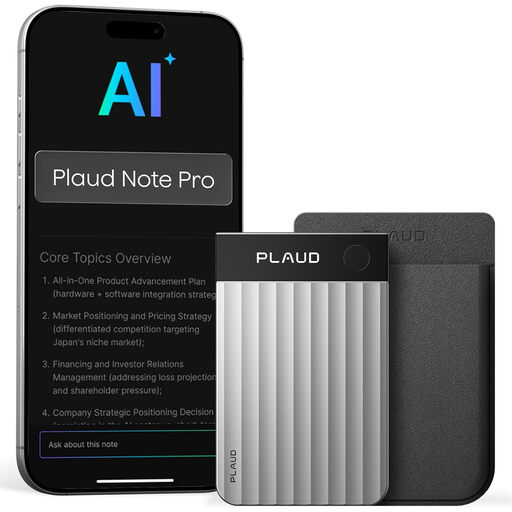
Plaud Note Pro AI Notes & Summary Voice Recorder (Silver)
If you want to use a recorder on location, this product may suit a mobile recording set-up.
The product name identifies it as a voice recorder and lists the colour as Silver. Check that its recording and file-handling options suit your project.
Joybuy
 No image available
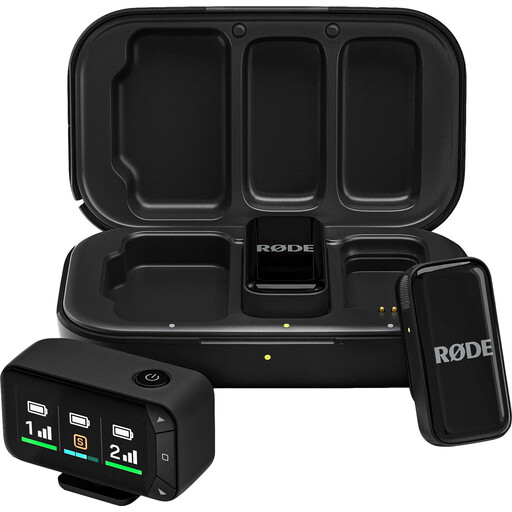
RØDE Wireless Micro, USB-C, Black (2 microphones)
A set with two microphones may be suitable if both the interviewer and speaker can wear one.
The product name lists two microphones and USB-C. Check that the receiver and connection are compatible with your recording device.
Joybuy
 No image available
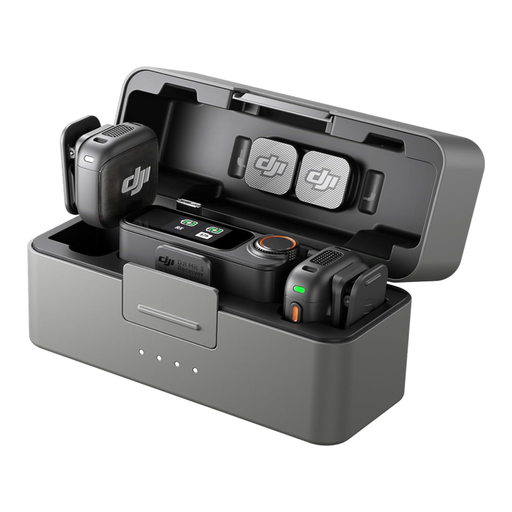
DJI Mic 3 (2 TX + 1 RX + Charging Case)
A set with two transmitters may be suitable if both speakers can wear a microphone.
The product name lists 2 TX, 1 RX and a Charging Case. Check the connection and make a test recording with both speakers.
Joybuy
 No image available
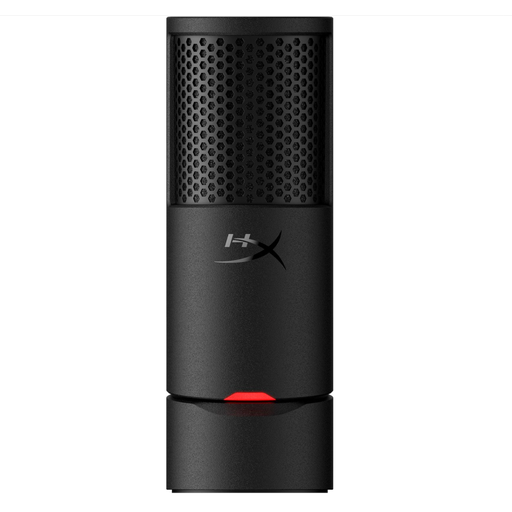
HyperX SoloCast 2 USB Cardioid, Black
This model may suit a computer-based set-up if one speaker can stay close to a USB microphone.
The product name lists USB, a cardioid polar pattern and the colour Black. Test the microphone where you plan to record the interview.
Joybuy
Frequently asked questions
Should I buy a dynamic microphone for an untreated room?
Not necessarily. First, think about where the speaker will sit and how close you can position a microphone. A cardioid microphone can reduce sound from other directions; a lapel microphone close to the speaker may be more practical than a table microphone placed further away. Test your chosen set-up in the room.
How can I check the recording before the interview starts?
Make a short recording of both questions and answers from the positions people will actually speak from, then listen back. Listen out for table vibrations, rustling clothes and sounds that are easy to miss during a conversation.
Which file format is suitable for long-term preservation?
Ask the archive receiving the recording about its requirements. The Oral History Association recommends an uncompressed standard format such as WAV where possible. Before buying, check that your chosen recording device can capture that format.
What if a newly purchased microphone develops a fault soon after buying it?
For a consumer purchase in the Netherlands, statutory consumer rights apply in addition to any manufacturer’s warranty. ACM ConsuWijzer explains that if a product is faulty, you may be entitled to an appropriate solution from the seller. There is no single fixed statutory warranty period for every product.
Can I record and publish an oral history interview that identifies the person?
An identifiable audio recording may count as personal data. If you process it for purposes beyond purely personal or household use, you need a lawful basis under the GDPR. Consent is one possible basis, but it is not automatically the only one. The Dutch Data Protection Authority says that in most cases you need consent to publish someone else’s personal data online. Discuss in advance with the interviewee how the recording will be used, stored and shared.


