Which setup is right for you?

Interviewers in a noisy room

If traffic, household noises or echo could obscure words, position the storyteller close to the microphone and test the recording in advance at the interview location. The East Midlands Oral History Archive at the University of Leicester recommends placing table microphones close to the interviewee.

Interviewers with a storyteller who moves around

A storyteller who doesn’t stay in one place may benefit from a clip-on microphone that moves with their voice. Make a test recording to check that the clip doesn’t cause rustling against their clothes.

Interviewers who want to capture both voices

If you need both questions and answers to be clear when you listen back, test both voices in a recording. Depending on your setup, you may need a second microphone or a recorder in a suitable position.

What should you look for when choosing?

Fixed-position speaking microphone close to the storyteller

Best suited to: a storyteller who stays in one place for most of the interview, and recording with a computer or compatible recording device.

Bear in mind: a single microphone close to the storyteller may pick up your questions at a lower volume.

Clip-on microphone or wireless kit

Best suited to: a storyteller who moves around, or situations where a microphone on the table would be too far away.

Bear in mind: rustling clothes, the connection and power supply. Also check that the interviewer can be heard.

Standalone recorder with built-in microphones

Best suited to: recording without a computer, provided you can place the recorder close enough to both people.

Bear in mind: a recorder in the middle of the table may pick up echo and background noise. Check storage and power in advance.

What to consider What to check before buying Who should pay particular attention?
Clarity against background noise Check the recording pattern and connections, and whether you can position the microphone close to the storyteller. Listen back to a test recording. If I need to contend with traffic, appliances or echo in the room, I want to be able to record the storyteller close up. Around 36% of consumers say clarity is their top purchasing priority.
Freedom of movement Check how the microphone is attached, whether the connection is compatible and what power supply a wireless kit needs. If the storyteller moves around, I want the microphone to stay close to their voice without rubbing against their clothes. Around 29% of consumers prioritise freedom of movement.
Clear audio from both people Check whether you can connect two microphones or record both voices clearly with one setup. If I want to understand both the questions and answers when I listen back, I check both voices with a test recording. Around 21% of consumers say that hearing both voices clearly is their top priority.
Recording without a computer Check the storage, power supply and whether you can listen back to a recording using headphones. If I don’t want to use a computer during the conversation, I look for a recorder I can operate on its own. Around 14% of consumers give standalone recording top priority.

Common pitfalls

  • Relying solely on promises of noise processing

    Noise and echo can still obscure words. A manufacturer’s feature doesn’t guarantee that all distracting sounds will be removed in your room.

    First, find a suitable location and microphone distance, then make a test recording there.

  • Recording only the storyteller close up

    With one microphone close to the storyteller, the interviewer’s questions may sound much quieter.

    Listen back to both voices before the full interview, then decide whether you need a second microphone or a different setup.

  • Not getting a recorder ready to use in advance

    The Zoom H1essential won’t record unless a microSD card is inserted.

    Check the card and power supply, and make a test recording before the interview starts.

Brands to consider

Audio-Technica

The ATR2100x-USB is a dynamic speaking microphone with USB and XLR connections, designed for a fixed recording position.

  • Audio-Technica specifies a cardioid recording pattern that picks up less sound from the sides and rear, as well as a headphone socket for direct monitoring.
  • When using one microphone close to the storyteller, check separately that the interviewer can be heard clearly too.

RØDE

The Wireless ME is a wireless clip-on microphone option for conversations involving movement; the PodMic USB is a fixed-position dynamic USB/XLR microphone.

  • RØDE says that the Wireless ME has a built-in microphone in both the transmitter and receiver. According to RØDE, the PodMic USB offers direct headphone monitoring.
  • For the wireless kit, check the positioning, power supply and any clothing noise. For the fixed-position microphone, check that it records both voices.

Shure

The MV7+ is a dynamic USB-C/XLR microphone for a fixed recording position, with controls via compatible software.

  • Shure describes automatic level control and real-time noise processing as microphone features.
  • These features don’t guarantee clear audio in your flat. Check that the required connection and setup are compatible with your recording device.

Zoom

The H1essential is a standalone recorder with built-in X/Y microphones and an input for an external microphone.

  • Zoom specifies recording to a card and monitoring via the 3.5mm output.
  • A microSD card must be inserted to record. If you place it on a table, test that echo and room noise don’t overpower the voices.

Joybuy products

This selection includes wireless clip-on microphones for a storyteller who moves around, a fixed-position USB microphone and portable recorders for interview recording.

DJI Mic Mini 2S with two transmitters, one receiver and charging case

DJI Mic Mini 2S (2 TX + 1 RX + charging case)

With two transmitters, this kit is worth considering if you want to record two people or the storyteller moves around.

The product information lists two transmitters and one receiver, clip or magnetic attachment, and 32-bit float recording. Make a test recording to check that both voices come through clearly.

Joybuy
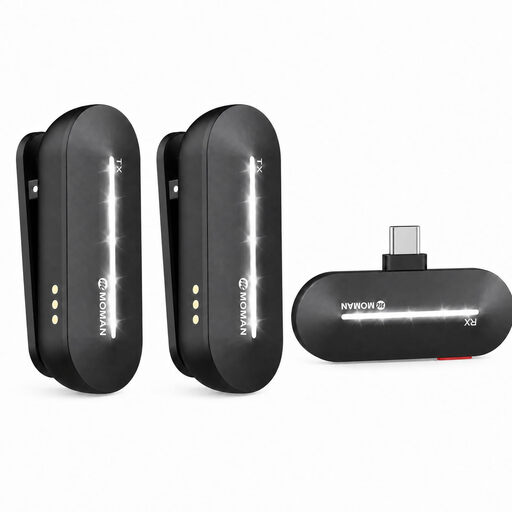
Moman M1CXT wireless lavalier microphone with USB-C, two transmitters and one receiver

Moman M1CXT wireless lavalier microphone, USB-C, 2TX+1RX, 150m

A clip-on microphone setup may work well if the storyteller moves around. Check that the clip doesn’t cause rustling against their clothes.

The product name specifies USB-C, two transmitters and one receiver, with a range of 150 m. The product information also mentions 32-bit float recording. Check that the connection is compatible with your recording device.

Joybuy

USB condenser microphone with cardioid pattern and headphone monitoring

USB condenser microphone with cardioid pattern

This fixed-position USB setup may suit a storyteller who stays in one place for most of the interview. Listen back to check that your questions are clear too.

The product information lists headphone monitoring and an included boom arm, shock mount and pop filter. A cardioid pattern doesn’t mean that all room noise is excluded.

Joybuy
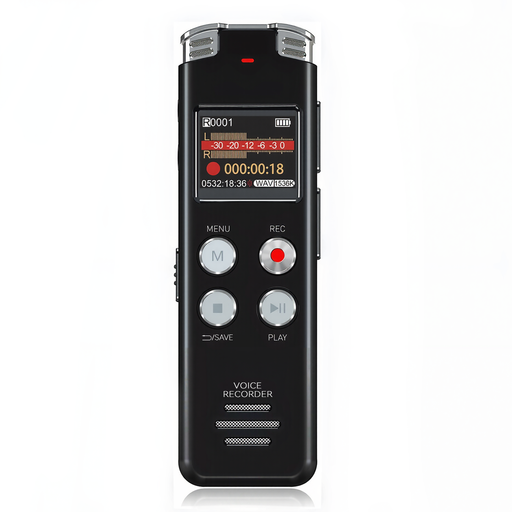
Rexsun L357 digital voice recorder, 128GB

Rexsun L357 digital voice recorder, 128GB

A portable recorder may suit you if you want to record interviews independently and listen back later. Position it so that both voices come through clearly.

The product information lists WAV and MP3 recording, one-button operation and an LCD screen. Make a test recording to check that you can hear both the interviewer and storyteller clearly.

Joybuy
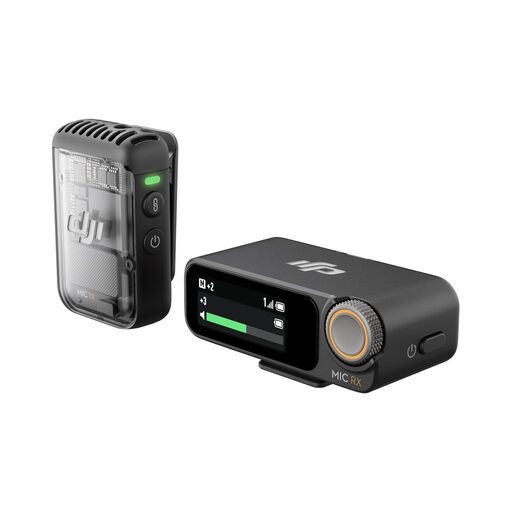
DJI Mic 2 wireless microphone kit with one transmitter and one receiver

DJI Mic 2 (1 TX + 1 RX)

The clip and magnetic attachment may be handy if the storyteller moves around. This kit alone won’t record the interviewer on a separate transmitter.

The product information lists internal recording on the transmitter and adapters for USB-C, Lightning and 3.5 mm. Check which connection is compatible with your recording device.

Joybuy

Frequently asked questions

Is a microphone with noise processing enough for a noisy flat?

Don’t count on it without making a test recording. Choose the quietest spot you can, position the microphone close to the storyteller, and listen back to the questions and any distracting sounds too. Noise processing is a feature of a specific product, not a guarantee that it will work in your room.

How can you avoid rustling clothes or table noise?

Attach a lavalier microphone so that it doesn’t rub against clothing, or place a table microphone close to the storyteller without touching it during the conversation. Make a short test recording at the interview location and listen back to it.

What should you prepare when using a standalone recorder?

Check the storage and power supply in advance, and make a test recording. A microSD card must be inserted to record with the Zoom H1essential. Its documentation also describes battery and USB power options.

Do you need permission to preserve or publish someone’s life story?

Discuss in advance with the storyteller how you’ll use and store their story, and whether you intend to publish it. The Oral History Association recommends documenting informed consent. The Dutch Data Protection Authority describes a GDPR exemption for purely personal or household use. If the GDPR applies, you must establish an appropriate legal basis before processing the data. Consent is one possible legal basis and must meet specific requirements. This is not a general conclusion about the criminal lawfulness of recording every conversation.
