What should you look for when buying?
First, test speech clarity at the actual location, then decide how many voices you want to record. Oral history guidance emphasises microphone distance; the East Midlands Oral History Archive points to two microphones as an option if the interviewer also needs to be clearly audible.
| What to consider |
What should you check? |
Which consumers does this matter to? |
| Clear speech |
Make a test recording at the location from the intended speaking distance and compare microphone positions. |
If my main priority is capturing the speaker clearly, I’ll test how close the microphone can be positioned. Around 36% of consumers say speech clarity is their main consideration. |
| Two voices |
Check the number of microphones, inputs or transmitters, and listen back to each voice separately. |
If both the interviewer and speaker need to be clearly audible, I’ll look for a set-up for two speakers. Around 29% of consumers prioritise recording both voices. |
| Connection |
Compare the microphone connection with the one on your computer, recorder, camera or phone. |
If I want to use my existing recording equipment, I’ll first check which connection is compatible. Around 21% of consumers put compatibility first. |
| Monitoring and saving the recording |
Test whether you can listen while recording and how you save the original audio file. |
If I want to be able to check the interview and keep the source file, I’ll look beyond the microphone alone. Around 14% of consumers make this their main consideration. |
Microphones at Joybuy
This selection includes wireless microphones for interviews with one or two speakers, as well as a USB microphone for a fixed, compatible computer set-up.
 No image available
DJI Mic Mini 2S (2 TX + 1 RX + Charging Case)
The version with two transmitters may suit an interview where both the speaker and interviewer need to be recorded up close.
The product name lists 2 TX, 1 RX and a charging case.
View at Joybuy
 No image available
RØDE Wireless Micro Camera Kit
With two microphones, this kit may suit an interview where both the interviewer and speaker need to be recorded up close.
The product name lists two microphones, a camera and smartphone receiver, a charging case and USB-C.
View at Joybuy
 No image available
DJI Mic 3 (2 TX + 1 RX + Charging Case)
The version with two transmitters may suit a conversation where both speakers need to be recorded up close.
The product name lists 2 TX, 1 RX and a charging case.
View at Joybuy
 No image available
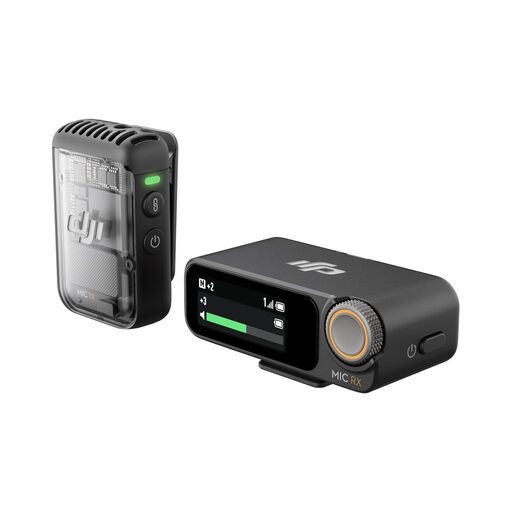
DJI Mic 2 (1 TX + 1 RX)
The version with one transmitter may suit recording the speaker up close, but check whether that will be enough for both interview participants.
The product name lists 32-bit float internal recording and adapters for iPhone, Android and camera.
View at Joybuy
 No image available
Razer Seiren V3 Mini Quartz
This USB microphone may suit a fixed recording position with a compatible recording device.
The product name lists a USB microphone in the Quartz finish. Check the connection and recording set-up in advance.
View at Joybuy
Frequently asked questions
Is one microphone enough for the interviewer and speaker?
It can be, if your main priority is making the speaker clearly audible. If you also need to be able to hear the questions clearly when listening back, test both speaking positions and consider using one microphone per speaker.
How can you avoid a failed recording in the rehearsal room?
Place the microphone close to the speaker and make a short test recording beforehand, then listen back to it. If possible, switch off any noisy equipment and, if you’re using a clip-on microphone, watch out for clothing rustle.
Which file should you keep for an oral history archive?
Store the original recording file securely and, if needed, create a separate version for editing or presentation. Oral history guidance recommends WAV or BWF as an audio archive file; check that your recording set-up can produce the format you need.
What rules apply to an interview recording that identifies someone?
An identifiable audio recording may be personal data. If the UK GDPR applies to its use, you need a valid lawful basis; consent is one possible basis. The Dutch Data Protection Authority states that purely personal or household use falls outside the GDPR. Discuss with the speaker what will be recorded and what will happen to it afterwards, especially before archiving or publication.
What about returns and guarantees when buying online in the Netherlands?
For distance purchases from a business, you generally have a 14-day cooling-off period; check the terms that apply to your purchase. According to the Dutch government, statutory guarantees in the Netherlands do not have a fixed legal time limit. If there is a fault, contact the seller.


