Start with a microphone close to the speaker and make a test recording in the place where the conversation will take place. This will help you assess the effect of room noise and reverberation, though it won’t eliminate them. Then choose a wired microphone with a compatible connection, a set with two wireless transmitters if both speakers need their own microphone, or a set with recording on the transmitters if a separate recording matters. Also check how you’ll store and share the recording.
Who is this guide for?
Interviewer in a noisy hall
You want the speaker to remain clear and easy to understand amid other conversations and reverberation. Finding a quiet spot and positioning the microphone well matter more than extra features; the International Association of Sound and Audiovisual Archives recommends placing it about 15 cm from the mouth.
Recording a two-person conversation
You want to capture both the questions and the answers. Check whether your setup can record two speakers separately and whether the channels are easy to listen to afterwards.
Managing interviews that are hard to record again
You want to avoid losing the conversation if you’re interrupted. Check the recording function and plan carefully how to store the files; the Dutch Data Protection Authority considers an identifiable audio recording to be personal data.
What should you look for?
Wired lavalier for one speaker
A good fit if: the speaker will mostly be sitting in one place and your recording device has a compatible input.
Bear in mind: the cable limits where you can position yourself, and the microphone won’t automatically capture the interviewer just as clearly.
Wireless set with two transmitters
A good fit if: both the interviewer and the speaker need their own microphone, or they’ll be moving around.
Bear in mind: check the transmitters, receiver, batteries and connection. The stated transmission range won’t necessarily apply in a hall.
Wireless set with recording on the transmitters
A good fit if: you also want separate recordings on the transmitters for a conversation that would be difficult to repeat; RØDE describes this feature for both transmitters on the Wireless PRO.
Bear in mind: check that recording is running and export the files. According to RØDE, the 32-bit float capabilities apply to recordings on the transmitters, not automatically to the camera recording.
In a hall with other people around, finding a quiet spot and keeping the microphone close to the speaker remain important. The International Association of Sound and Audiovisual Archives recommends positioning it about 15 cm from the mouth.
| What to consider |
What should you check? |
Who is this important for? |
| Clarity |
How it’s attached and how far it is from the mouth; listen to a test recording made in the intended location. |
If I want to capture memories clearly in a reverberant hall, I pay attention to the location and microphone placement. Around 36% of consumers put clarity first. |
| Recording two voices |
Check how many microphones or transmitters are included and how the channels are recorded. |
If both my questions and the answers matter, I want to know in advance whether both speakers will have their own microphone. Around 29% of consumers prioritise capturing both voices. |
| Connection |
Compare the exact input on your device with the microphone plug; check whether you need an adapter. |
If I want to use my existing phone or recorder, the connection needs to work with the microphone I’ve chosen. Around 21% of consumers put compatibility first. |
| Recording security |
Check whether the set records internally, whether recording has started and whether the files can be exported. |
If the interview would be difficult to repeat, I want to know how to check and secure a separate recording before I leave. Around 14% of consumers prioritise recording security. |
Avoid common buying mistakes
-
Assuming noise reduction will fix reverberation and background conversations
A microphone won’t remove background noise. In a busy community hall, the location and distance from the speaker will still affect how clearly they can be heard.
Find the quietest spot, attach the lavalier securely and listen back to a test recording before the conversation starts.
-
Checking only the plug size
Microphones may use, for example, 3.5 mm TRS, 3.5 mm TRRS or USB-C connections. These aren’t necessarily interchangeable.
Compare the specifications for the exact microphone model with the input on your recorder or phone, then test a recording. Depending on your equipment, you may need a compatible adapter or a different microphone.
-
Assuming a bundle includes two transmitters or a backup recording
Bundles vary in the number of transmitters included. You’ll also need to start and check the transmitters’ recording function correctly.
Check what’s included in the exact bundle. Before the interview, test that recording is running, then export any separate files afterwards.
Brands to consider
Audio-Technica
The ATR3350xiS is a wired option for one speaker, with a 3 m cable.
- Audio-Technica lists a 3.5 mm dual-mono output. The product specifications also mention a clip, an LR44 battery and an adapter for devices with a compatible headset socket.
- Check the battery and the exact connection. This model isn’t a two-microphone set on its own.
Sennheiser
The XS Lav USB-C is a wired lavalier for a compatible USB-C device.
- Sennheiser lists an omnidirectional clip-on microphone and a 2 m cable.
- Check that your phone or computer recognises this USB-C microphone; the specifications don’t describe wireless operation.
Shure
The MVL is a wired 3.5 mm TRRS lavalier for compatible mobile devices.
- Shure lists most Android and iOS devices with a TRRS connection or a suitable CTIA-compliant adapter.
- That doesn’t guarantee it will work with every phone or 3.5 mm recorder input; test the combination you plan to use.
DJI
The Mic Mini bundle with two transmitters and a receiver is worth considering if both people in the conversation need their own wireless microphone.
- DJI describes separate channels in stereo mode.
- Check what’s included in the bundle you choose and whether it connects to your recording device. DJI’s stated transmission range is measured in an open environment without interference, so it doesn’t tell you how well the connection will work in your hall.
RØDE
The Lavalier GO is a wired lavalier for a compatible 3.5 mm TRS input; the Wireless PRO is a separate wireless option.
- RØDE lists two lavaliers with the Wireless PRO and describes internal recording on both transmitters.
- The Lavalier GO isn’t a standalone wireless set. According to RØDE, the 32-bit float capabilities don’t automatically apply to audio recorded on the camera.
Wireless microphones for interviews
These product picks focus on wireless lavalier microphones for interviews. Check how many transmitters each model includes and whether the connection is compatible with your recording device.
 No image available
DJI Mic Mini 2S (2 TX + 1 RX + Charging Case)
The two included transmitters may suit a setup where both the interviewer and the speaker wear their own microphone; check the connection and make a test recording in advance.
View at Joybuy
 No image available
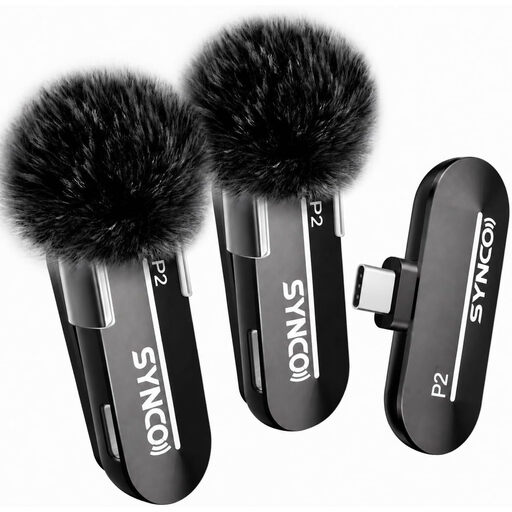
SYNCO P2XT USB-C Wireless Microphone
The USB-C connection makes this model worth considering for interviews with a device that supports it. Check compatibility and listen along during a test recording.
View at Joybuy
 No image available
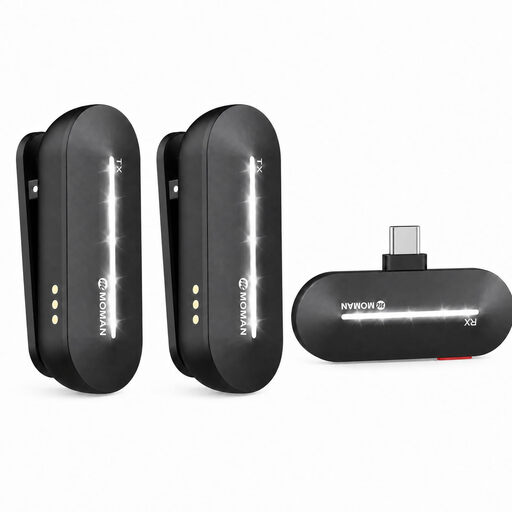
Moman M1CXT Wireless Lavalier Microphone, USB-C, 2TX+1RX
The listed 2TX+1RX setup may suit situations where both people need a microphone; check that the USB-C connection is compatible with your recording device.
View at Joybuy
 No image available
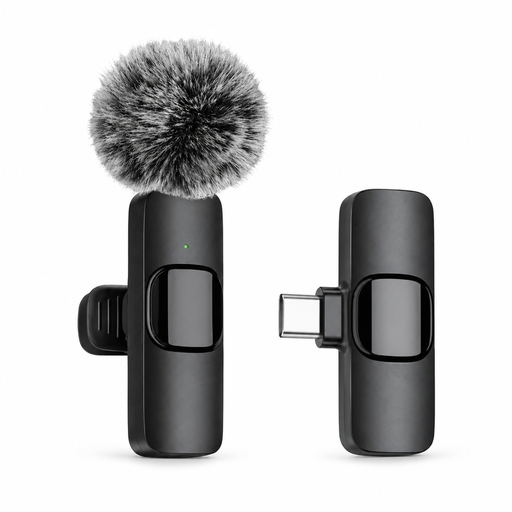
Verbex K9-Black Wireless Mini Microphone, Type-C
The Type-C connection makes this model a possible option for interviews with a compatible device; test that the microphone is actually being recorded before the conversation starts.
View at Joybuy
 No image available
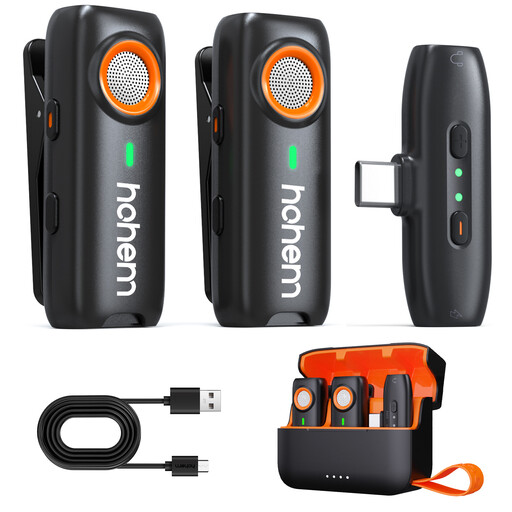
hohem Wireless Lavalier Microphone, TF Backup Recording
The product name lists TF card recording as a backup option for interviews; you’ll need a TF card, which isn’t included. Check in advance that recording has started and how to export the file.
View at Joybuy
Frequently asked questions
Where should you attach the microphone on the speaker?
Attach the microphone securely to their clothing, somewhere it won’t rub against the fabric. The International Association of Sound and Audiovisual Archives recommends positioning it about 15 cm from the mouth; listen beforehand to check for any rubbing from clothing or the cable.
Can one lavalier also pick up the interviewer’s questions clearly?
Don’t assume it will. Listen to the balance in a test recording. If the questions matter, consider a second microphone or a set with two transmitters.
What should I check about the connection?
Compare the connection on the exact microphone model with the input on your phone or recorder. TRS, TRRS and USB-C aren’t necessarily interchangeable; also check whether you need an adapter and test a recording file.
Can you keep an oral history recording in the Netherlands or publish it online?
An identifiable audio recording is personal data. Processing it requires a valid legal basis under the GDPR, and the person concerned must be given information including the purpose and retention period. The Dutch Data Protection Authority says that publishing someone else’s personal data online usually requires their consent, and outlines some exceptions. So consent to make a recording doesn’t automatically mean consent to publish it.


