What should you look for in a lapel microphone?
First decide how you want to record the voices. Then check that the connection and set are right for your recording device and interview.
| What to consider |
What should you check? |
Who is this most important for? |
| Clear speech despite room noise |
Attach the microphone close to the speaker without letting it touch their clothing, then listen back to a test recording. |
If I want to hear the speaker clearly despite noise in the room, I’ll focus on placement and testing in my own space. Around 36% of consumers put clear speech first. |
| Recording two voices |
Check how many transmitters are included and whether your recording device or app can save separate channels. |
If I also need my questions to come through clearly, I’ll check whether both speakers can wear a nearby microphone. Around 29% of consumers prioritise recording both voices. |
| A backup recording |
Check whether the exact model records onboard and whether you can play back the files before the interview. |
If the story would be difficult to record again, I want to check whether there’ll be a backup file as well as the recording on the connected device. Around 21% of consumers put recording security first. |
| Connection and ease of use |
Compare the microphone’s connection with the one on your phone or computer, and check which adapter you’ll need. |
If I want to plug in and record with minimal fuss, I’ll check in advance that my device works with the microphone. Connection and ease of use are the top priority for around 14% of consumers. |
Products at Joybuy
These product picks are wireless microphone sets with two transmitters, designed for recording both speakers with a microphone close to each of them.
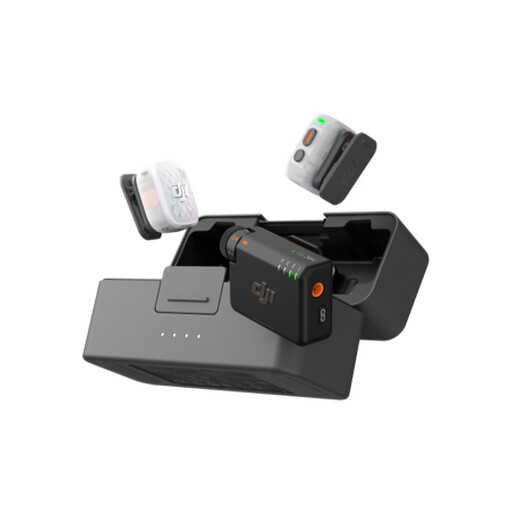 Image unavailable
DJI Mic Mini 2S (2 TX + 1 RX + Charging Case)
The product name lists two transmitters, which suits a recording where both speakers use a transmitter.
Set contents listed: 2 TX, 1 RX and Charging Case. Check that the connection is right for your recording device.
View at Joybuy
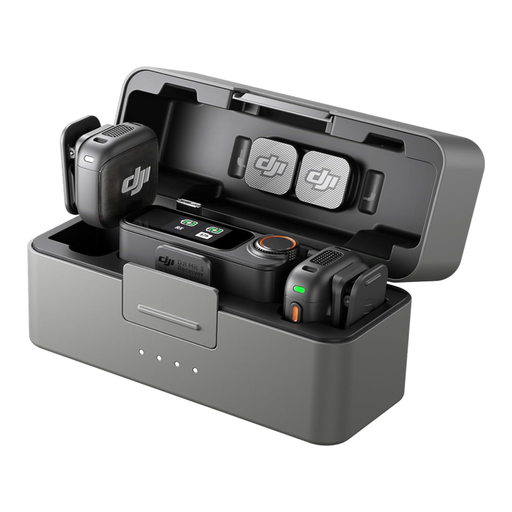 Image unavailable
DJI Mic 3 (2 TX + 1 RX + Charging Case)
The set name lists two transmitters; compare this with your plan to record both the speaker and interviewer at close range.
Set contents listed: 2 TX, 1 RX and Charging Case. Check that the connection is right for your recording device.
View at Joybuy
Frequently asked questions
Will noise cancellation do enough to tackle a noisy flat?
No. Noise cancellation is no substitute for a quiet location and good microphone placement. RØDE describes the Wireless Micro’s noise cancellation as being designed for continuous sounds, not sudden noises such as a door slamming. Reduce distracting noises wherever possible and listen back to a test recording.
How should you attach and test a lapel microphone before the interview?
Attach the microphone around the lapel, clear of any rubbing clothing, and record a short sample of normal speech before the conversation. The East Midlands Oral History Archive recommends placing it around the lapel. Also check that the interviewer’s questions are clear; you may need a second microphone for this.
Does your phone need a headphone socket?
It depends on the microphone model and your phone’s connection. The Shure MVL uses 3.5 mm TRRS and, according to Shure, can work with a suitable CTIA-compliant adapter. The Sennheiser XS Lav USB-C has a USB-C connection. Check that your phone, adapter and recording app work together.
What costs or terms should you check when buying a set?
Before ordering, check that the exact set includes the transmitters and adapters you need. For many online distance purchases, the Government of the Netherlands states that there is a 14-day cooling-off period. Check the terms that apply to your specific purchase.
Can you keep or publish an oral history interview in the Netherlands?
This depends on how you use the recording and what you do with it. According to the Dutch Data Protection Authority, use solely for personal or household purposes within a limited circle falls under a GDPR exemption. If the GDPR applies to your processing, you’ll need an appropriate legal basis. You may need consent to publish personal data online. The Oral History Association advises agreeing with the speaker in advance on recording, storage and access.


