
Vandaag of morgen in huis

Kwaliteit gegarandeerd

Welkomstaanbiedingen ontgrendelen: GRATIS bezorging | Tot 80% korting | Gratis 30 dagen JoyPlus-proefperiode
Download de app
If you’re looking for Optimum Nutrition strawberry whey protein, you’re probably after a convenient protein shake for after a workout, a protein powder to support muscle growth or an easy way to top up your daily protein intake. But eye-catching packaging or a familiar brand name doesn’t tell you everything. The nutritional values, protein source, serving size and usage advice all help you decide whether a product suits your routine.
A pack may highlight “24 g protein”, even though its serving is larger than that of another product. So always compare protein per 100 g and per serving. Optimum Nutrition Gold Standard 100% Whey lists around 24 to 25 g of protein per serving of approximately 30 g, depending on the variant and product information.
Many whey products contain a blend of whey isolate, whey concentrate and hydrolysed whey proteins. That’s not the same as a product made exclusively from whey isolate. Check the ingredients list if you’re looking for a particular protein source.
A protein powder you plan to use regularly needs to be practical. Instantised powder is designed to mix more easily with water or milk, but the final taste and texture are still a matter of personal preference. Strawberry flavour may taste lighter with water and creamier with milk. A sample or smaller size can help avoid waste if you haven’t tried the flavour before.
According to the product information, Gold Standard 100% Whey contains a blend of whey isolate, whey concentrate and hydrolysed whey isolate. Each serving provides approximately 5 g of naturally occurring BCAAs. So BCAA whey protein isn’t automatically a separate BCAA supplement; whey naturally contains these amino acids.
A separate BCAA powder may serve a different purpose, such as drinking during a workout. However, it isn’t a direct substitute for a whey product providing around 20 to 25 g of protein per serving.
The strawberry variants from Optimum Nutrition list approximately the following per 30 g serving:
Always check the packaging before use. Product formulations, nutritional values and packaging information may change.
A 450 or 780 g tub is a good choice if you’d like to try the flavour first. Larger packs, such as 2.04 kg or 4.53 kg, make more sense if you use the product consistently. Use the stated serving size to work out the price per serving, rather than comparing only the price of each tub.
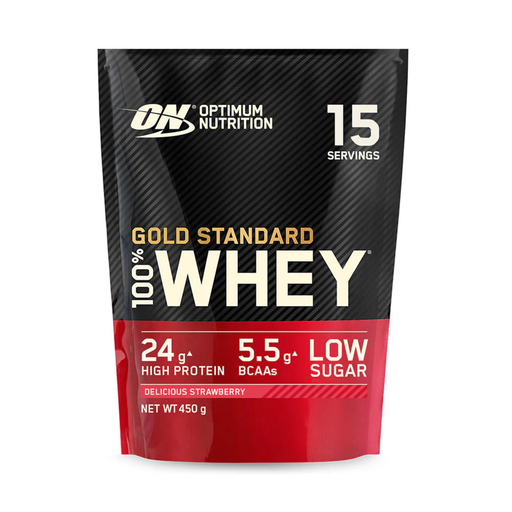
Why it suits this profile: The compact size provides around 15 servings, making it a manageable option if you’re trying strawberry protein powder for the first time.
You don’t have to buy a large supply straight away. The serving size and nutritional values are clearly listed in the product information.
Around 24–25 g of protein per serving, a blend of whey isolate and concentrate, and suitable for mixing with 180–240 ml of water or milk.
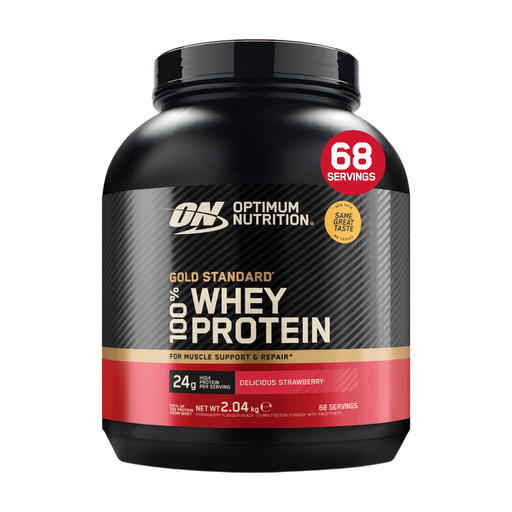
Why it suits this profile: This size is a good fit for people who train several times a week and regularly have a protein shake after working out.
The ingredients list names the different whey sources and gives the nutritional values per 30 g, so you don’t have to rely on marketing terms alone.
Large pack, around 24–25 g of protein per serving and approximately 5 g of naturally occurring BCAAs, according to the product information.
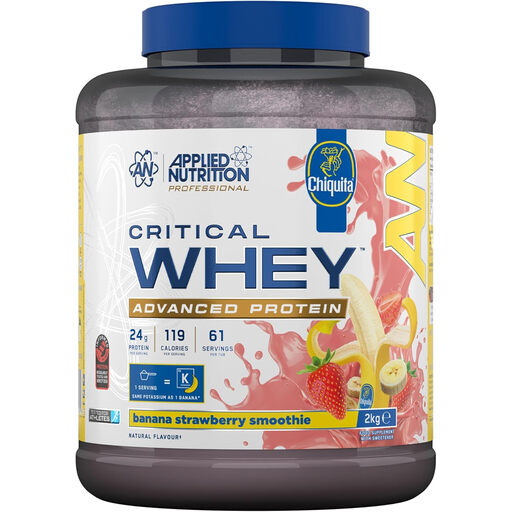
Why it suits this profile: The 2 kg pack is a practical choice for regular users who often plan a shake or protein-rich snack into their day.
The stated serving size, protein content and ingredients make it easier to compare with Gold Standard 100% Whey, without suggesting that all whey products have the same formulation.
A blend of whey concentrate, isolate and hydrolysed whey protein; the product information lists approximately 24 g of protein per serving in this large pack.
We’ve put together a complete, up-to-date list of products that meet these strict selection criteria and current European safety requirements.
Mix one scoop of around 30 g with 180–240 ml of cold water or milk, unless the label specifies a different amount. Shake or stir until the powder has dissolved. You can have a shake after working out, or at another time of day when you want to add extra protein to a varied diet.
The recommended amount varies from person to person. Take your overall diet into account and follow the serving instructions on the label. A supplement is no substitute for a varied diet or a healthy lifestyle.
Check the allergens: the whey products mentioned contain milk and usually soya from lecithin. Some packs may also warn of traces of egg, peanuts, gluten or nuts, among other things. Always check the current label, especially if you have an allergy or intolerance.
Yes, the product is intended to supplement your daily protein intake and, according to the product information, can be used after exercise or at another time of day. Timing matters less than your total protein intake and daily diet.
This depends on the use-by date and how it’s stored. Keep the tub tightly closed in a cool, dry place, away from direct sunlight and moisture. Always follow the date and storage instructions on the packaging.
No. A blend containing whey isolate may also include whey concentrate, and isn’t automatically lactose-free. Check the current ingredients list and nutritional information. If you have an allergy or medical condition, it’s a good idea to consult a doctor or dietitian.
