
Vandaag of morgen in huis

Kwaliteit gegarandeerd

Welkomstaanbiedingen ontgrendelen: GRATIS bezorging | Tot 80% korting | Gratis 30 dagen JoyPlus-proefperiode
Download de app
If you exercise regularly, you may want a practical way to add extra protein to your daily diet. Vanilla whey protein can be useful after a workout, between meals or on busy days. However, protein powders can differ considerably. Attractive packaging or a claim such as “fast absorption” does not always tell you what you are actually buying.
As a Joybuy Product Recommendation Officer, I therefore focus mainly on verifiable information: the amount of protein per serving, the type of whey, the ingredients, allergens and ease of use.
A high protein percentage per 100 grams may sound appealing, but serving sizes vary from one brand to another. So also check the amount of protein per recommended serving. According to the product information, Optimum Nutrition Gold Standard Whey Protein Vanilla 300 g provides approximately 24 g of protein per serving of around 30 to 32 g of powder.
Also check the complete nutritional information. Carbohydrates, sugars, fats and salt can vary between flavours and variants.
Whey comes in several forms:
A blend of whey isolate, whey concentrate and hydrolysed whey, such as the Gold Standard variant, is not the same as a product made exclusively from whey isolate. So compare the ingredients list rather than looking only at the front of the packaging.
A protein shake that goes lumpy or tastes too sweet often ends up unused at the back of the kitchen cupboard. Look out for terms such as instantised powder, the recommended amount of liquid and the preparation instructions. For the Optimum Nutrition Vanilla Ice Cream variant, the recommendation is to mix one scoop with 180 to 240 ml of cold water or milk, then shake or stir.
For adults who want to increase their daily protein intake, the number of grams of protein per serving is a useful point of comparison. The variant mentioned contains approximately 24 g of protein per serving, with around 119 kcal according to the nutritional information provided. The exact scoop size may vary between packages, so use the measuring scoop and the label as your guide.
The permitted EU health claim states that protein contributes to the growth and maintenance of muscle mass, as part of a varied diet and healthy lifestyle. This does not mean that protein powder alone guarantees results.
Gold Standard Whey contains a blend of milk proteins and an emulsifier based on soya lecithin. The product contains milk and soya and, according to the product information, may contain traces of peanuts, eggs, gluten and nuts due to the manufacturing process.
Do you have an allergy or intolerance? Always check the current packaging. Formulations and warnings may change. A whey protein product is not vegan either.
A 300 g pack is suitable if you want to try a flavour first or do not want to buy a large supply straight away. At one serving per day, this works out at around nine to ten shakes, depending on the exact serving size. If you use protein powder every day, a larger pack may offer better value, but also check the best-before date, storage space and price per serving.
Store the powder tightly sealed in a cool, dry place, away from direct sunlight and moisture. Follow the recommended dosage on the label and do not use food supplements as a substitute for a varied diet.
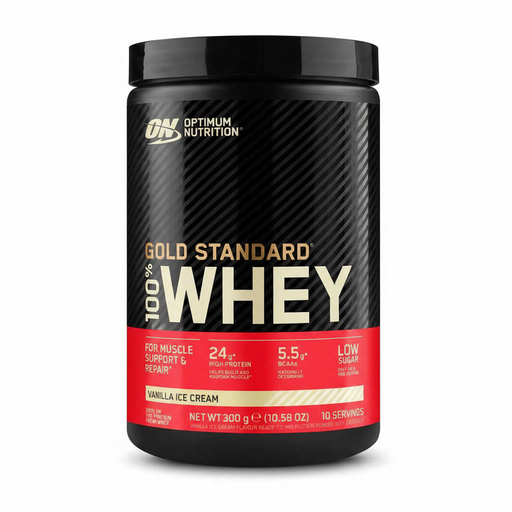
Why it suits this profile: The compact pack makes this vanilla whey suitable for trying the product first without buying a large quantity straight away.
The product information states the serving size, nutritional values, ingredients and allergens. This allows you to compare more accurately than by looking at the flavour name alone.
Approximately 24 g of protein per serving; a blend of whey isolate, whey concentrate and hydrolysed whey; instantised powder for mixing with water or milk.

Why it suits this profile: The larger pack and isolate formula are suited to adults who train frequently and have a regular daily protein shake.
The variant states separately that it is based exclusively on whey isolate. However, always check the current ingredients list on the packaging.
25 g of protein per serving; 31 servings per pack; according to the product information, less than 1 g of carbohydrates and less than 0.5 g of fat per serving.
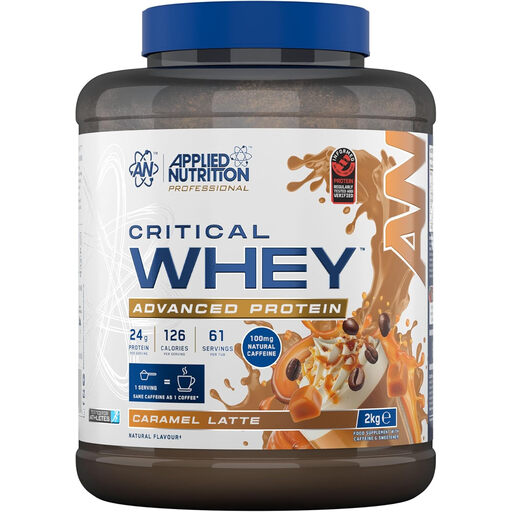
Why it suits this profile: This large pack is designed for users who have a shake frequently and deliberately choose a caramel latte flavour with caffeine.
The product information clearly states that one serving contains 100 mg of caffeine. This helps prevent you from accidentally using this variant as though it were a caffeine-free whey.
24 g of protein per serving; 2 kg pack size; a combination of whey concentrate, isolate, hydrolysed whey and milk protein.
We have put together a complete, up-to-date list of products that fully meet these strict selection criteria and the applicable European safety regulations.
Use approximately one scoop, around 30 to 32 g, with 180 to 240 ml of cold water or milk. Shake or stir until the powder has dissolved. Milk generally gives the shake a richer flavour, while water makes for a lighter drink. Follow the instructions on the current packaging.
This depends on how many servings you use. At around 30 to 32 g per shake, 300 g provides approximately nine to ten servings. Store the powder sealed, somewhere dry and cool. Always check the best-before date and the instructions on the label before use.
This variant is intended for adults who want to increase their daily protein intake. It contains milk and soya and is therefore not suitable for people with an allergy to these ingredients. Pregnant people, those who are breastfeeding or anyone with a medical condition may wish to consult a healthcare professional beforehand. Protein powder is not a substitute for a varied diet.
