Start by working out how much cream and how many other chilled ingredients you want to store at the same time during the workshop. Then choose a fridge with enough usable cooling space. The Netherlands Nutrition Centre advises storing opened cream at 4 °C, so check the actual temperature with a separate thermometer rather than relying on the thermostat setting alone. If you prepare or sell food as a food business, make sure your refrigeration also meets the requirements of your food safety plan or hygiene code.
Who should consider this?
Workshop host looking for safe refrigeration
You use opened cream during the session and want to be able to check its storage temperature, especially if other perishable ingredients are being kept ready to use. The Netherlands Nutrition Centre advises a fridge temperature of 4 °C.
Cook with limited workspace
You need chilled storage close to a compact workshop kitchen, so you’ll need to balance the fridge’s external dimensions with the cooling space available. Measure the space and check the layout of the exact model.
Host running larger groups
You want to store several cartons and ingredients at once, and need a layout that suits the way you work. Compare the usable fridge capacity and the shelves or drawers available.
What to look for in a fridge for cream
First consider temperature control, the space available, usable fridge capacity and running costs.
| What matters |
What to look for |
Who will find this important? |
| Keeping cream chilled |
Check the temperature with a separate fridge thermometer. If you prepare food commercially, you may also need to monitor it in line with the procedures that apply to your business. |
If I want to store opened cream safely during a workshop, I need to know how cold it actually is. Around 36% of consumers say temperature control is their main concern. |
| A suitable place to install it |
Measure the width, depth and height of the space, and check that the door can open fully there. |
In a small kitchen, the fridge needs to fit without blocking access to the work area. For around 29% of consumers, available space is their main concern. |
| Usable fridge space |
Compare the stated fridge capacity and the shelves or drawers with the amount of cream and ingredients you want to store at once. |
When catering for a group, I want to be able to arrange cartons and other fresh ingredients neatly. Around 21% of consumers put available fridge space first. |
| Energy use and service |
Compare the energy labels and stated annual energy consumption of the exact models. Also check the warranty and service terms. |
If you use the fridge regularly, you may want to consider its energy use and service terms. Around 14% of consumers say this is their main buying concern. |
Common buying mistakes
-
Assuming the thermostat setting proves the storage temperature
The cream’s temperature may differ from what a dial or display shows.
Set the fridge and check its actual temperature with a separate thermometer. If you run a food business, also follow the temperature-monitoring procedures that apply to your operation.
-
Confusing total capacity with fridge space
In a model with a freezer compartment, not all of the capacity is available for cream and other chilled ingredients.
Compare the stated fridge capacity and layout of the exact models. Decide in advance whether you really need the freezer compartment.
-
Choosing a refrigerated counter without measuring the space
The four-drawer version of Arktic (HENDI) has stated external dimensions of 1360 × 700 × 755 mm, which has implications for the space available.
Measure the installation space and choose refrigerated drawers only if they suit both the layout and the room you have.
Brands to consider
Tomado
Tomado offers compact tabletop models without a freezer compartment, as well as versions with one, giving you different layouts to compare.
- Tomado says the TLT4702W has three glass shelves and no freezer compartment.
- The TRT4702W has a freezer compartment and a stated total capacity of 80 litres. These are model specifications, not independent measurements of cooling performance.
Beko
Beko offers compact freestanding tabletop models, such as the TS190340N, for spaces where room is limited.
- Beko lists the TS190340N as 47,5 cm wide, with a 73-litre fresh food compartment.
- Measure the space and check the layout of the exact model. These specifications don’t show that the fridge will keep cream at 4 °C during a workshop.
Bosch
Bosch offers tabletop models with different layouts, including the KTL15NWEB, which has a freezer compartment.
- Bosch Netherlands lists the KTL15NWEB as having 106 litres of fridge capacity and a door-open alarm.
- The freezer compartment takes up space that isn’t available for chilled ingredients, and an alarm is no substitute for checking the temperature.
Liebherr
The Rd 1200 Pure is a tabletop model for anyone looking for a fridge that isn’t geared towards freezing.
- Liebherr states that this model has a total capacity of 110 litres.
- Liebherr lists a noise level of 34 dB. This figure comes from the manufacturer and isn’t an independent comparison with other models.
Arktic (HENDI)
A professional refrigerated counter with drawers may suit intensive food preparation and the need to keep ingredients chilled close to the work area.
- For version 233764, HENDI lists four refrigerated drawers and a stated temperature range of −2 to 8 °C.
- The external dimensions are 1360 × 700 × 755 mm. The stated range doesn’t prove what temperature the cream will reach in the drawers.
Fridges at Joybuy
These product picks are suited to storing opened cream and other ingredients under refrigeration, from compact models to larger fridges.
 No image available
Bella BKK090.1BE, 88 litres, energy rating E
An option to consider if you want to store cream and other chilled ingredients and could also make use of a freezer compartment.
The product information lists two glass shelves, a salad drawer and three door shelves. The freezer compartment isn’t fridge space for cream; check the actual fridge temperature with a separate thermometer.
View at Joybuy
 No image available
Wiggo WL-BTT88E(W), tabletop model, 54 cm, energy rating E
Worth considering if you want to store other fresh ingredients alongside your cream.
The stated capacity is 129 litres. The product information lists a temperature control, two glass shelves, a salad drawer and door racks. Check the actual temperature with a separate thermometer.
View at Joybuy
 No image available
TCL RF120DWE0, 90 litres, with chiller compartment, energy rating E
A compact option if you’re looking for a fridge with shelves and a separate chiller compartment.
The product information lists three adjustable glass shelves and a temperature range of 0–10 °C for the chiller compartment. This range doesn’t prove that the cream will stay at 4 °C during use; check it with a thermometer.
View at Joybuy
 No image available
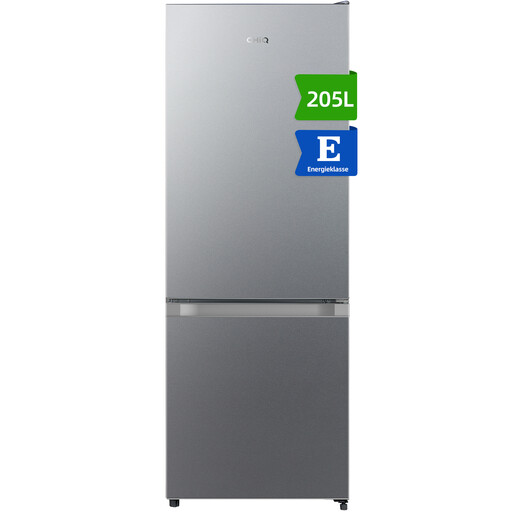
CHiQ JR205LSE, fridge freezer, 205 litres, energy rating E
Could be a good fit if you want to store several fresh ingredients during a workshop and also need a freezer compartment.
The product information lists 153 litres of fridge space, 52 litres of freezer space and external dimensions of 540 × 550 × 1440 mm. The stated 4 °C setting is no substitute for checking the actual temperature.
View at Joybuy
 No image available
CHiQ JR92DSE, 92 litres, 47 cm wide, energy rating E
A compact option to consider if you want to store cream alongside other fresh ingredients.
The product information lists 92 litres of fridge space, a width of 474 mm, adjustable shelves and a reversible door. The stated 4 °C setting doesn’t guarantee the temperature of the cream during use; check it with a thermometer.
View at Joybuy
Frequently asked questions
At what temperature should you store opened cream?
The Netherlands Nutrition Centre advises returning opened whipping cream to a 4 °C fridge promptly. Check the actual temperature with a separate thermometer; a thermostat setting alone isn’t a measurement.
Do whipping cream and cooking cream have the same shelf life once opened?
No. The Netherlands Nutrition Centre’s storage guide gives opened, unwhipped cream a fridge life of 4–6 days, and opened cooking cream a fridge life of 3–5 days. Check which product you’re using, follow the label too, and return the cream to the fridge promptly after use.
Do you need to buy a commercial fridge for a cookery workshop?
Not necessarily: the Netherlands Food and Consumer Product Safety Authority (NVWA) guidance on food-safe working doesn’t specify a particular type of fridge for the situation described. If you run a food business, choose equipment that lets you meet the storage and temperature-monitoring requirements of your procedures.
When is a food safety plan or hygiene code required?
According to the NVWA, a business that prepares, processes or sells food must work with an HACCP food safety plan; an applicable hygiene code can be used for this. Whether your workshop falls under these business requirements depends on how it is organised.
Do you need to list allergens when serving dishes made with cream?
If you operate a food business and offer unpackaged food to consumers, the NVWA requires you to provide information about allergens, including milk. How you provide this information depends on the circumstances; a private workshop doesn’t automatically fall under the same requirements.


