What should you look for when choosing?
This advice is about edible cream. If you mean face cream, follow the label: the product name alone doesn’t mean it needs to be kept in the fridge.
Your existing fridge
Choose this if: there’s room for the closed container and you can check the temperature where you plan to store it.
The trade-off: you won’t need another appliance, but available space and the actual measured temperature are key. Voedingscentrum recommends 4 °C and taking a measurement over half a day or overnight.
Table-top fridge without a freezer compartment
Choose this if: you regularly need extra space for cream and other chilled foods, but don’t use freezer space.
The trade-off: all the space is for chilling, with no freezer compartment. ETNA states that the KKV956WIT has 133 litres of chilled capacity and uses 58 kWh per year; PRIMO lists 88 litres and 85 kWh per year for the PR121FR. These figures are supplied by the manufacturers.
Table-top fridge with a freezer compartment
Choose this if: you want to freeze small amounts as well as store chilled products, and will still have enough fridge space.
The trade-off: the freezer compartment takes up some of the space. Inventum states that the KV550 has 97 litres of chilled capacity and 16 litres of freezer capacity. Check the temperature in the fridge compartment for this model too.
Thermoelectric cool box
Choose this only if: you’ll use the cool box temporarily and can measure the temperature to check that the contents stay sufficiently chilled.
The trade-off: Mestic states that the MTEC-25 cools to 20 °C below the ambient temperature and recommends putting already-chilled products in the box. This relative figure does not, by itself, guarantee a temperature of 4 °C.
| Buying concern |
What should you look for? |
Who is this important to? |
| Reliable cooling |
Check the storage instructions on the label and use a fridge thermometer to measure the temperature. Voedingscentrum recommends 4 °C. |
If I want to store opened edible cream, I need to be able to check that the storage area is cold enough. Reliable cooling is the top buying concern for around 31% of consumers. |
| Dimensions and chilled capacity |
Measure the available space and door clearance; compare chilled capacity separately from any freezer capacity. |
When my existing fridge is full, I want to know whether an extra appliance will fit and have enough room for my containers. Suitable dimensions and usable chilled capacity are priorities for around 25% of consumers. |
| Energy consumption |
Compare the stated annual consumption in kWh for models that meet your needs in terms of size and function. |
For an appliance that runs continuously, I want to take its stated energy consumption into account alongside the chilled capacity I need. Energy consumption is the main buying concern for around 19% of consumers. |
| With or without a freezer compartment |
Decide whether you’ll actually use the freezer; check chilled and freezer capacity separately. |
If I want to freeze something as well as store cream, the freezer compartment needs to provide that extra function without leaving too little room for chilled food. This combination is a deciding factor for around 13% of consumers. |
| Noise where you’ll place it |
Compare the stated dB rating and consider where the appliance will go. |
In a quiet home or teaching space, I want to take noise into account when choosing where to put it. Noise level is the main buying concern for around 12% of consumers. |
Fridges on Joybuy
This Joybuy selection includes table-top fridges for extra chilled storage, with models both with and without a freezer compartment.
 Image unavailable
Bella BKK090.1BE, table-top fridge, 88 litres, energy label E
Suitable if you’re looking for extra chilled storage for cream and other chilled products.
The product name lists a capacity of 88 litres and energy label E.
Joybuy
 Image unavailable
Bella BKV555-040CW, table-top fridge with freezer compartment, 109 litres, energy label C
Suitable if you want to store chilled cream and also make use of a freezer compartment.
The product name lists a total capacity of 109 litres and energy label C.
Joybuy
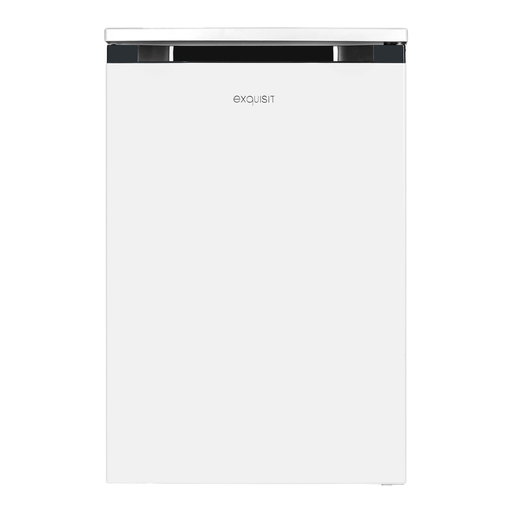 Image unavailable
Exquisit KS16-4-051CW, fridge with freezer compartment, 107 litres, energy label C
Suitable if you want to combine extra chilled storage with a freezer compartment.
The product name lists a capacity of 107 litres and a freezer compartment; check how the chilled and freezer space is divided before buying.
Joybuy
 Image unavailable
Wiggo WL-BTT88E(W), table-top fridge, 54 cm, energy label E
Suitable if you’re looking for a table-top model to provide extra chilled storage; check that its dimensions will fit the space available.
The product name lists a width of 54 cm and energy label E.
Joybuy
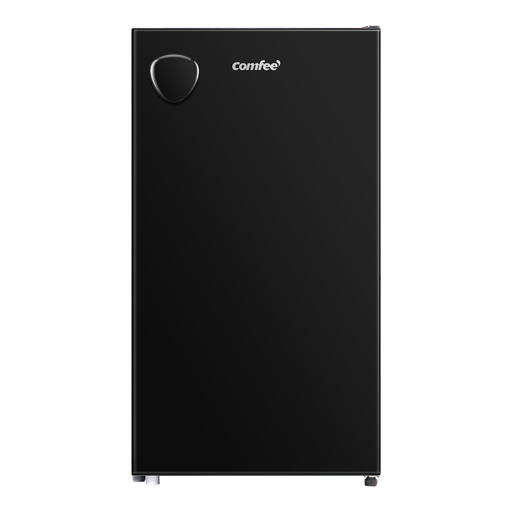 Image unavailable
COMFEE' RCD92BL2EUY(E), fridge, 88 litres, energy label E
Suitable if you’re looking for an extra fridge for chilled products; the product description mentions a separate cool box for short-term use.
The product name lists a capacity of 88 litres and energy label E. According to the product description, the separate cool box is intended for short-term chilling.
Joybuy
Frequently asked questions
How long can opened cream stay in the fridge after your class?
It depends on the type of cream: Voedingscentrum gives a storage time of 4–6 days for opened, unwhipped cream and 3–5 days for opened cooking cream. Follow the label on your own product and put the cream back in the fridge promptly after use.
Can putting unrefrigerated cream in a fridge make it safe again?
No. Chilling it afterwards won’t undo the time it has spent out of the fridge. Voedingscentrum advises not leaving highly perishable food out of the fridge for more than 2 hours.
How do you set and check a fridge’s temperature?
Voedingscentrum recommends 4 °C. Place a fridge thermometer in the middle of the bottom shelf, leave it there for half a day or overnight, and adjust the fridge if the measured temperature is higher.
What storage temperature applies at a teaching venue that serves food to customers?
For catering, food businesses and retail, NVWA sets out HACCP requirements for hygienic storage and temperature control. For pre-packed foods, follow the temperature on the label; if there isn’t one, NVWA states 7 °C or below. This does not replace the consumer advice of 4 °C and does not automatically apply to a private lesson.
What if by ‘cream’ you mean an opened face cream?
Don’t automatically follow the storage advice for dairy cream. Check the cosmetics label for the period after opening and any instructions or precautions. The word ‘cream’ alone doesn’t mean refrigeration is needed.


