
Vandaag of morgen in huis

Kwaliteit gegarandeerd

Welkomstaanbiedingen ontgrendelen: GRATIS bezorging | Tot 80% korting | Gratis 30 dagen JoyPlus-proefperiode
Download de app
Open-ear headphones leave your ears uncovered while you listen to music, podcasts or phone calls. That is useful when out walking, at the office or during a workout. However, not every model is suitable for the same situation. For example, a lightweight model for everyday use may not be designed to withstand rain, while headphones for running need to stay securely in place.
As a Joybuy Product Recommendation Officer, I focus mainly on verifiable specifications. Marketing terms such as “noise cancelling”, “AI” or “bone conduction” do not mean much on their own. The fit, IP rating, battery life and connectivity options ultimately determine whether a product suits the way you use it.
An open design can let in surrounding sounds, but that does not mean you will continue to hear everything clearly. Music at a high volume, wind around your ears and heavy traffic can still mask important sounds. Manufacturers therefore often warn against using their headphones while driving, cycling or in situations that require your full attention.
When using Bluetooth headphones outdoors, keep the volume moderate and follow the rules of the road. Open-ear earbuds can support awareness of your surroundings, but they are no substitute for staying alert.
Pay attention to the difference between IPX4, IPX5, IP55, IP67 and IP68. These codes refer to protection against water and dust under specific test conditions. IPX4, for example, is intended to protect against splashes, while a higher rating may offer more protection. The exact conditions of use vary by product.
A model with an IP55 rating, such as the Soundcore AeroFit 2, is described in the product information as offering water and dust resistance. That makes it a practical choice for sweat and light rain, but not automatically for swimming. Always check whether the manufacturer explicitly mentions swimming and whether the headphones may only be charged once the charging contacts are completely dry.
With conventional noise-cancelling headphones, surrounding sounds are actively reduced because the ears are largely enclosed. With open-ear or bone-conduction headphones, your surroundings remain more accessible. A product listing may mention “noise cancelling” for microphones or calls without completely removing distracting background noise while you listen to music.
So check whether the feature refers to ENC for calls, microphones or active noise cancellation. According to the product information, the Soundcore Aeroclip has four microphones with a noise-reduction system for calls. This does not guarantee that traffic noise will be completely filtered out while you are listening.
Open-ear models are usually worn on or around the ear. An ear clip, ear hook or neckband can improve stability when running or cycling. Look out for:
Open-ear headphones should not feel tight, but they should not move out of position with every movement of your head either. Fit is personal, so check the returns and warranty terms before buying.
Look at the stated playback time, not just the battery capacity. Battery life can vary depending on volume, the Bluetooth connection, microphone use and other features.
The Soundcore Aeroclip states up to 8 hours of continuous playback. According to the product specifications, the Soundcore AeroFit 2 has a 750 mAh battery and a charging station. Baseus Eli Sport 1 states around 7 to 8 hours of playback per charge and around 30 hours with the charging case. The manufacturer also points out that actual battery life may vary.
For everyday commuting, one full working day is often enough. For long workouts, travel or swimming, built-in storage may be more practical than having to take your phone with you every time.
Wireless open-ear headphones use Bluetooth to connect to a smartphone, smartwatch or laptop. Bluetooth 5.3 and 5.4 are modern versions, but range and stability also depend on the connected device and your surroundings.
For calls, the number and positioning of the microphones are important. The Aeroclip lists four microphones, while the AeroFit 2 uses two microphones according to the product information. These are product specifications, not a guarantee of a particular call quality on every street or in all wind conditions.
Also check:
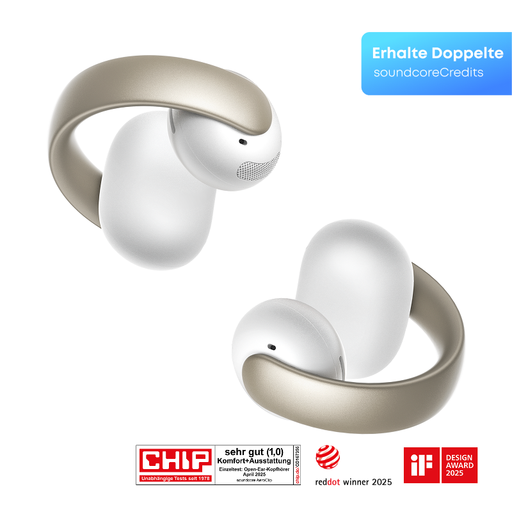
Why it suits this profile: This TWS model is designed for calls, music, sport and everyday use. Its open-ear wearing style and Bluetooth 5.4 make it suitable for anyone trying an open design for the first time.
The product listing clearly states up to 8 hours of playback, four microphones and touch controls. This makes the product specifications easier to assess than general claims about smart features.
Open-ear TWS design, Bluetooth 5.4, up to 8 hours of playback and four built-in microphones.
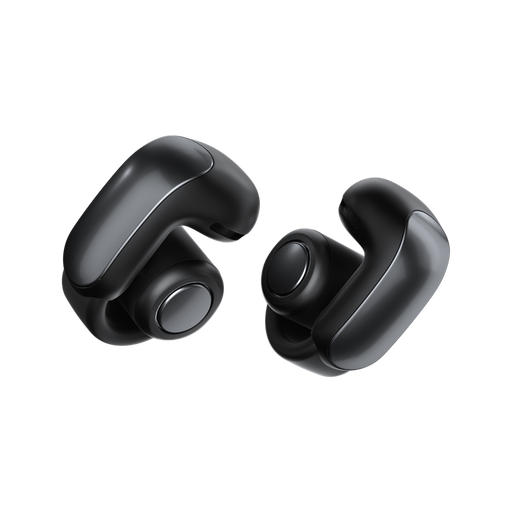
Why it suits this profile: The open construction is designed for listening to music and taking calls without completely enclosing your ears. The specifications state Bluetooth 5.3, up to 7 hours of playback and IPX4 splash resistance.
The water resistance is specifically described as IPX4. This helps prevent the model from being confused with waterproof sports earbuds designed for swimming.
Bluetooth 5.3, open design, up to 7 hours of battery life and IPX4 splash resistance.
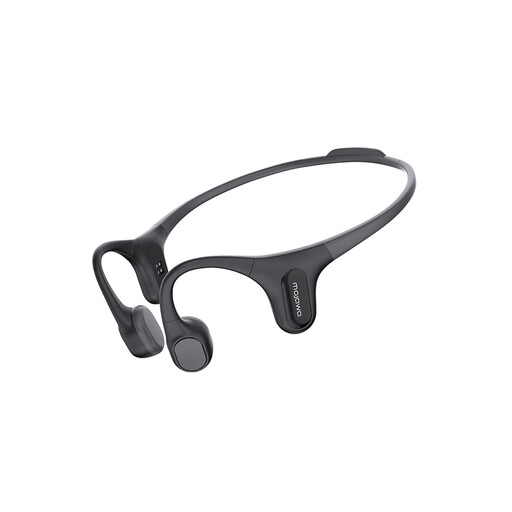
Why it suits this profile: According to the product listing, this model is designed for running, swimming, cycling and fitness. The combination of an open design, 32 GB of built-in storage and an IP68 rating suits users who do not always want to take their phone with them.
The listing explicitly mentions built-in storage and IP68. When swimming, follow the instructions, rinse with fresh water after exposure to salt water and only connect the magnetic charging cable once everything is dry.
Bone-conduction design, 32 GB of storage and IP68 according to the product information.
We have compiled a complete, up-to-date list of products that fully meet these strict selection criteria and the applicable European safety regulations.
They can be, provided the fit is secure and you keep the volume low enough not to unnecessarily mask important sounds around you. If you run in the rain or sweat heavily, choose a model with a suitable IP rating. Headphones for running should also remain comfortable during repeated movement.
Only if the manufacturer explicitly supports swimming and the water resistance is suitable for it. An IPX4 or IP55 model is not automatically suitable for submersion. Also check whether Bluetooth works underwater; models with internal storage may be more practical in this situation. Dry the charging contacts completely before charging again.
Many models in this selection state around 7 to 8 hours of playback per charge. Actual battery life depends on volume, calls and the features you use. A charging case, charging station or internal storage can make everyday use easier. Also pay attention to the charging port and drying instructions, particularly with sports models that come into frequent contact with sweat or rain.
