
Dialogue editor working around background noise
If you edit speech somewhere that outside noise can get in, compare closed-back models and how they fit. Shure explains that closed ear cups reduce background noise.


Closed-back headphones are a better choice if background noise interferes with your judgement or if you’re using a microphone at the same time. In a quiet room, an open-back model can provide an additional, spacious listening reference, but it lets sound in and out. Then check the fit and connection with your own equipment. A bright window can also cause screen reflections: Arboportaal recommends positioning your viewing direction parallel to the window, where possible.
If you edit speech somewhere that outside noise can get in, compare closed-back models and how they fit. Shure explains that closed ear cups reduce background noise.
In a quiet space, open-back headphones can provide an additional listening reference, as long as you’re not recording with an open microphone at the same time. Shure describes open-back headphones as offering a spacious presentation.
If you edit dialogue for long periods, consider wearing comfort and screen reflections too. For screen-based work, Arboportaal recommends positioning your viewing direction parallel to the window, where possible.
Choose these when: outside noise interferes with your listening judgement, or you’re using a microphone at the same time.
Trade-off: fit and seal vary by model; a closed-back design doesn’t mean every individual model has a measured isolation rating.
Choose these when: the room is quiet and you want an additional, spacious listening check.
Trade-off: background noise gets in more easily and sound can leak out, including towards a microphone.
| What to consider | What should you check? | Who is this important for? |
|---|---|---|
| Background noise and sound leakage | Compare open-back and closed-back designs; with a closed-back model, check the seal around your ears. | If I edit speech with noise around me or record at the same time, I want that noise to interfere as little as possible with my judgement or microphone. Around 33% of consumers give isolation the highest priority. |
| Dialogue as a listening reference | Compare a familiar speech passage on your own equipment; consider an open-back design only in a quiet room. | When I assess edited speech, I want to check for differences without treating a manufacturer’s claim about sound as an independent comparison. Around 27% of consumers give dialogue reference the highest priority. |
| Wearing comfort | Check the headband, ear cushions and fit; if possible, try the model during a realistic listening session. | When listening repeatedly, I want my headphones to feel comfortable throughout a typical session. Around 20% of consumers give long-term wearing comfort the highest priority. |
| Connection and maintenance | Check the plug size, any adapter and cable length; make sure replacement parts fit the exact model. | If I want to keep using my current set-up, I need to know whether the headphones connect to my output and which cables or parts are compatible with my model. Around 20% of consumers give set-up and maintenance the highest priority. |
An open-back design lets in background noise and can leak sound into a live microphone.
Assess the sound in your own workspace and compare a closed-back model if background noise interferes with your listening checks.
Your equipment’s connection and output matter too: Shure notes that a mismatched combination can result in low volume.
Check the plug and adapter, and test the headphones with your own computer or audio interface before choosing.
If the connection or volume isn’t suitable, you may need to use a different playback output or add amplification.
Headphones won’t change the light entering your room or reflections on your screen.
Assess your screen’s position and window coverings separately from your choice of open-back or closed-back ear cups.
A manufacturer’s warranty is not the same as your statutory rights if a product doesn’t conform to the contract.
Keep your purchase information and contact the seller if there’s a fault; also check the terms for any replacement parts.
The DT 770 PRO is a closed-back option, while the DT 990 PRO is an open-back model for listening in a quiet room.
Shure describes the closed-back SRH440A as suitable for tasks including critical editing and studio use.
According to Audio-Technica, the wired, closed-back ATH-M50x is designed for monitoring and comes with interchangeable cables.
The open-back HD 560S could be an additional listening option in a quiet room.
Sony Netherlands describes the folding MDR-7506 as suitable for uses including studio and broadcast work.
These Joybuy headphones are relevant if you’re listening in an environment with background noise. Product information mentions features such as noise cancellation, a closed-back design or wired connections. On their own, these features don’t indicate how accurate the headphones are as a reference for dialogue editing.
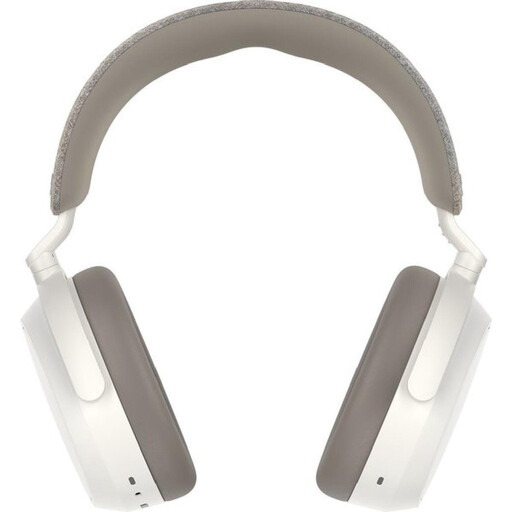 No image available
Could be suitable if you’re looking for noise cancellation and the option to listen over a wired connection; this alone doesn’t prove the headphones are suitable as a dialogue reference.
Product information lists adaptive active noise cancellation, Bluetooth and a 3.5 mm audio cable. Listening over a wired connection without a battery is also mentioned.
The product name states a battery life of 60 hours.
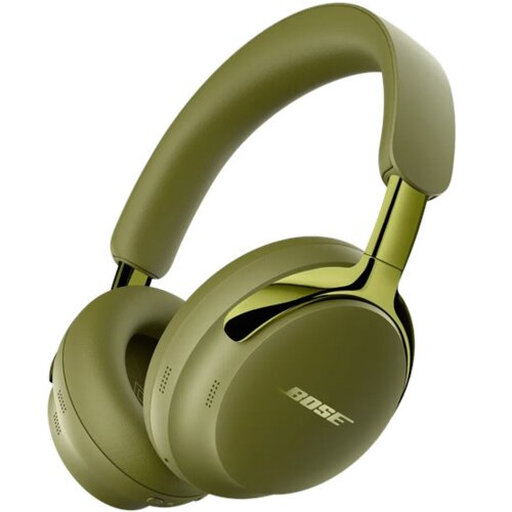 No image available
Could be suitable if you’re looking for active noise cancellation and wired connection options; check compatibility with your own equipment.
Product information lists Bluetooth, active noise cancellation and a detachable cable with USB-C and 3.5 mm connections.
Product information mentions comfort for extended wear; fit is a personal matter.
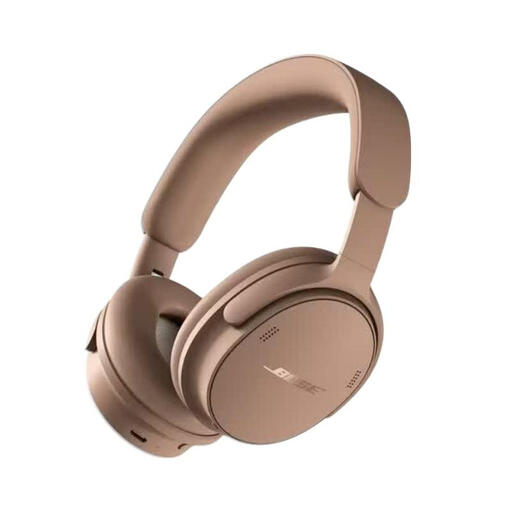 No image available
Could be suitable if you’re looking for noise cancellation and USB audio; check beforehand that the USB connection is compatible with your set-up.
Product information lists Bluetooth, active noise cancellation and USB audio.
A wider headband and soft ear cups are also described; decide for yourself whether the fit is right for your listening sessions.
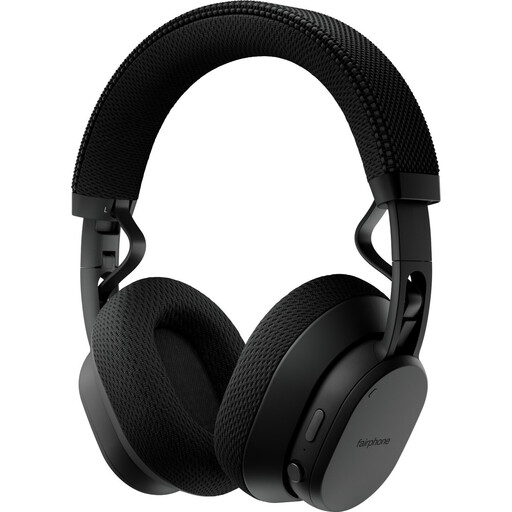 No image available
Could be suitable if you’re looking for a closed-back over-ear model with active noise cancellation; the product information doesn’t say how accurately it reproduces dialogue.
Product information lists a closed-back design, hybrid active noise cancellation and Bluetooth.
Nine replaceable parts are mentioned, including the battery and ear cushions.
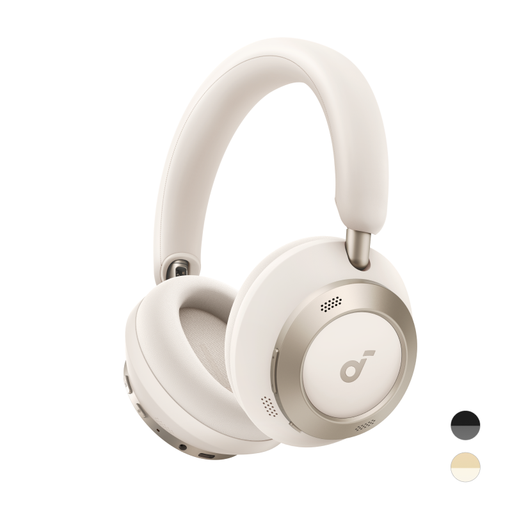 No image available
Could be suitable if you’re considering active noise cancellation and USB audio; check the connection and performance with your own equipment.
Product information lists Bluetooth, active noise cancellation and lossless audio via USB.
The product name mentions LDAC, six microphones and a battery life of 60 hours.
No. Screen reflections are a workspace issue: Arboportaal recommends positioning your viewing direction parallel to the window, where possible, and using suitable window coverings if needed. Choose open-back or closed-back headphones separately, based on background noise and whether you’ll be recording with a microphone.
The name ‘studio headphones’ doesn’t guarantee that. Compare your device’s output with the plug and supplied adapter, then check with your own equipment that you can achieve a suitable listening volume.
Keep the volume moderate and take regular listening breaks. The World Health Organization explains that risk depends on both sound level and duration of exposure.
For eligible distance purchases from a business, you generally have a 14-day cooling-off period, according to the Dutch government. You’re also entitled to a product that conforms to the contract; the Netherlands does not have a fixed statutory two-year guarantee period, according to the Dutch government. A manufacturer’s warranty does not replace these statutory rights, and you should contact the seller if there’s a fault.
Arboportaal describes employers’ obligation to provide adequate protection against direct sunlight falling on the workplace. Whether that workplace rule applies to your home-working set-up depends on your employment relationship and circumstances; it is not a general legal requirement for buying headphones.