
Vandaag of morgen in huis

Kwaliteit gegarandeerd

Welkomstaanbiedingen ontgrendelen: GRATIS bezorging | Tot 80% korting | Gratis 30 dagen JoyPlus-proefperiode
Download de app
Open-ear wireless earbuds let you listen to music without completely blocking your ear canal. This is useful when you are out walking, at the office, working from home or simply want to stay aware of your surroundings. However, a quick purchase can be disappointing. A model may seem comfortable but shift during a run. Similarly, long battery life does not always reflect actual usage at high volumes or during frequent phone calls.
This guide will help you assess the specifications of open-ear headphones, clip-on earbuds and other Bluetooth earbuds in practical terms.
Open-ear earbuds generally let in more ambient sound than in-ear models. That does not mean you will always hear everything happening around you clearly. Wind, traffic and loud music can still mask environmental sounds. Therefore, do not use earbuds while driving, cycling or in situations where your full attention is required. Also check the local traffic regulations.
An IP rating indicates the conditions against which a product has been tested according to its stated protection class. IPX4, for example, indicates protection against splashing water, while IP55 indicates a limited level of protection against dust and water jets. Neither rating automatically means that you can submerge the earbuds.
Also pay attention to the difference between the earbuds and the charging case. With some models, only the headset is resistant to sweat or light rain. Keep the case dry as a result.
Open-ear wireless earbuds are secured with an ear hook, clip or supra-aural construction. A lightweight model may be comfortable for a full working day, while a flexible clip-on design may stay in place better when walking or exercising. Do not just look at the weight, but also consider the shape, material and how the earbuds are secured.
For everyday use, comfortable earbuds mainly depend on the pressure on your ear and how stable they remain during movement. A clip-on model rests around or on the outer ear. An ear hook can provide extra support when running, but may cause pressure more quickly for some users.
Therefore, check:
Bluetooth 5.3 and Bluetooth 5.4 are modern connection standards that are common in this product category. Actual connection stability also depends on your smartphone, distance, obstacles and software. TWS earbuds work completely wirelessly in each ear, while some open-ear headphones may have a fixed connection between the two sides.
Before buying, check whether your phone supports Bluetooth and whether you actually need features such as multipoint, an app or a voice assistant. More features can make the controls more comprehensive, but may also require additional configuration.
For earbuds for calls, the number and positioning of the microphones are relevant specifications. Brands may promote noise cancellation or AI processing. Do not treat such performance as guaranteed: according to the brand’s own research or product information, it may help improve speech clarity, but call quality also depends on wind, the network connection and your phone.
Also pay attention to the difference between:
Stated playback time is often measured under specific conditions. According to Baseus product information, for example, the usage time of the Eli Sport 1 was measured at a volume of 70%; actual battery life may vary.
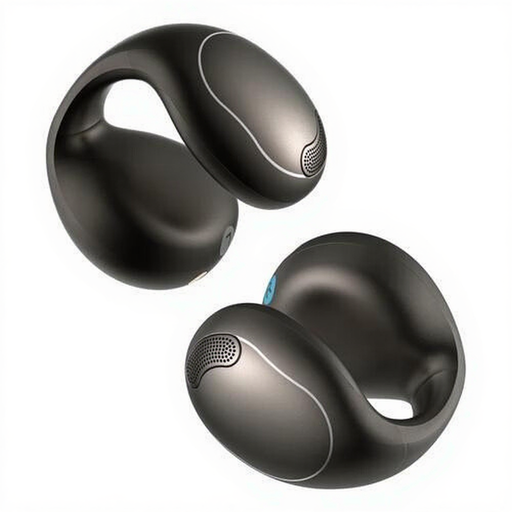
Why it suits this profile: This model combines an open-ear fit with Bluetooth 5.4, button controls and a charging station. It is a straightforward choice for music, calls and everyday use.
The specifications clearly state the fit, controls and IPX4 rating. IPX4 is suitable for splashes and sweat, but not for submersion.
Bluetooth 5.4, two microphones, button controls and a supra-aural fit; stated weight: 60 grams.
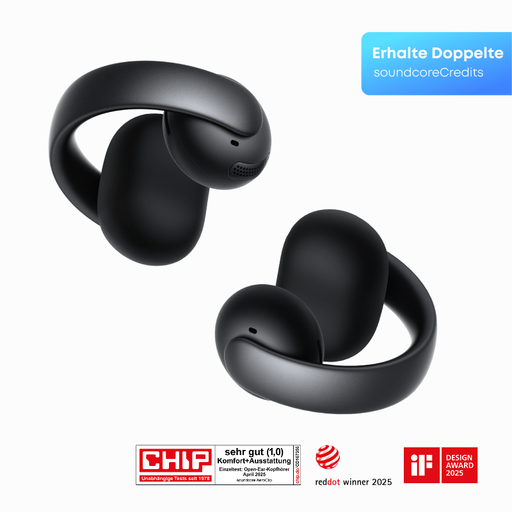
Why it suits this profile: The clip-on design is intended for extended wear without the pressure associated with traditional in-ear earbuds. It suits commuters, home workers and music lovers looking for an open design.
According to the product information, the flexible open-ring construction is designed to withstand repeated bending. However, check whether the clip shape suits your ear.
Four beamforming microphones, Bluetooth 5.4 and an open-ear clip-on design. The product information mentions Hi-Res Audio and a 12 by 12 millimetre driver.
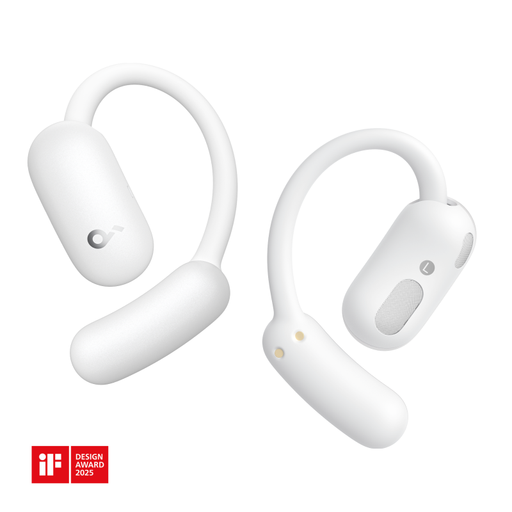
Why it suits this profile: The combination of a supra-aural fit, IP55 rating and charging station is well suited to sports enthusiasts and users who often wear their earbuds outdoors.
The IP55 rating provides greater protection against dust and water jets than IPX4, but does not make the product suitable for swimming or submersion.
Bluetooth 5.4, two microphones, a 750 mAh battery and button controls. The stated weight is 85 grams.
We have put together a complete, up-to-date list of products that fully meet these strict selection criteria and the applicable European safety regulations.
They can be, particularly when the model has multiple microphones. Call quality is also affected by wind, background noise, the Bluetooth connection and the phone. Therefore, check the number of microphones and read the full product information. Claims about noise cancellation come from the brand and are not a guarantee of performance in every environment.
Battery life per charge is a few hours for many models, but varies by product and usage. Volume, phone calls and features such as an app or low-latency mode affect usage time. Physical lifespan depends on charging cycles, cleaning, exposure to moisture and careful battery management.
Clip-on earbuds can stay more stable during movement than loose open earbuds, but the fit varies from ear to ear. Choose a model with an ear clip or ear hook and check the IP rating for sweat and light rain. Stay alert to traffic while running; hearing ambient sound does not replace safe awareness.
