
Staying available to talk
You listen while doing light chores and want to keep hearing people at home and sounds around you. An open fit may suit you, as long as you can understand the spoken guide at a moderate volume.


Open-ear earbuds are a good choice if you want to stay available to talk and hear sounds around the home. Consider noise-isolating in-ears if background noise makes the spoken guide difficult to hear. Then check how they fit while you move around and how long they last on a single charge. Wired earbuds may suit you if your device has the right connection and you don't mind having a cable.
You listen while doing light chores and want to keep hearing people at home and sounds around you. An open fit may suit you, as long as you can understand the spoken guide at a moderate volume.
You want to follow the instructions when household background noise gets in the way. So compare a sealed fit with an ambient sound mode, if the model you choose has one.
You often change position or move between rooms, so you’re mindful of pressure in or around your ears, a secure fit and controls that work well while you’re listening.
First decide whether you mainly want to hear the sounds around you or follow the spoken instructions more clearly. Then compare the fit and listening time in the mode you plan to use.
A good fit if: you want to stay available to talk and hear sounds around you while doing light housework.
Keep in mind: distracting sounds will still be audible, so you may not be able to hear the guide clearly in every room. The Consumentenbond also notes that open designs allow more sound to leak out.
A good fit if: background noise makes the spoken guide difficult for you to understand, but you want to let ambient sound through at other times.
Keep in mind: the fit may not be comfortable for everyone, and a sealed fit or noise cancellation can make sounds you want to hear less audible. How well noise cancellation works also depends on the sound.
A good fit if: not having to recharge matters more than freedom of movement, and your playback device has the right connection.
Keep in mind: a cable can get in the way when you’re doing household tasks. Also check that the connection is compatible with your device.
| What to consider | What should you look for? | Who would value this? |
|---|---|---|
| Hearing ambient sounds | Compare an open design with an in-ear model that has an ambient sound mode. Try them in your room to see whether you can hear both the guide and relevant sounds at a moderate volume. | If I want to stay available to talk while doing light chores, I want to hear people at home and sounds around me. Around 31% of consumers prioritise hearing ambient sounds. |
| Understanding speech in noisy surroundings | Assess how well the earbuds seal and try the guide with the kind of background noise that matters in your home. Avoid continually turning up the volume to drown out noise. | When household noise drowns out the instructions, I want to follow them without continually raising the volume. Around 31% of consumers prioritise speech intelligibility in noisy surroundings. |
| Fit while moving | Check the fit when bending, walking and turning. Compare any ear tips, ear hooks or fit stabilisers available for the specific model. | If I often bend down or walk between rooms, I want earbuds that stay comfortable and don’t press or shift. Around 23% of consumers prioritise comfort while moving. |
| Listening time and controls | Compare the stated hours per charge in the listening mode you plan to use, not just the total time with the charging case. Check that a wired model’s connection is compatible with your device. | For a longer guide, I want to listen all the way through and control the audio easily; wired earbuds can avoid recharging if the connection is compatible. Around 15% of consumers prioritise uninterrupted, easy use. |
Total usage time may include recharging in the case. That’s not the same as the earbuds’ listening time on a single charge.
Compare the stated time per charge with the length of your listening session. For models with noise cancellation, check which setting the figure refers to.
An open design lets ambient sound through, but that doesn’t mean the spoken guide will still be easy to understand when there’s distracting household noise.
Try the guide in a similar listening situation at a moderate volume. If you keep wanting to turn up the audio, consider a noise-isolating alternative.
Water resistance may differ between the earbuds and the case. Sony specifically states that the LinkBuds Open case is not water-resistant and that moisture on the charging contacts can cause problems.
Check the protection rating for each part separately and follow the care instructions for your specific model.
The OpenFit 2 is an open-ear model with an ear hook, designed for people who want to move around while still hearing sounds around them.
The open LinkBuds Open (WF-L910) and the noise-isolating WF-C710N offer different ways to balance ambient sound and spoken audio.
The TAA6709BK/00 is an open-ear option with an ear hook to consider if you’re looking for an open ear canal and a secure fit around the ear.
According to JBL, the Soundgear Clips have an open-ear clip design, offering an alternative to compare with an ear hook or in-ear tip.
The selection below mainly includes wireless in-ear earbuds with noise cancellation or an ambient sound mode, along with a wired USB-C option.
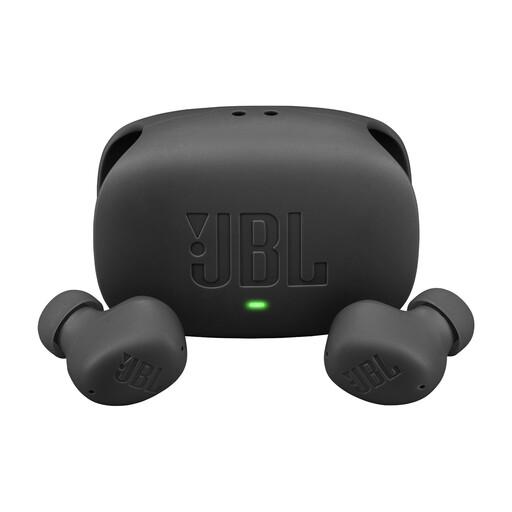 No image available
An in-ear option to consider if you’re weighing up noise cancellation against letting ambient sounds through while listening.
The product details list 10 hours of playback in the earbuds with ANC off and IP54 protection for the earbuds.
Both ANC and Smart Ambient are listed; consider whether you need to keep hearing sounds around you.
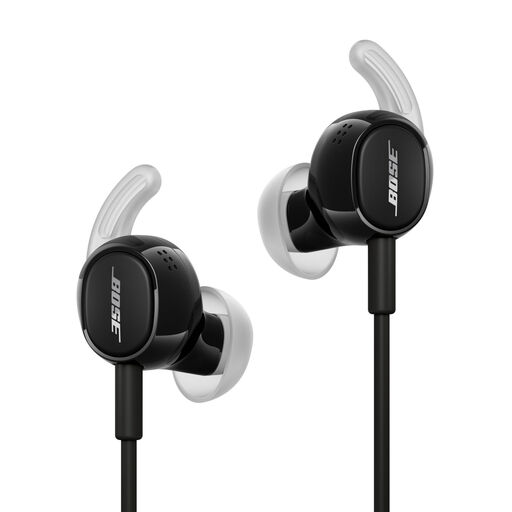 No image available
A wired option if you don’t want to recharge and your device has a compatible USB-C connection.
The product details list multiple earbud sizes, stability wings, an in-line remote and a microphone.
The cable may get in the way when you’re doing household tasks; check that the connection is compatible with your playback device.
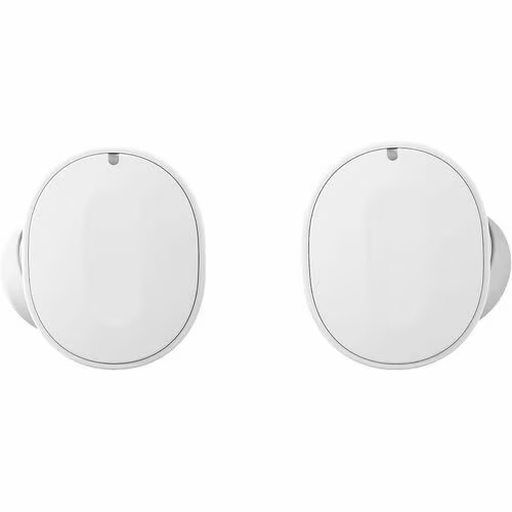 No image available
A wireless in-ear option with Hybrid ANC if you want to reduce household background noise.
The product details list up to 8 hours of playback with ANC off and a modular design with replaceable parts.
The sealed in-ear fit and noise cancellation may be less suitable if you want to hear sounds around you at all times.
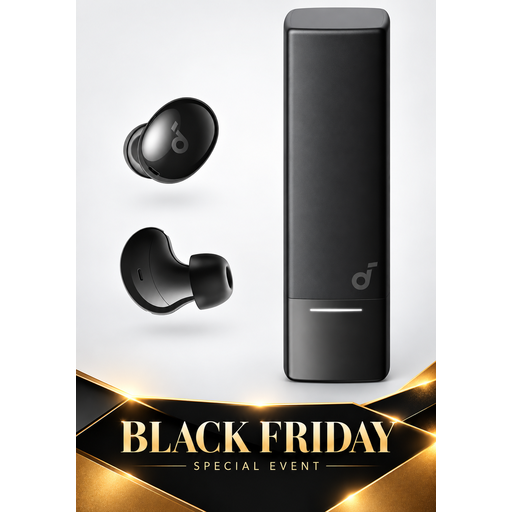 No image available
A wireless in-ear option with active noise cancellation for listening when background noise is distracting.
The product details list multipoint connectivity, IP54 protection and up to 7 hours of listening time per charge.
Noise cancellation may be less suitable if you want to keep hearing sounds around you at all times.
 No image available
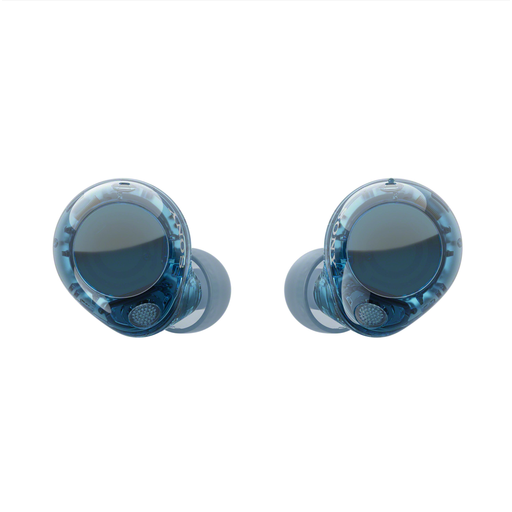
A noise-isolating in-ear model with noise cancellation and an ambient sound mode, giving you options for different listening needs.
Sony lists IPX4 protection and up to 8.5 hours of music playback with NC on, or 12 hours with NC off.
Sony states that the charging case is not water-resistant. The sealed fit may make sounds you want to hear less audible.
No. An open design lets ambient sound through, but it doesn’t guarantee that you’ll notice every sound that matters. The World Health Organization points out that volume, listening time and how often you’re exposed to loud sounds all matter; try not to keep turning up the volume to drown out background noise.
Follow the instructions for the exact model, and don’t assume the case has the same protection as the earbuds. Sony specifically states that the LinkBuds Open case is not water-resistant; dry any moisture on the charging contacts according to the model-specific instructions.
You’re entitled to a product that does what you can reasonably expect of it; there is no fixed statutory warranty period for all products. According to the Dutch government, the seller is your point of contact if something goes wrong. A manufacturer’s warranty is an extra benefit and doesn’t replace that right.
For online consumer purchases, you’ll often have a 14-day cooling-off period. ACM ConsuWijzer lists an exception for certain hygiene products whose seal has been broken; that doesn’t automatically mean every pair of earbuds falls under this exception. Before opening the packaging, check the seal and the terms that apply to the product and seller.
Bluetooth earbuds sold as radio equipment on the EU market are covered by the European radio equipment framework. The European Commission and EUR-Lex describe rules covering areas such as safety, electromagnetic compatibility and spectrum use. A Bluetooth or CE marking on its own doesn’t prove that an individual product listing meets all the applicable requirements; these specific radio equipment rules don’t automatically apply to wired earbuds.