
Vandaag of morgen in huis

Kwaliteit gegarandeerd

Welkomstaanbiedingen ontgrendelen: GRATIS bezorging | Tot 80% korting | Gratis 30 dagen JoyPlus-proefperiode
Download de app
Open-ear headphones let you listen to music or conversations without completely blocking your ear canal. This is useful when walking, at the office or during a workout where you want to remain aware of your surroundings. However, not every open-ear model is suitable for every situation. A design that feels comfortable during a relaxed walk may shift while running, while a model with a high water-resistance rating is not automatically suitable for swimming.
The biggest pitfall is that product pages sometimes use terms such as “noise cancelling”, “bone conduction” and “long battery life” without providing enough context. So don’t just look at the name. Focus particularly on the specific specifications.
With open-ear earbuds, the speakers are usually positioned beside or above the ear. With bone conduction headphones, the sound is transferred via contact points near the cheekbone, according to the product design. A clip-on model rests on the outer ear. These solutions differ in comfort, sound reproduction and stability.
An open design can let in ambient sound, but that does not automatically mean you are safe in traffic. Various product manuals warn against use while cycling, driving or in other situations where your full attention is required. Follow the traffic rules and remain responsible for your surroundings.
Pay attention to the difference between IPX5, IP55, IPX7 and IP68. The first digit refers to dust protection; the second refers to water protection. A model with IPX5 is, according to the stated rating, resistant to sweat and splashes, but is not intended for submersion. The charging case may also have a different level of protection from the earbuds.
When considering waterproof headphones, always check:
Manufacturers may list the playback time per earbud, the total playback time with the charging case or a standby time. Always compare like for like. Volume, Bluetooth codec, phone calls and noise cancellation all affect the actual battery life.
For headphones for running, ear hooks, an ear clip or a secure band are often more practical than loose Bluetooth earbuds. Consider the weight and how the pressure is distributed. A non-in-ear design may feel more comfortable for users who do not want silicone tips inside the ear canal, but the fit is still a personal matter.
For everyday use, physical buttons can sometimes be more convenient than touch controls. During a workout, sweat or a hat can cause accidental touches.
Open models generally provide a different listening experience from closed in-ear earbuds. Bass may sound less prominent outdoors or in a busy gym. For calls, the number of microphones and the type of call noise cancellation used are relevant details. Treat “clear conversations” as a product claim; actual quality also depends on wind, the network connection and the phone being used.
A model with noise-cancelling earbuds may offer different modes, such as ANC, transparency mode and ANC off. According to QCY’s product information, the Melobuds Neo features ANC and ENC for calls. Do not use ANC in situations where you need to hear traffic or warning sounds.
Bluetooth 5.3 or 5.4 indicates the connection version being used, but this alone cannot guarantee a reliable connection in every environment. Also check compatibility with your smartphone, multipoint support and the charging standard. USB-C is now commonplace and means you do not need a separate cable for every device.
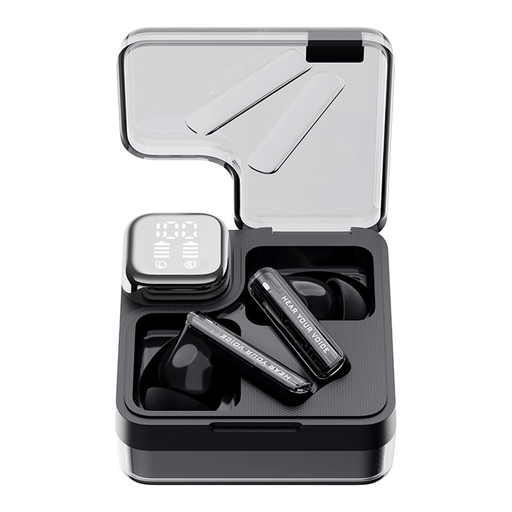
Why it suits this profile: This model is a practical introduction to wireless audio for everyday use, commuting and light workouts. The earbuds use Bluetooth 5.3 and support the QCY app.
The product information separately states approximately 6 to 7 hours per charge and approximately 28 hours with the case. IPX5 is also specified; the case is not waterproof.
10mm dynamic driver, ANC plus ENC for calls, USB-C and a stated latency mode of 0.06 seconds.
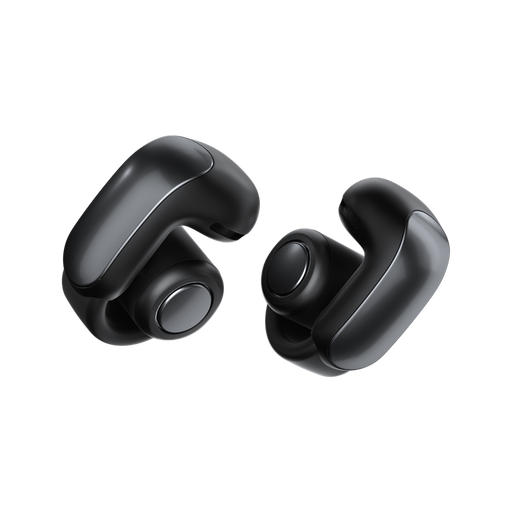
Why it suits this profile: The open wearing style is designed for listening to music and having conversations in everyday life, without completely blocking your ears.
The specifications state Bluetooth 5.3, IPX4 and up to 7 hours of playback time. This makes it immediately clear that it is not a swimming model.
Open-ear construction, stated IPX4 protection and a charging case supplied with a USB-C cable.
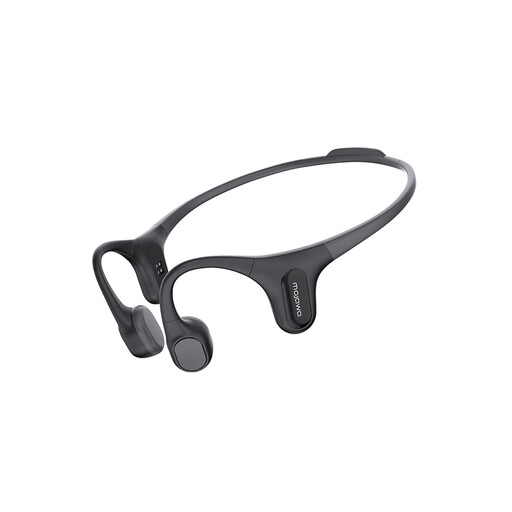
Why it suits this profile: The product description focuses on running, fitness, cycling and swimming. The built-in storage is intended for listening without a constant Bluetooth connection.
The listing states IP68 and 32 GB of storage. Before buying, check the current manual, charging procedure and conditions for fresh, salt or swimming-pool water.
Bone-conduction design, 32 GB of MP3 storage and a stated IP68 rating for sports use.
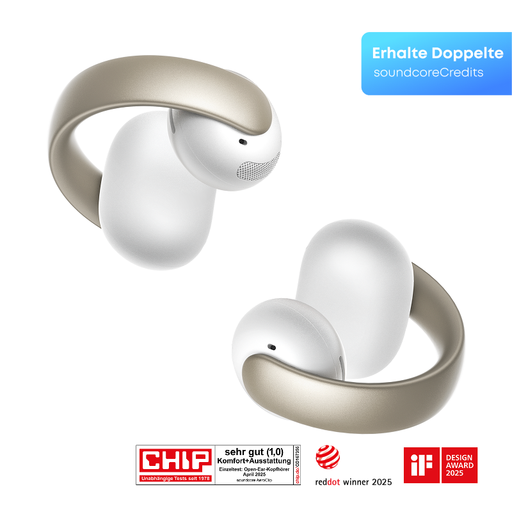
Why it suits this profile: The on-ear clip design is intended for calls, music, sport and everyday use. It offers a stated playback time of 8 hours and features Bluetooth 5.4.
The product details distinguish between open-ear and on-ear positioning, as well as 8 hours of continuous playback. Check the IP rating on the current product page before buying.
Four microphones, touch controls, Bluetooth 5.4 and an open wearing style without in-ear sealing.
We have put together a complete, up-to-date list of products that fully meet these strict selection criteria and the applicable European safety regulations.
That depends on the fit, weight and water protection. An ear clip, ear hook or bone-conduction design may stay more securely in place during sport than loose earbuds. Do not turn the volume up unnecessarily high, and remain alert to traffic and other people exercising nearby. The warnings for many models advise against using them while cycling or driving.
Only if the product information explicitly supports this and the water-resistance rating is suitable. Bluetooth does not work reliably underwater, so a swimming model often needs internal storage or an MP3 mode. Dry the charging contacts completely before connecting the device. Rinse a model with clean water after exposure to salt water or chlorinated water when the manufacturer instructs you to do so.
The stated battery life of the models mentioned ranges from approximately 6 to 8 hours per charge, while a charging case can extend the total usage time. Actual battery life varies depending on volume, phone calls, codec and noise cancellation. If you are looking for headphones with long battery life, compare both the playback time per charge and the capacity of the case or charging station.
Not necessarily. Open-ear models avoid pressure inside the ear canal, but with a particular ear shape they may instead press against the outer ear. Consider the wearing style, weight and adjustability. The most suitable choice is the model that stays securely in place for your intended use and fits comfortably, without requiring you to turn the volume up significantly.
