
Vandaag of morgen in huis

Kwaliteit gegarandeerd

Welkomstaanbiedingen ontgrendelen: GRATIS bezorging | Tot 80% korting | Gratis 30 dagen JoyPlus-proefperiode
Download de app
Open-ear headphones let you listen to music or podcasts without completely blocking your ear canals. That makes them appealing to runners, cyclists, commuters and people working from home who want to stay aware of their surroundings. However, not every open design is suitable for every situation.
Marketing terms such as “bone conduction”, “AI headphones” and “noise cancelling” don’t tell you much on their own about comfort, safety or sound quality. Instead, pay close attention to the design, battery information, water resistance and any usage limitations.
An open design blocks your ears less than traditional in-ear earbuds or closed-back over-ear headphones. However, wind, traffic and voices can still drown out what you’re listening to. Listening at a high volume can also make you less aware of your surroundings.
So don’t use open-ear headphones while driving, cycling in heavy traffic or operating machinery when you need to stay fully alert. Product warnings often stress that being aware of your surroundings doesn’t automatically mean you’re completely safe.
With bone-conduction headphones, the transducer is usually positioned near the cheekbone. Ear clip headphones, on the other hand, rest on or around the outer ear. Open-ear earbuds may also use small speakers that sit in front of the ear.
The fit varies from person to person. A model that doesn’t sit in your ear canal may feel more comfortable, but pressure on your ear, temples or cheekbone can still become uncomfortable during extended use. Check the shape, weight and how the model attaches.
“Up to 28 hours” often means the total listening time, including the charging case, rather than the battery life of a single earbud. Always check both figures. Also look at the IP rating. IPX4 means the product information states that the device is protected against splashes, sweat or light rain; it doesn’t mean you can submerge the earbuds.
Choose according to how you’ll use your headphones day to day:
For running and fitness, a secure fit and low weight matter more than a large driver size alone. A soft ear hook or adjustable band may help, but fit is still a personal preference.
Bluetooth 5.3 and Bluetooth 5.4 are recent standards that, according to product specifications, can help provide a stable connection and lower power consumption. They don’t automatically guarantee greater range or better sound. Also check for multipoint support if you want to connect to a laptop and smartphone at the same time.
If you mainly use your headphones for calls, it’s worth checking how many microphones they have and what noise reduction is described. Terms such as “AI noise reduction” refer to features mentioned in the product description; actual call quality also depends on wind, traffic, your phone and its software.
Compare these three figures separately:
Sports headphones with IPX4 are suitable for sweat and light rain if the manufacturer says so. Avoid submerging them, and only charge a wet device once it’s completely dry.
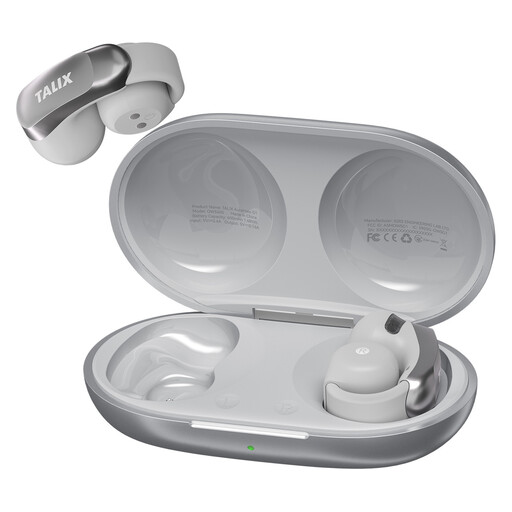
Why it suits this profile: This clip-on model is designed for everyday use, calls and light exercise, without the need for an in-ear fit.
The product information lists a weight of 5.2 grams per earbud, a silicone ear hook and an IPX4 rating. Battery life is broken down into up to 7 hours per charge and 28 hours with the case.
Bluetooth 5.3, four microphones according to the product information, fast charging and up to 28 hours in total with the charging case.

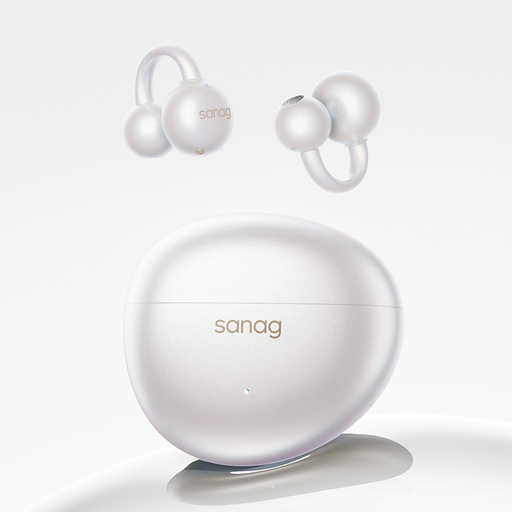
Why it suits this profile: A good choice if you value an open fit, app settings and different listening modes for work, walks and commuting.
The product information specifically mentions a clip-on design, IPX4 splash resistance and three listening modes. This makes the wearing style and intended use clearer.
According to the product information: 9 hours of listening time per charge, up to 37 hours with the case, Bluetooth 5.3 and a 10-band equaliser in the app.
Why it suits this profile: An option for anyone specifically looking for bone-conduction headphones for sport, with an open design that doesn’t sit inside the ear canal.
The product information mentions bone conduction, open-ear use, volume safety and avoiding submersion. Before buying, check the current water-resistance rating.
An open-ear bone-conduction design, Bluetooth connectivity and, according to the product name, long battery life for sports use.
We’ve put together a complete, up-to-date list of products that meet these strict selection criteria and current European safety requirements.
That depends on the fit, weight and water resistance. Ear clip headphones or a bone-conduction model may stay securely in place during a gentle run, but always check whether the model is designed to withstand sweat or light rain. Stay alert to traffic and don’t use a volume that drowns out the sounds around you.
Battery life per charge varies by model and settings. Battery capacity decreases over time, particularly after many charging cycles and exposure to heat. Keep the device dry, charge it with the recommended cable and use the charging case if one is supplied.
Some models advertise active noise cancelling or noise reduction for calls. However, with an open design, your ears remain partly exposed to surrounding sounds. According to a brand’s own product information, a particular mode may reduce background noise, but that doesn’t mean an open-ear model offers the same level of isolation as closed-back noise-cancelling headphones.
