
Vandaag of morgen in huis

Kwaliteit gegarandeerd

Welkomstaanbiedingen ontgrendelen: GRATIS bezorging | Tot 80% korting | Gratis 30 dagen JoyPlus-proefperiode
Download de app
Open-ear headphones leave your ears uncovered, so you can listen to music or podcasts without completely blocking out the sounds around you. This is useful when running, cycling, walking, commuting and working out. However, not every model labelled open-ear works in the same way. Clip-on earbuds work differently from bone conduction headphones, and a water-resistant model is not automatically suitable for swimming.
The main pitfalls are usually not about looks, but about fit, water-resistance ratings and battery information. Read on to find out what to look for before buying wireless headphones.
Bone conduction headphones transmit vibrations through the area around your cheekbones. Other open-ear earbuds sit beside your ear or clip around the outer ear, directing sound towards your ear from a small speaker.
These designs have different features:
So, check not only for the term “open ear”, but also how the headphones are worn and how much they weigh.
In practice, an IPX4 rating means protection against splashes and sweat, not submersion. Models such as the Sony LinkBuds Clip and Soundcore C40i are listed as IPX4 or splash-resistant in their product specifications. That makes them suitable for running in light rain, but not for swimming.
For swimming headphones, look for a stated submersion rating, such as IP68 or IPX8, as well as the usage instructions. Bluetooth may have limited functionality underwater on some models. In that case, headphones with an MP3 player and built-in storage are more practical, as you can play music stored on the device.
“Long battery life” might refer to the earbuds’ playback time, the total listening time with the charging case, or standby time. So, check:
Headphones with long battery life are particularly useful for long bike rides, training sessions or working days. For everyday use, fast charging may matter more than a high theoretical maximum.
For running headphones, weight, an ear hook, a neckband and pressure around the cheekbones all matter. A model that feels comfortable when walking may slip during a sprint or jump. Also consider how it fits with a cycling helmet, sunglasses or sports glasses.
If you’re unsure, choose a model with adjustable or flexible parts. Stop using it straight away if you experience pressure, a headache, skin irritation or an uncomfortable vibrating sensation.
Bluetooth 5.3 or 5.4 is listed in the product specifications of several models in this selection. This tells you which Bluetooth generation they use, but it does not automatically guarantee a reliable connection in every environment. Walls, busy stations and other wireless devices can affect the range.
Headphones with a microphone are useful for phone calls and online meetings. Check how many microphones there are and whether you can control the headphones using buttons or touch controls. According to the product specifications, the Soundcore Aeroclip has four microphones and the Soundcore C40i has two. This is verifiable product information, but call quality can vary depending on your surroundings.
Check the full IP code. A model with splash protection only is suitable for sweat and light rain, but not for use in a swimming pool. If a model has 32 GB of storage, check how to transfer music and which file formats it supports.
Only charge sports headphones once the charging contacts are completely dry. If the product information says a model is suitable for swimming, rinse it with fresh water after use in chlorinated or salt water, then dry it thoroughly.
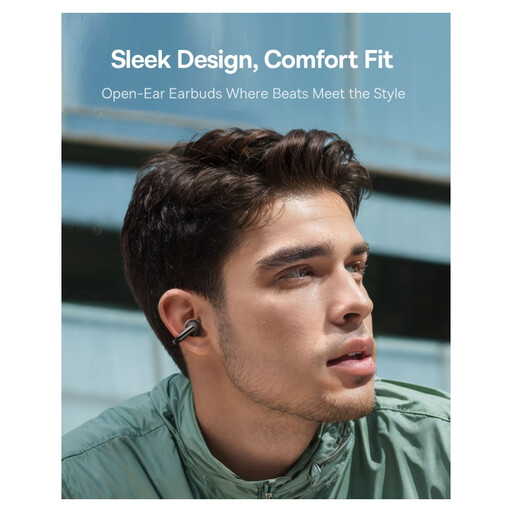
Why it suits this user type: A compact choice for everyday use, walking, commuting and light workouts. The open clip-on design leaves your ear canal unobstructed.
The specifications list Bluetooth 5.4, a range of up to 10 metres in open areas and a USB-C charging port. Please note: according to the product information, this model is not waterproof.
Open-ear clip-on design, Bluetooth 5.4, 600 mAh charging case and a frequency range of 20 Hz to 20 kHz.
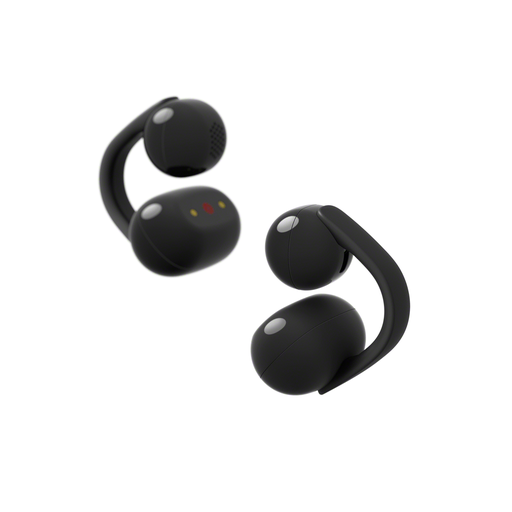
Why it suits this user type: A good choice if you want open-ear listening combined with a charging case, different listening modes and long total battery life.
The product information distinguishes between up to 9 hours per earbud and up to 37 hours with the charging case. The IPX4 rating is for splash protection, not swimming.
Bluetooth 5.3, clip-on design, microphone, USB-C and IPX4 splash protection.
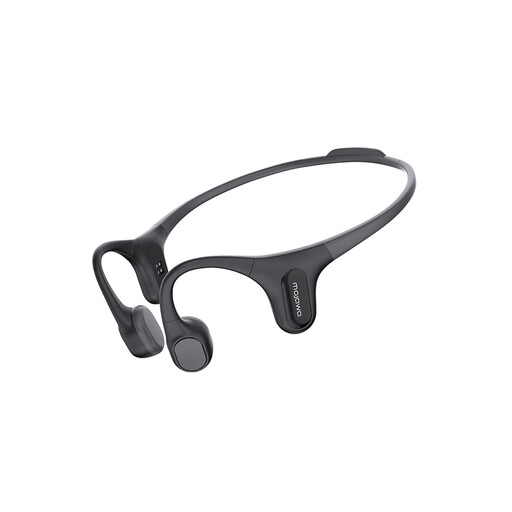
Why it suits this user type: Designed for people who combine running, cycling, workouts and swimming, and want to play music stored on the headphones without a smartphone.
The product page lists IP68, 32 GB of built-in storage and bone conduction technology. Always check the instructions before using the headphones in water, and only charge the device once it is dry.
Bone conduction, 32 GB of MP3 storage and a design that, according to the product information, is intended for running, swimming and cycling.
We’ve put together a complete, up-to-date list of products that meet these strict selection criteria and the applicable European safety regulations.
Open-ear audio lets you hear the sounds around you, but it is no substitute for staying alert. Do not use headphones while driving, and take extra care at busy junctions, railway crossings and cycle paths. Keep the volume low enough to hear traffic, sirens and other warnings.
Avoid listening at high volumes for long periods. Stop if you experience pain, irritation, dizziness or if the device feels unusually hot. Keep small accessories out of children’s reach, and do not use a damaged battery or charging cable.
Yes, depending on the fit. Choose a lightweight model with an ear hook, clip or stable neckband. Also check the water protection if you often train in the rain or sweat heavily. An IPX4 model is not designed for submersion.
That depends on the IP rating and the usage instructions. According to the product information, a model with IP68 or IPX8 may be intended for certain swimming conditions. Bluetooth does not always work well underwater, so built-in MP3 storage may be useful.
It varies by model and how you use it. Check whether the stated time refers to a single charge or the total listening time with the charging case. Calls, high volumes and extra features can reduce actual battery life.
