
Vandaag of morgen in huis

Kwaliteit gegarandeerd

Welkomstaanbiedingen ontgrendelen: GRATIS bezorging | Tot 80% korting | Gratis 30 dagen JoyPlus-proefperiode
Download de app
Open-ear headphones let you hear the sounds around you while listening to music, podcasts or phone calls. That’s useful when running, cycling, walking or working in an office. However, many models look similar, even though they can differ significantly in fit, water resistance and battery life.
Look out for these three common pitfalls:
Read on to find out which specifications matter and which type of open-ear earbuds will suit your needs.
Open-ear models can broadly be divided into three groups.
These models rest on or around the outer ear without sealing off the ear canal. A clip-on design, like the one found on some wireless sports earbuds, is handy if you don’t want to wear an earbud inside your ear. Check that the clip holds securely without putting pressure on your outer ear.
Bone conduction headphones use transducers that rest against your head, usually near your cheekbones. According to the product description, sound is transmitted through vibrations. Your ears remain uncovered, but the listening experience is different from that of traditional headphones. Pressure on your cheekbones and how securely the band fits are therefore important considerations.
Open-ear Bluetooth headphones connect wirelessly to a smartphone, tablet or sports watch. Bluetooth is suitable for running, cycling and everyday use, but the connection won’t work automatically underwater. For swimming, you’ll need a model with suitable water resistance and, often, built-in storage for MP3 files.
The IP rating indicates the type of water the product is specified to withstand. IPX4 generally means protection against splashes, such as sweat or light rain. That makes a model suitable for many sports, but not for submersion.
Models with IPX8 or IP68 ratings are listed for swimming. Always check the manual and instructions for use. For example, the Verbex X7S instructions say that the charging contacts must be completely dry before you charge it. They also recommend rinsing it with fresh water after contact with salt water.
A battery life of, say, 8 or 9 hours is handy for commuting and long training sessions. Check whether this figure applies to continuous playback and whether extra hours from the charging case are included.
For swimming, built-in storage is often more important than Bluetooth. Your phone’s connection may drop out in the water. Models with 32 GB of storage, such as certain Mojawa and Verbex versions, are designed for listening to music stored locally. Check which file formats and controls are supported before you buy.
Open-ear headphones shouldn’t slip out of place when you move, but they shouldn’t pinch either. Look for:
For example, the Baseus Bowie MC1 models list Bluetooth 5.4, a range of 10 metres in open areas and a USB-C charging port. The Soundcore Aeroclip also has Bluetooth 5.4, touch controls and four built-in microphones, according to the product specifications.
The following selection is based on listed features, connections, water-resistance ratings and usage warnings. Brand claims about sound quality or noise cancellation aren’t treated as guaranteed results.
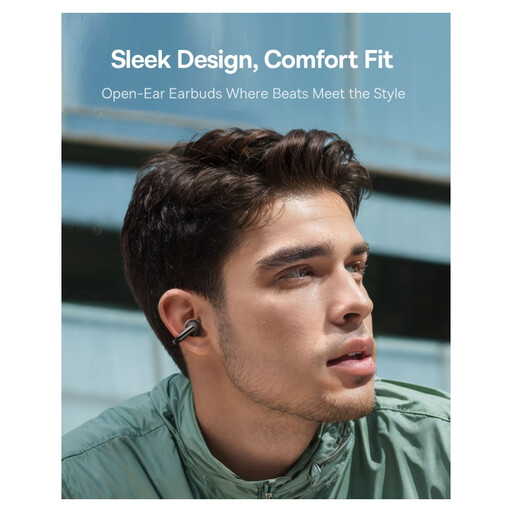
Why it suits this profile: An accessible open-ear model for podcasts, commuting and light workouts, where Bluetooth and a compact charging case are important.
The specifications list Bluetooth 5.4, a range of 10 metres and USB-C. Note that the product information says this model isn’t waterproof.
Open TWS design, Bluetooth 5.4, 48 mAh per earbud and a 600 mAh charging case.
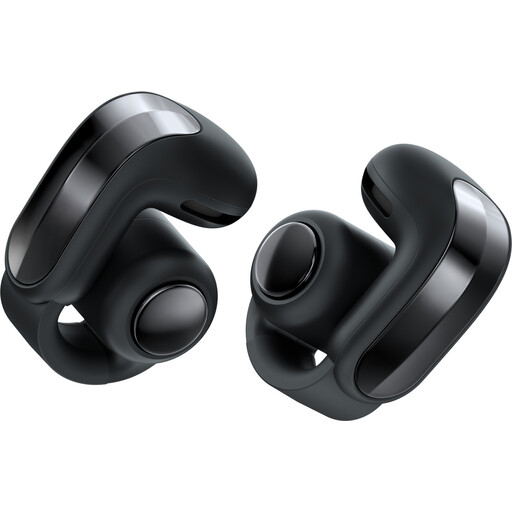
Why it suits this profile: A good choice for everyday use, walking and cycling if controls, app support and an open fit are high on your list.
The stated IPX4 rating makes the limits clear: it’s designed for splashes and sweat, not swimming or submersion.
Bluetooth 5.4, up to 9 hours of battery life per charge, on-ear controls and wireless charging for the case, according to the product information.
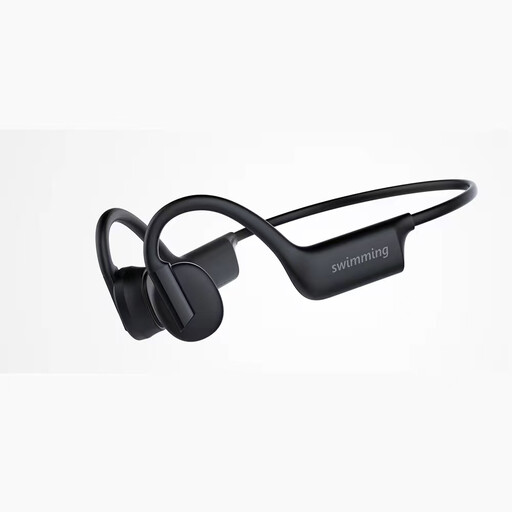
Why it suits this profile: Designed for swimming and intensive sports, where local music storage and a high water-resistance rating matter more than a Bluetooth connection alone.
The stated IPX8 rating and 32 GB of storage make it suitable for use in water. The charging contacts must be completely dry; follow the manual.
32 GB of storage, magnetic charging, Bluetooth and a stated battery life of up to 8 hours.
We’ve put together a complete, up-to-date list of products that meet these strict selection criteria and the applicable European safety regulations.
They can be, provided they fit securely and you keep the volume low enough to hear traffic and other sounds around you. Check your local traffic regulations too. An open design is no substitute for staying alert.
Standard Bluetooth earbuds aren’t automatically suitable for swimming. Bluetooth may have limited functionality underwater. Only choose a model whose water-resistance rating and instructions for use allow swimming. Built-in music storage is useful in this situation.
Lifespan depends on charging cycles, moisture, heat and everyday use. Let your headphones dry after exercise, don’t charge them when the contact points are damp, and don’t leave them in a hot car for long periods. When buying, also check whether the charging case can be replaced and whether a manual is available.
