
Vandaag of morgen in huis

Kwaliteit gegarandeerd

Welkomstaanbiedingen ontgrendelen: GRATIS bezorging | Tot 80% korting | Gratis 30 dagen JoyPlus-proefperiode
Download de app
Want to listen to music, podcasts or phone calls without completely blocking your ears? Open-ear earbuds are a natural choice. They usually sit beside or above your ear, so you can still hear the sounds around you. This makes them a good option for commuters, office workers, walkers and sports enthusiasts.
However, not every model suits every situation. Marketing copy often highlights impressive audio terminology while leaving out important details. Read on to find out which features are really worth checking and which models suit different needs.
For example, the packaging might quote total playback time with the charging case. That’s different from how long the earbuds themselves last. So check both figures:
Also check the conditions under which the manufacturer measured the battery life. Volume, codec, phone calls and features such as spatial audio can all affect it.
With open-ear models, your ears remain partly uncovered. This means active noise cancellation works differently from how it does with closed in-ear earbuds. Some brands mention ENC, wind noise reduction or acoustic technology. According to Lenovo’s own product description, the LE302 is designed to distinguish voices and reduce background noise. That’s a claim made by Lenovo, not a guarantee that all surrounding sounds will disappear.
For calls, multiple microphones can help make your voice clearer to the person you’re speaking to. But for listening to music on a busy train, open-ear earbuds still block out less sound than in-ear models.
Open-ear earbuds let in surrounding sounds, but that doesn’t mean you’ll always hear what’s happening in traffic. Wind, traffic noise and excessive volume can mask important sounds. So don’t wear earbuds while driving. Check the safety guidance for your chosen model before cycling or exercising in a busy area, too.
Open-ear models aren’t all the same. Common styles include:
Check the weight of each earbud, the shape of the hook and the material where it touches your ear. A lightweight model can be comfortable, but a fit that’s too loose may shift as you move. A secure fit is useful, as long as it doesn’t feel uncomfortable.
Most wireless open-ear earbuds connect to phones, tablets and laptops via Bluetooth. Check:
A newer Bluetooth version can help provide a stable connection and lower power consumption, but it doesn’t tell you anything about sound quality on its own. Your smartphone and the codec you use also play a part.
An IPX4 rating generally means protection against splashes, sweat and light rain. It doesn’t protect against immersion in water. For some models, the rating applies only to the earbuds, not the charging case.
So always check:
A water-resistant model isn’t automatically suitable for swimming.

Why it suits this profile: Its clip-on design, support for Android, iOS and Windows, and quoted battery life of up to 25 hours make this model a good choice for everyday listening, videos and office work.
The product description mentions both the open-ear design and the total battery life. This lets you compare these details in advance instead of relying on an audio buzzword alone.
Up to 25 hours of quoted battery life, wireless connectivity and compatibility with several operating systems.
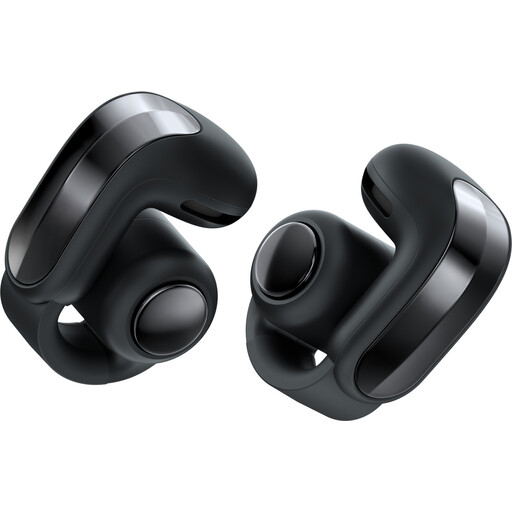
Why it suits this profile: This model combines an open-ear design with Bluetooth 5.4, an app for adjusting settings, IPX4 splash resistance and a quoted listening time of up to 9 hours.
The specifications list both the playback time on a single charge and the total capacity with the case. The IPX4 rating is also clearly stated, rather than relying on a vague claim of water resistance.
Up to 9 hours of battery life, Bluetooth 5.4, IPX4, app-based settings and wireless charging via the case.
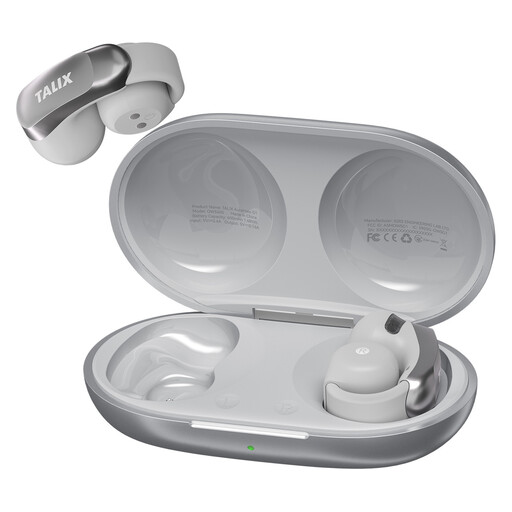
Why it suits this profile: The clip-on fit and silicone ear hook are designed for sports and everyday movement. According to the product information, each earbud weighs 5.2 grams.
The key fit and protection details are clearly stated: 5.2 grams, an ear hook and IPX4. This makes it easier to compare the model with your sporting needs.
Up to 7 hours of listening per charge, 28 hours with the case, Bluetooth 5.3, four microphones and IPX4 protection.
We’ve put together a complete, up-to-date list of products that meet these strict selection criteria and the applicable European safety regulations.
They can let you hear the sounds around you, but they don’t automatically make cycling safe. Wind and traffic can mask voices, bells and warning sounds. Keep the volume low, follow the manufacturer’s instructions and don’t use them when you need to give the road your full attention.
It depends on battery capacity, charging habits, volume and how often you use features such as calling. Check the quoted playback time per charge, not just the total capacity of the charging case. A model with fast charging may be more practical for everyday use.
Choose sports earbuds with a secure ear hook or clip-on design. Also check the IP rating. IPX4 is designed to protect against splashes and sweat, not immersion or heavy rain. Clean your earbuds after use and let them dry before putting them away in the case.
