
Vandaag of morgen in huis

Kwaliteit gegarandeerd

Welkomstaanbiedingen ontgrendelen: GRATIS bezorging | Tot 80% korting | Gratis 30 dagen JoyPlus-proefperiode
Download de app
Would you like to listen to music while running, cycling or travelling without shutting yourself off completely? Then open-ear earbuds could be a practical choice. They sit in or around your ears and allow you to hear your surroundings more clearly than traditional in-ear earbuds with sealing silicone tips.
However, the range often looks simpler than it really is. Marketing terms such as “open”, “sport” and “water-resistant” do not always tell the whole story. Pay particular attention to the fit, the exact IP rating, battery life and the way sound is transmitted.
Open-ear headphones can reduce pressure in the ear canal, but comfort depends on the design. Some models rest on the outer ear, while others use an ear hook or neckband. An ear hook can feel secure when running, but may get in the way if you wear glasses or sunglasses.
Therefore, check:
Low weight helps, but it is no guarantee of comfort. The shape and distribution of the weight are at least as important.
Water-resistant earbuds are identified by an IP rating. The first digit refers to protection against dust; the second refers to water. IPX4, for example, means protection against splashing water, but not submersion. A model with an IP54 rating also offers limited protection against dust.
Note the difference between:
The charging case does not always have the same level of protection as the earbuds. So do not take it into the shower or swimming pool unless this is expressly permitted.
Manufacturers sometimes state the playback time of the earbuds and sometimes the total battery life including the charging case. These are different figures. Volume, Bluetooth codec, phone calls and temperature all affect actual battery life.
Therefore, compare:
A model with multipoint Bluetooth can also be useful if you switch between a phone and laptop. However, check whether both devices can remain connected at the same time.
With standard open-ear earbuds, the speakers are usually positioned near the ear without completely sealing the ear canal. With bone conduction headphones, sound is transmitted through vibrations at the bone beside the ear. This means the listening experience, fit and pressure distribution differ.
Open-ear models are often suitable for podcasts, phone calls and music during your commute. Bone conduction models may appeal to runners or cyclists who prefer wearing a band around their head. With both types, watch out for sound leakage: people nearby may sometimes hear what you are listening to on a quiet train or in an office.
Most wireless earbuds work via Bluetooth. A newer Bluetooth version can offer benefits in terms of energy consumption and connection, but on its own it says nothing about sound quality. Also look at:
Bluetooth earbuds with an app sometimes offer an equaliser or customisable controls. This is useful if you use your earbuds for music, podcasts and calls in different ways.
For sports earbuds, stability is more important than a long list of features. An ear hook, clip or neckband can prevent an earbud from shifting with every step. Touch controls are convenient, but check whether they also let you answer calls, adjust the volume or activate a voice assistant.
An integrated microphone is important for phone calls. Do not expect every open design to filter out background noise completely. According to a brand’s own research, certain noise-reduction features can improve speech clarity, but the result depends on the wind, traffic, phone and surroundings.
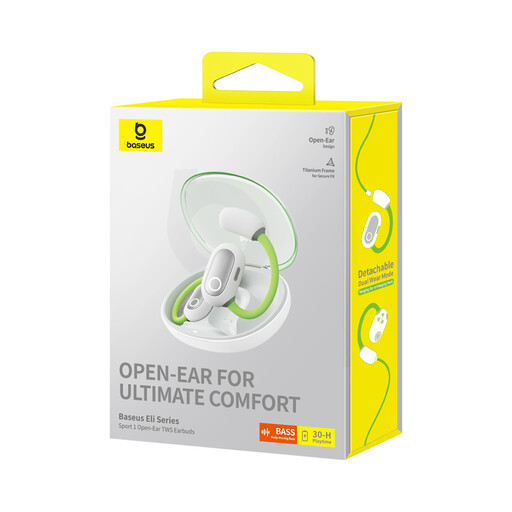
Why it suits this profile: This open-ear model combines Bluetooth 5.3 with around 7 to 8 hours of playback per charge and approximately 30 hours with the charging case. This makes it suitable for everyday listening without having to look for a power socket straight away.
The product specification states the playback time separately from the total duration with the case. This makes comparisons easier.
Bluetooth 5.3, USB-C and a stated communication range of 10 metres.
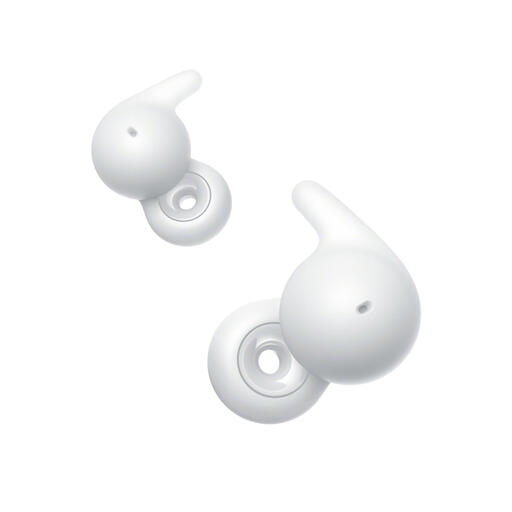
Why it suits this profile: According to the product information, each earbud weighs 4.8 grams and offers Bluetooth 5.3, multipoint and an IPX4 rating. This suits commuters and users looking for one pair of earbuds for work, sport and relaxation.
The IPX4 rating makes it clear that this means splash protection, not use underwater.
Stated total battery life of 22 hours, multipoint connection and support for AAC, LC3 and SBC.

Why it suits this profile: This bone conduction model is designed for sports users who want to combine an open design, Bluetooth and built-in storage. The product listing states 32 GB of storage and IP68 water resistance.
The stated IP68 rating is more specific than a general description such as “water-resistant”. Before swimming, check the manual and charging instructions.
Bone conduction design and 32 GB of built-in MP3 storage according to the product listing.
We have put together a complete, up-to-date list of products that fully meet these strict selection criteria and the applicable European safety regulations.
That depends on the fit and weight. An ear hook, clip or neckband can help keep the earbuds in place while you move. You can usually hear your surroundings more clearly than with sealed in-ear models, but stay alert at junctions, on cycle paths and in heavy traffic. Do not use high volume levels during prolonged activities.
Their lifespan depends on the battery, charging cycles, storage and exposure to moisture. Battery life per charge does not indicate how long the product will last overall. Charge the earbuds according to the manual, use the correct cable and keep the case dry. An official warranty and your statutory consumer rights in the EU are separate from the stated playback time.
Usage costs mainly consist of the purchase price and the electricity used for charging. The latter is generally minimal. Pay particular attention to potential replacement costs for the charging case, accessories or a new pair when the built-in battery loses capacity over time. So do not compare the price alone; also consider the features, protection and fit you need.
