
Vandaag of morgen in huis

Kwaliteit gegarandeerd

Welkomstaanbiedingen ontgrendelen: GRATIS bezorging | Tot 80% korting | Gratis 30 dagen JoyPlus-proefperiode
Download de app
Open-ear earbuds are ideal for anyone who wants to listen to music while still being able to hear traffic, colleagues or housemates. They do not sit deep inside the ear canal, making them more comfortable for some users than classic in-ear wireless earbuds. However, models vary considerably in fit, sound quality, battery life and protection against moisture.
Marketing copy does not always make these differences easy to spot. So pay particular attention to the following three pitfalls.
With open-ear earbuds, your ear remains partly uncovered. This helps you hear surrounding sounds, but it also means that noise from a train, office or busy street is not completely blocked out. Active Noise Cancelling (ANC) generally works more effectively with sealed in-ear earbuds.
A model may therefore be marketed as noise-cancelling, even though it works differently with an open fit than with sealed earbuds. Check whether the product offers ANC, an ambient mode or simply microphone noise reduction for phone calls.
An ear clip, ear hook and open-ear band distribute weight in different ways. Even a lightweight model can feel tight if its shape is not suited to your ear. Look at the weight of each earbud, the hook material and whether you can adjust its position slightly.
With clip-on earbuds, it is also worth checking how stable they remain while walking, running and bending down. A secure fit is more important than an eye-catching design.
A stated battery life may refer to the earbuds individually, the total including the charging case or use at a particular volume. ANC, phone calls and high volume can reduce operating time.
So check these three points:
Open-ear earbuds usually rest on or around the outer ear. A clip-on design, such as that of the soundcore AeroClip, may be suitable for extended use because there is no silicone tip sitting deep inside the ear. According to the product information, this model has a flexible open-ring design and a 12 x 12 mm driver.
An in-ear model such as the Google Pixel Buds Pro seals the ear canal more effectively. This can deliver more powerful bass and better sound isolation, but it is not comfortable for everyone. So choose your preferred wearing style first, then compare the features.
For music, driver diameter, frequency range and audio codecs are useful indicators, but they do not fully predict how a model will sound to you. With open-ear earbuds, the position of the speaker above the ear can have a significant effect on volume and bass.
For calls, the number and position of the microphones are particularly relevant. The soundcore AeroClip and TALIX G1, for example, list four microphones. According to the product information, these models also use technology to reduce noise during calls. This does not guarantee that every caller will hear you clearly in every environment; wind and traffic will still have an effect.
In practice, an IPX4 rating means protection against splashing water, such as sweat or light rain. It does not allow submersion. IPX5 provides protection against water jets under specified conditions. The case may have a different protection rating from the earbuds.
For outdoor exercise, models with IPX4 or IPX5 are practical, but dry the earbuds after use and keep the charging case out of the rain. An open-ear model is not automatically water-resistant.
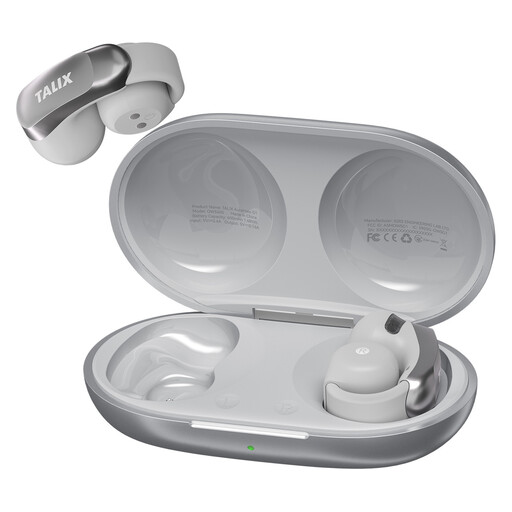
Why it suits this profile: The clip-on fit and weight of 5.2 grams per earbud are designed for everyday use, calls and light sporting activities.
The product information lists playback time per charge and total battery life with the charging case separately. IPX4 makes it clear that this is protection against splashing water, not submersion.
Up to 7 hours per charge, up to 28 hours with the case, Bluetooth 5.3 and four microphones according to the product description.
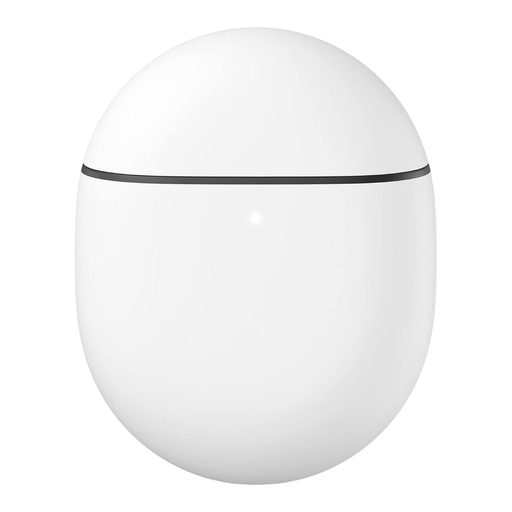
Why it suits this profile: This is an in-ear alternative for anyone who prioritises sound isolation, ANC, multipoint connectivity and wireless charging over a fully open fit.
The product specifications mention both active noise cancellation and an ambient sound mode. This allows you to choose between blocking out sounds and letting surrounding noise through.
11 mm speaker, five-band equaliser, three ear tip sizes, multipoint connection and wireless charging according to the product information.
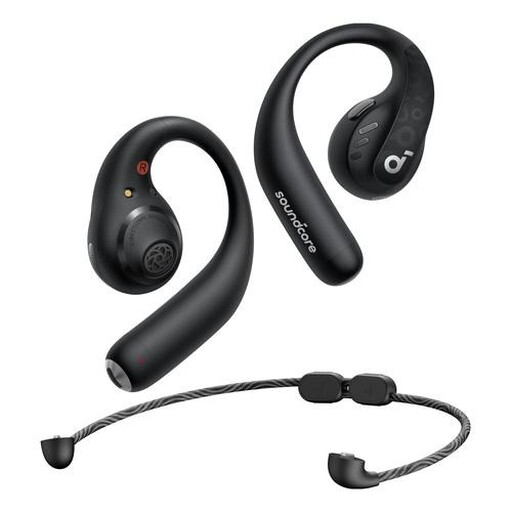
Why it suits this profile: The ear hook, IPX5 rating and long playback time are well suited to running, fitness and intensive everyday use.
The specifications state a specific IPX5 rating and 14 hours of playback time. This makes the limits clearer than a general claim about “sports use”.
Bluetooth 5.3, AAC, LDAC and SBC support, IPX5 and 14 hours of continuous playback according to the product description.
We have compiled a complete, up-to-date list of products that fully meet these strict selection criteria and the applicable European safety regulations.
That depends on the fit and IP rating. An ear hook or clip may stay more securely in place during movement than a loose-fitting model. For outdoor sports, IPX4 or IPX5 are practical ratings, but neither is intended for swimming or submersion. Also pay attention to the volume and stay alert to traffic.
Their lifespan depends on the battery, charging cycles, storage conditions and temperature. Many models offer several hours of use per charge; the case extends this further. A battery that noticeably runs down quickly may limit practical use over time. Do not store earbuds in heat or direct sunlight for extended periods.
Many Bluetooth earbuds designed for calls use multiple microphones and voice-processing algorithms. According to brands’ own product information, including soundcore and TALIX, their microphones are designed to reduce background noise or wind during calls. Actual call clarity still depends on the wind, traffic, phone connection and microphone placement. Always check the number of microphones and call features in the product specifications.
